How Much Do Kitchen Countertops Cost in Sacramento?
How much should you budget for new kitchen countertops in Sacramento? A useful starting point is the installed price per square foot, but the number only makes sense when you know what it includes. HomeGuide’s national countertop cost guide estimates an average of about $50 to $150 per square foot installed for kitchen countertop replacement. Some basic projects cost less, while premium slabs, complicated layouts, and upgraded fabrication can run considerably higher.
Those are third-party planning estimates, not Domus Surfaces prices, local averages, or guaranteed quotes. The most reliable estimate for your kitchen comes from selecting an actual material and reviewing your measurements, cutouts, edges, removal requirements, and installation scope together.
Countertop Cost per Square Foot: A Practical Starting Point
For a first budget, it helps to compare installed ranges rather than slab-only advertisements. The following broad figures come from HomeGuide’s national countertop installation cost guide, reviewed in November 2026. They describe possible market pricing, not a price sheet for Domus or a prediction for a specific Sacramento kitchen.
- Quartz: Approximately $50–$200 per square foot installed in that national guide, with price changing by brand, collection, slab size, and fabrication details.
- Granite: Approximately $80–$150 per square foot installed in those estimates, depending on stone selection, thickness, layout, and finishing.
- Quartzite: Approximately $65–$150 per square foot installed in that same guide; distinctive slabs or difficult fabrication can cost more.
- Marble: Approximately $40–$150 per square foot installed, with particularly wide variation by slab type, rarity, and finishing.
- Porcelain: Approximately $50–$120 per square foot installed in that guide; the specific product, fabrication approach, support, and edge construction still need careful evaluation.
These ranges overlap because the material name alone does not set the price. An accessible quartz selection can be less expensive than a rare granite slab, while a dramatic quartz color can cost more than a straightforward natural stone. Never assume that all quartz, granite, or quartzite belongs to one price tier.
Why Sacramento Countertop Quotes Can Differ
A national price guide is helpful for planning, but it cannot tell you what a Sacramento-area supplier will charge for your exact kitchen. Slab availability, fabrication requirements, removal of existing countertops, delivery access, and installation scope can all change the final cost. Local averages published online may also be based on older or limited submissions.
Use published ranges for an early budget, then request a written estimate for the actual material and layout. Ask the supplier to identify the selected slab or product, finished dimensions, fabrication, delivery, installation, exclusions, and work billed separately. That makes competing quotes much easier to compare.
Example: Estimating 40 Square Feet of Kitchen Countertops
Imagine a kitchen with approximately 40 square feet of finished countertop surface. To illustrate the math, an assumed installed rate of $80–$150 per square foot would produce a starting calculation of $3,200–$6,000 for that countertop scope.
This is an illustrative calculation using an assumed rate, not a Sacramento average, advertisement, or Domus estimate. It may not cover old countertop removal, new plumbing connections, the backsplash, specialty edges, extra fabrication, taxes, or other work. At the same time, a quoted project price may already include some of those items, so adding them again would overstate the cost.
It is also important to distinguish finished countertop area from slab material purchased. Vein direction, slab dimensions, seams, breakage allowances, and cutout placement can require more material than the finished surface area suggests.
How to Measure Countertop Area Before Visiting a Showroom
You do not need fabrication-grade measurements to start a budget conversation. For each straight counter run, multiply length by depth and convert the result to square feet. If you measure in inches, divide the square-inch total by 144. Measure the island separately, then add the areas together.
For example, a 10-foot run at 25.5 inches deep measures about 21.25 square feet. A 6-foot-by-3-foot island adds 18 square feet. Together, the finished surface is approximately 39.25 square feet, before any special shapes, adjustments, or backsplash.
A fabricator's final template determines the precise dimensions. Your rough measurements simply make the initial discussion more productive.
Material Price Is Not the Same as Installed Price
A slab advertised at a price per square foot may not include templating, cutting, polishing, edging, sink and cooktop openings, delivery, or installation. Some slab suppliers quote material only; others provide complete fabricated and installed proposals through their own team or a partner. Both methods can be legitimate, but they are not comparable without reviewing the included work.
For a typical countertop project, ask whether the quote includes:
- Material selection: The exact color, finish, thickness, and how much slab material is supplied.
- Measurement and templating: Who confirms the final layout and when.
- Fabrication: Cutting, polishing, seams, edges, sink openings, and cooktop cutouts.
- Delivery and installation: Transport, lifting, fitting, and setting the countertops.
- Existing countertop removal: Whether demolition, disposal, or cabinet preparation is included.
- Other trades: Sink or faucet plumbing, electrical work, appliance work, and any backsplash changes.
- Taxes and additions: Any allowance, exclusions, or potential extra charges.
A quote that initially looks inexpensive may end up costing more if important items are missing. Conversely, a higher-looking quote might include fabrication and services that another supplier prices separately.
Why Two Kitchens With the Same Countertop Area Can Cost Different Amounts
The layout of the kitchen often matters as much as the measured area. A simple straight run may be easier to fabricate than a kitchen with several corners, a sink cutout, an oversized island, or a patterned slab that needs careful alignment.
Slab yield, seams, and veining
A countertop with strong veining may need specific placement to keep the pattern looking intentional. When pieces are cut in a particular direction or paired across seams, some remaining slab material may not be suitable for another visible section. That can affect material use and cost even when the finished surface area stays the same.
Edges and thickness
A standard eased edge is generally simpler than a decorative profile or a mitered edge designed to look substantially thicker. Some edge styles also have limitations based on the slab material. Confirm which edge is included rather than assuming all profiles cost the same.
Sinks, cooktops, and backsplash choices
Undermount sinks, cooktop openings, unusual corners, plumbing reconnection, and full-height slab backsplashes can change the scope. A conventional tile backsplash is a separate material and installation decision from a matching stone slab backsplash.
The best countertop price is not the lowest number on a sign; it is the clearest price for the material, fabrication, and installation your kitchen actually needs.
Quartz, Granite, Quartzite, Marble, or Porcelain: Which Is Worth Comparing?
Quartz is popular for consistent appearance and low-maintenance everyday care. It is an engineered surface, however, and prolonged or intense heat exposure can damage its resin-based composition. Slab collection and brand can affect pricing substantially.
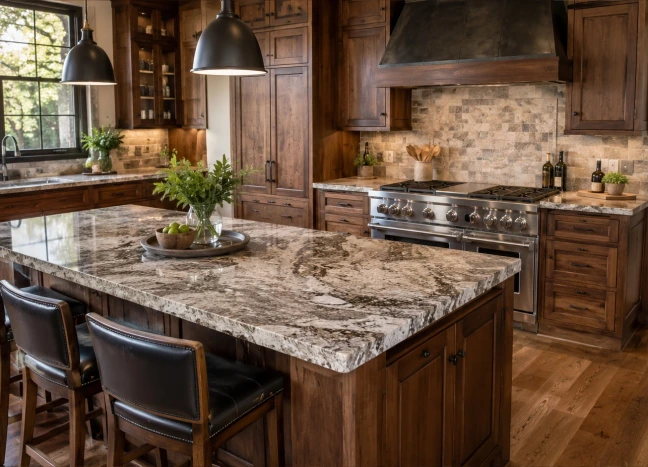
Granite offers individual natural patterns and a range of price levels. Some selections need periodic sealing and material-specific care. The exact slab matters more than the general label.
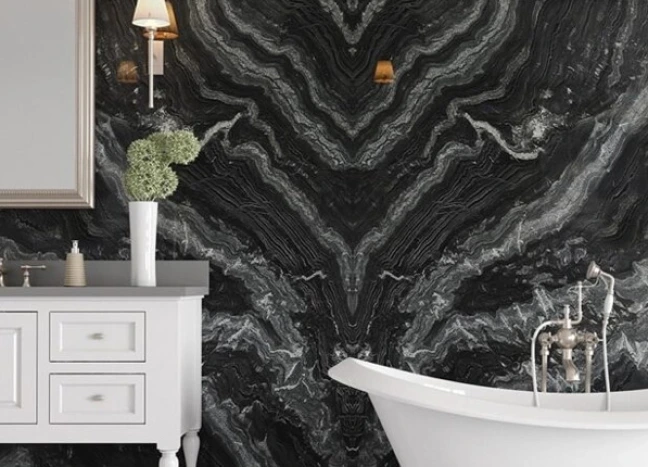
Quartzite can provide dramatic natural movement. Verify the stone's identity and properties with the supplier; stones sold under similar names may differ in behavior and maintenance. Material selection and vein layout can affect both appearance and cost.
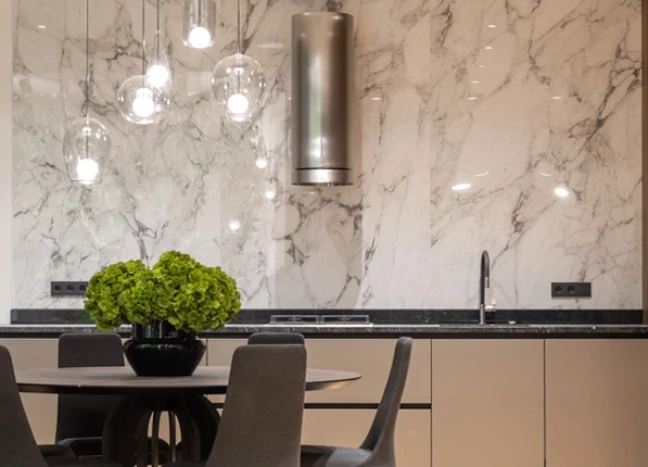
Marble offers classic natural veining but is generally more sensitive to acidic spills and etching. It can be a beautiful choice for homeowners comfortable with a changing patina.
Porcelain slabs can offer clean contemporary patterns, including large-format stone looks. The specific product must be approved for the intended countertop use, and the fabrication and edge details should be discussed early.
To see the available colors and material categories before comparing bids, browse Domus Surfaces' countertop and slab collection.
How to Keep Your Countertop Budget Under Control
- Compare actual slabs early. Choosing a specific material makes the estimate more meaningful than comparing generic price categories.
- Bring photos and rough dimensions. A clear layout helps identify likely cutouts, corners, and separate surface areas.
- Ask about standard edge options. A simpler edge may meet the design goal without an unnecessary fabrication upgrade.
- Understand seam placement. An intentional slab layout can prevent expensive late changes.
- Coordinate the backsplash. Decide whether you want tile, matching slab, or a different finish before finalizing the budget.
- Compare like-for-like quotes. Ask each supplier to specify included work and exclusions in writing.
Saving money does not have to mean choosing a surface you dislike. It often means identifying which visual details matter most and simplifying the parts that do not.
What About Domus Surfaces' Kitchen Package Promotions?
Domus Surfaces also publishes special kitchen countertop and backsplash package offers. These are Domus-specific promotional sale prices for participating materials and stated kitchen dimensions. They are not representative of average Sacramento countertop prices and should not be used to calculate a general market rate per square foot.
The offer page identifies participating countertop and backsplash materials, fabrication, and installation included within the advertised package dimensions. Larger areas and work outside the package scope may cost extra; removal, plumbing, and electrical work are listed separately. Check the live offer and its terms before relying on any advertised price, because promotions and availability can change.
Frequently Asked Questions About Countertop Costs
Is quartz always cheaper than granite?
No. The price ranges overlap, and an individual quartz collection may cost more or less than a specific granite slab. Compare the actual materials and installation scope.
Does the countertop price usually include the backsplash?
Not necessarily. Some bids include only the horizontal countertop surface. Tile backsplashes, full-height slab backsplashes, and their installation can be separate line items unless specifically included in a package.
Should I budget from the countertop area or the full slab size?
Use countertop area for an early estimate, but ask the supplier how slab quantity, yield, veining, and seams influence the final proposal. The purchased material may exceed the finished visible area.
Can I get an accurate installed quote without exact measurements?
Rough measurements and photos are useful for an initial estimate. Final fabrication and installed pricing should be based on a confirmed layout, selected material, and clearly defined scope.
Compare Countertop Materials in Sacramento Before You Commit
A good countertop estimate starts with the right conversation: what material do you like, how much surface do you need, what work is included, and how will the slab look in your actual kitchen? Those answers are more valuable than trying to compare one unexplained price-per-square-foot figure with another.
Visit Domus Surfaces at 7411 Watt Avenue in North Highlands to discuss quartz, granite, quartzite, marble, porcelain, and other surface options for your Sacramento-area project. Bring kitchen photos and rough measurements, and ask for a quote based on the materials and installation work your kitchen needs. You can also review what to bring to a materials showroom before you visit, or contact Domus Surfaces at (916) 387-8300 for current information.