What to Bring to a Countertop, Tile, and Flooring Showroom Before You Choose Materials
A showroom visit can be exciting, but it can also become overwhelming quickly. Countertops, slabs, tile, flooring, cabinet finishes, grout colors, edge profiles, and backsplash options all look different when they are sitting under showroom lights. A material that seems obvious on a small sample can feel completely different once it is placed beside a cabinet door, flooring plank, wall color, or full slab.
The most productive showroom visits usually happen before the homeowner has made every decision. The goal is not to arrive with the whole remodel already solved. The goal is to bring enough information so the materials can be compared in a real way. A few photos, rough measurements, existing finishes, and clear questions can save hours of guessing and prevent expensive mismatches later.
Bring Photos of the Actual Rooms
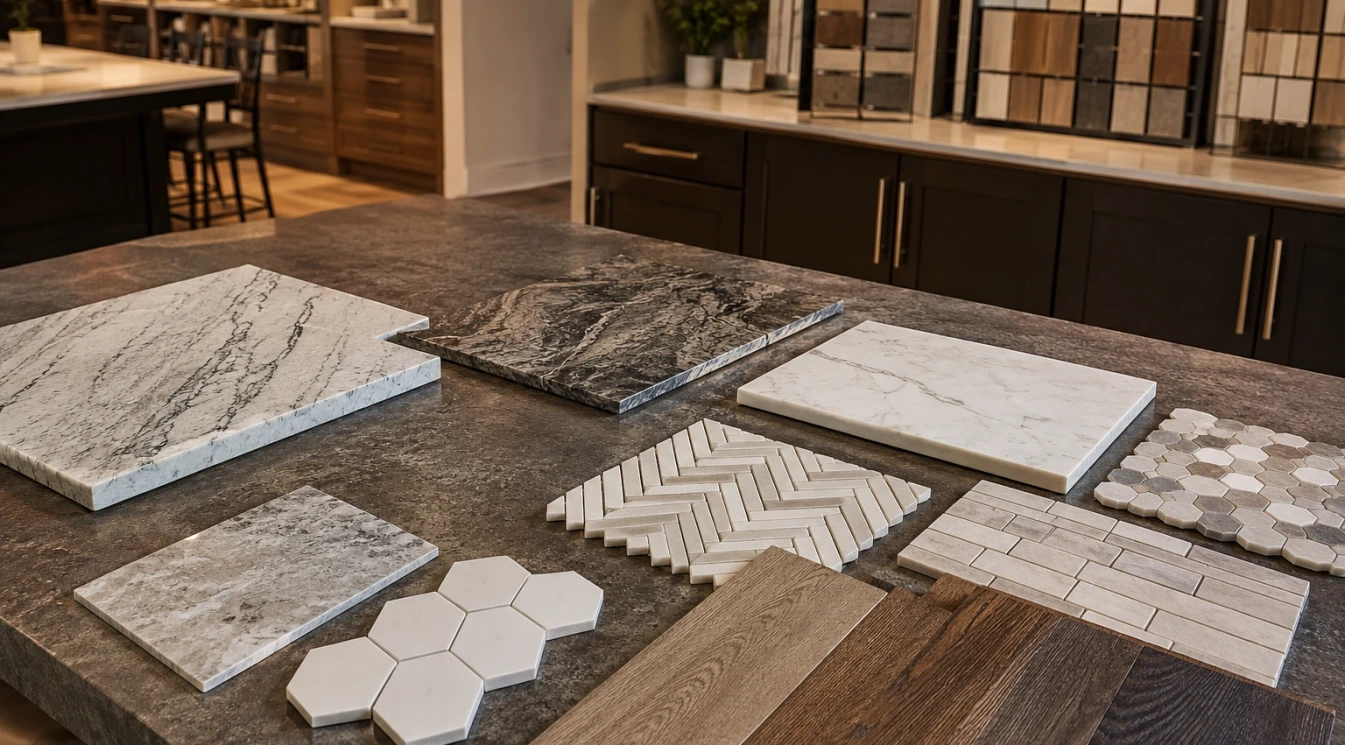
Photos are one of the most useful things to bring to a countertop, tile, and flooring showroom. Take wide photos of the entire room, then take closer photos of the cabinets, floors, windows, appliances, lighting, and any finishes that will remain. The wider photos show proportion and layout. The close photos reveal color, texture, and undertone.
Try to photograph the room during the day and again under evening lighting if possible. A kitchen with large windows may make light quartz look brighter than expected. A bathroom with warm sconces may make beige tile feel richer. A hallway with little natural light may make dark flooring feel heavier. Showroom lighting is useful, but it is not the same as the light inside the home.
Bring Cabinet Doors or Finish Samples
Cabinets sit directly beside countertops, backsplashes, and flooring, so their color has a major effect on every material decision. A white cabinet may lean warm, cool, creamy, gray, or slightly green. A wood cabinet may have red, yellow, brown, or gray undertones. A dark cabinet may need more contrast than it appears to need in a photo.
If a cabinet door or drawer front is available, bring it. If the cabinets are being replaced, bring the sample door from the cabinet line. If the cabinets are staying, bring a drawer face or a small removable panel if that is practical. A physical cabinet sample is much more reliable than memory, especially when comparing white quartz, warm tile, gray flooring, or natural stone slabs.
Bring Flooring, Paint, and Existing Finish Samples
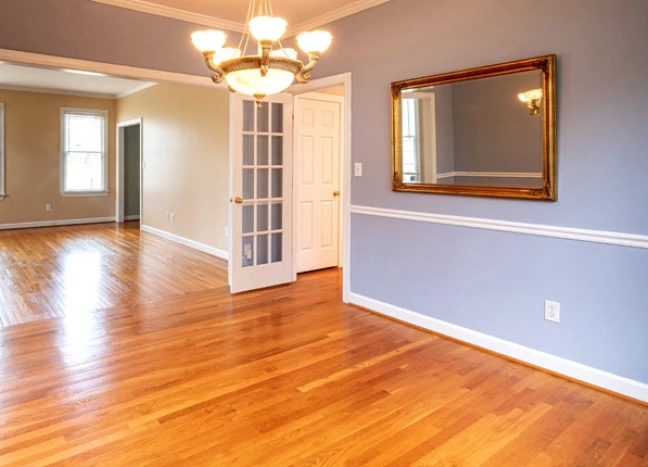
A countertop may look excellent against the cabinet door and still feel wrong once it meets the flooring. Flooring covers a large part of the room, and it often controls the warmth or coolness of the whole palette. A warm wood-look floor can make cool gray countertops feel colder. A gray floor can make warm cabinets look more yellow or orange. A patterned floor can compete with a bold backsplash or slab.
Paint colors matter too, especially in bathrooms, kitchens, and open living areas where walls are close to the selected materials. Bring paint chips, flooring planks, tile pieces, hardware samples, and appliance finish information when available. The goal is not to carry the whole house into the showroom. The goal is to avoid choosing each material in isolation.
Bring Rough Measurements, Even If They Are Not Final
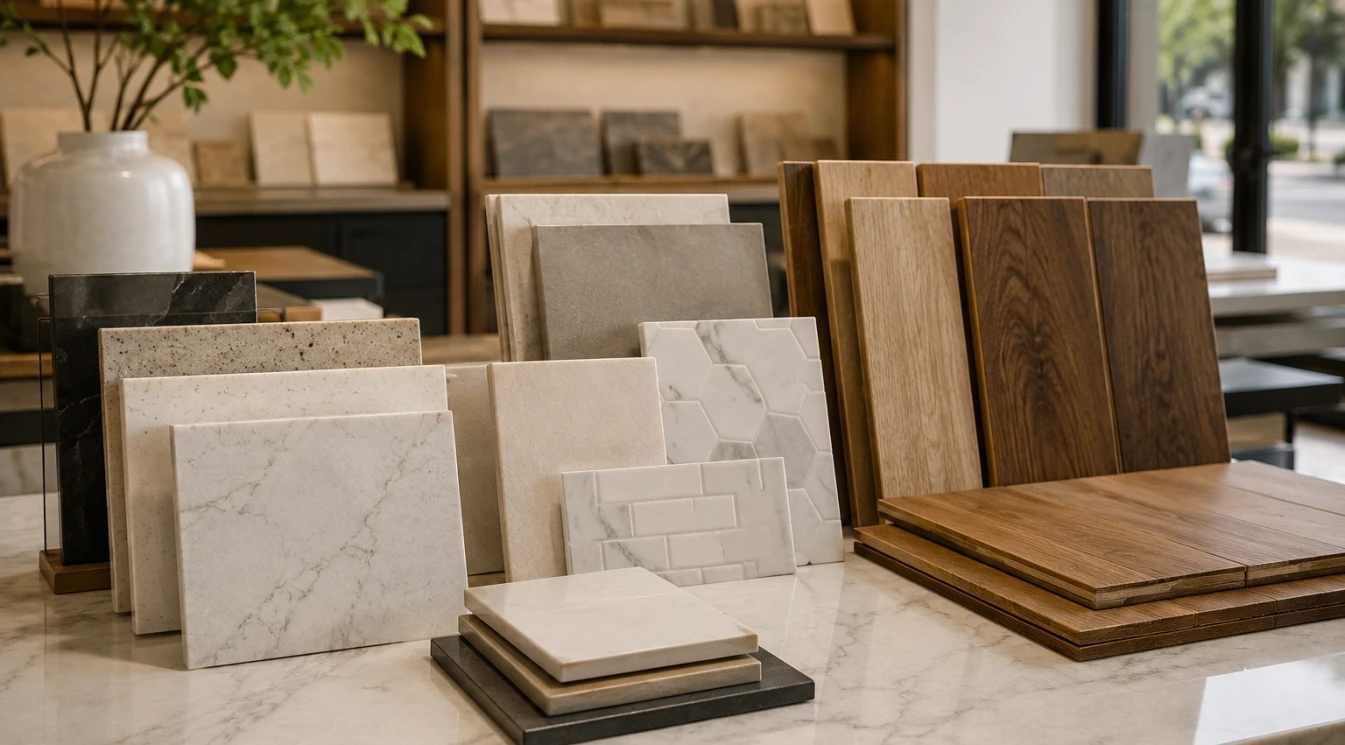
Exact fabrication measurements come later, but rough dimensions are still useful during early selection. They help determine whether the project needs one slab or multiple slabs, how much countertop material may be required, where seams might become a conversation, and whether a large-format tile or slab backsplash makes practical sense.
For countertops, measure the approximate length and depth of each run, the island size, and any backsplash areas being considered. For flooring, bring the approximate square footage or room dimensions. For showers or bathroom walls, measure height, width, niches, benches, and any feature areas. Photos and measurements together give the showroom team a much clearer picture than either one alone.
Know What Is Staying and What Is Changing
One of the first questions to answer is which parts of the room are staying. Existing cabinets, appliances, floors, paint colors, shower tile, tub surrounds, fireplaces, and trim can all limit or guide the material palette. If those finishes are not considered early, the new material may look beautiful by itself but disconnected from the room.
If the cabinets are staying, the countertop and backsplash need to respect them. If the floor is staying, new counters and tile should be tested against it. If the appliances are staying, metal finishes and color temperature matter. A remodel does not need every surface to be replaced, but the surfaces that remain still have a vote.
Bring Inspiration Photos, But Use Them Carefully
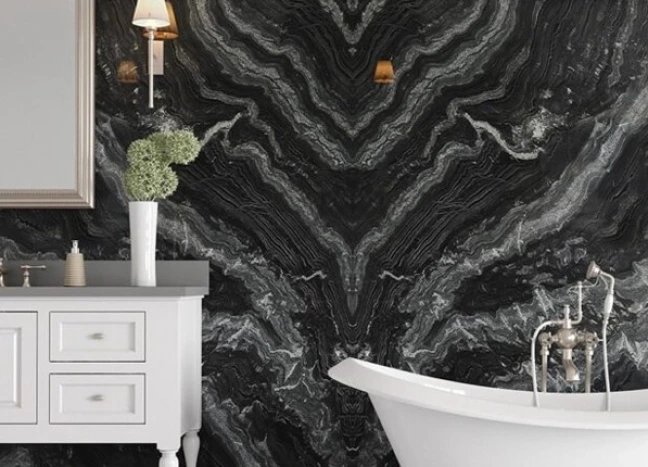
Inspiration photos are helpful because they show style direction. They can reveal whether the homeowner prefers quiet neutral kitchens, dramatic stone movement, warm wood tones, bold contrast, handmade tile, full-height slab backsplashes, or clean modern surfaces. They are especially useful when words like modern, traditional, warm, luxury, rustic, or timeless mean different things to different people.
The caution is that inspiration photos are not instructions. Many images are photographed in ideal light, edited for contrast, or shown in homes with different cabinet colors, ceiling heights, floors, and budgets. Use them to identify the feeling of the room, then compare actual samples to the home’s real finishes before making decisions.
A successful showroom visit is not about finding the most impressive sample; it is about seeing which materials belong together before they become permanent parts of the home.
Ask About Slab Size, Seams, and Layout
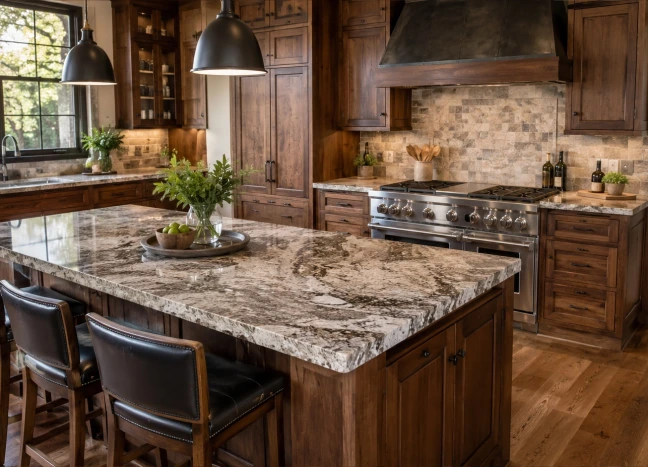
Countertop and slab decisions are not only about color. Slab size, veining direction, seam placement, edge profile, overhang, waterfall panels, backsplash height, and sink cutouts can all affect the finished result. A material with dramatic movement may need more planning than a quieter surface because the eye will follow the pattern across the room.
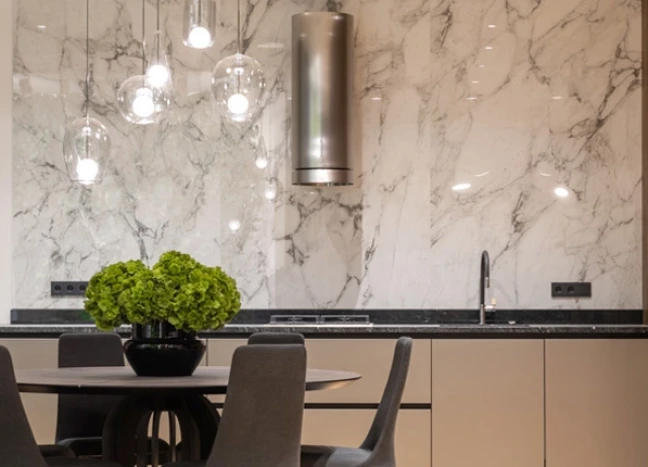
Ask how the slab might be laid out, especially for islands, long counters, and full-height backsplashes. Ask whether the pattern direction matters. Ask where seams may be likely, and whether those seams can be placed in less visible areas. These are practical questions, not just technical ones, because they affect how finished the room feels.
Ask About Tile Size, Grout, Trim, and Transitions
Tile selection is not complete when the tile color is chosen. Tile size, layout, grout color, grout width, trim pieces, outside corners, shower niches, floor transitions, and edge details all influence the final look. A tile that looks clean on a display board may feel busy with a high-contrast grout. A large-format tile may look elegant, but it may also require flatter walls or floors and careful installation planning.
For bathrooms and showers, ask how the floor tile, wall tile, niche tile, shower curb or curbless transition, and drain style will work together. For kitchen backsplashes, ask whether the tile should be the feature or should stay quiet behind the countertop. For flooring, ask how the new material will meet existing rooms, doorways, stairs, cabinets, or exterior doors.
Think About Daily Care Before Choosing the Look
Different materials ask different things from the homeowner. Quartz usually offers a consistent look and straightforward daily care. Granite and quartzite bring natural stone character but may require sealing and more attention to the exact slab. Marble can be beautiful, but it is more sensitive to etching and staining. Porcelain can be sleek and modern, but fabrication and edge details matter. Wood flooring feels warm and natural, while tile and stone offer strong durability in wet areas.
The best showroom conversation includes maintenance before the final decision. Ask what cleaners to avoid, whether sealing is needed, how heat should be handled, what can scratch or etch the surface, and what kind of wear is normal. A material is easier to enjoy when its care routine matches the household.
Do Not Choose From One Sample Alone
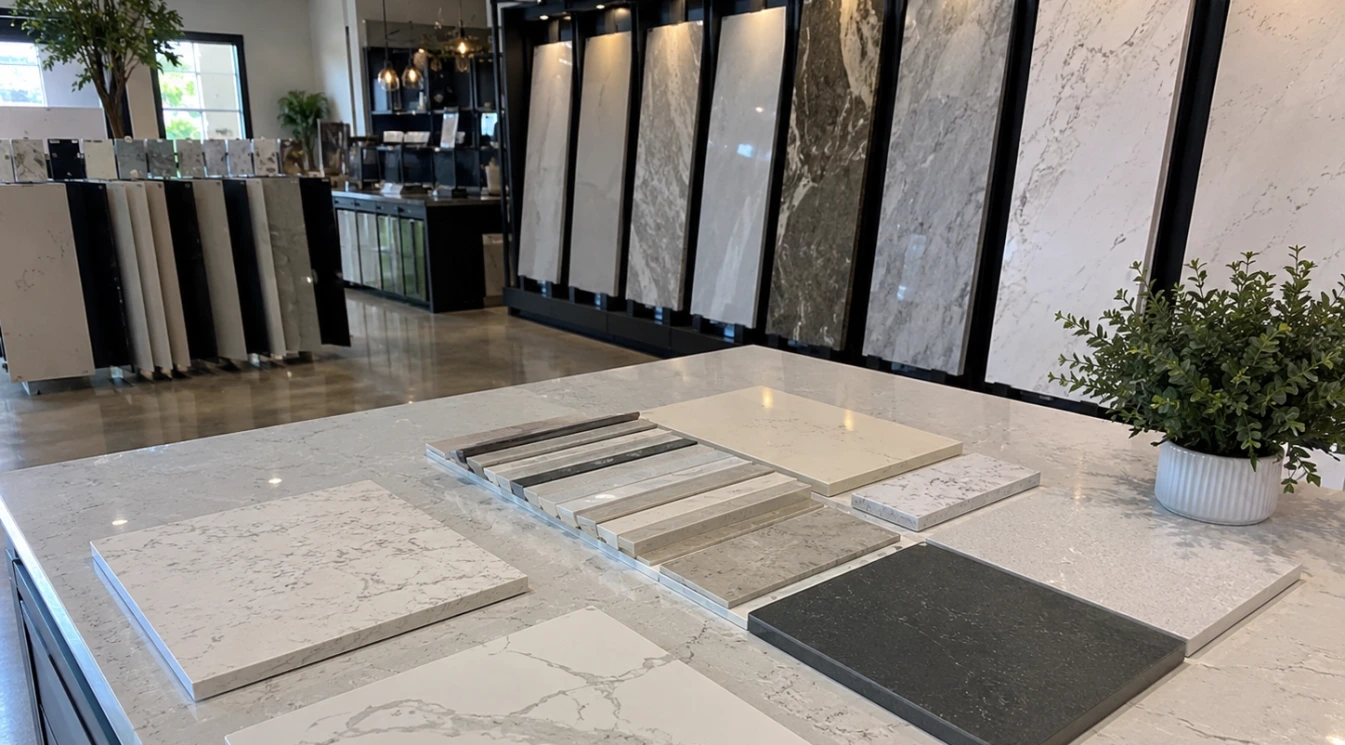
Small samples are useful for color direction, but they do not always show the full personality of a material. Quartz with large veining may look quiet on a chip but much more dramatic across an island. Natural stone may have movement, color shifts, or mineral areas that are not visible in a small piece. Flooring may show more pattern repetition once it covers a full room.
Whenever possible, view larger pieces, sample boards, or full slabs. Step back from the material instead of judging only from close range. A countertop is viewed from several feet away, flooring is seen across the room, and backsplash tile is seen vertically under changing light. Distance changes the decision.
Use the Showroom to Compare, Not Just Confirm
A good showroom visit should test the plan, not simply confirm the first idea. Place the countertop next to the cabinet sample. Add the backsplash. Add the flooring. Look at warm and cool options. Compare quiet and bold materials. Remove anything that fights the rest of the palette. The strongest choice is often easier to see when the wrong combinations are eliminated.
This is also where budget priorities become clearer. A homeowner may decide to keep the countertop quieter and spend more on backsplash tile. Another may choose a dramatic slab and keep the surrounding materials restrained. Another may choose practical flooring first because it covers more square footage. Seeing the materials together makes those tradeoffs more realistic.
Questions Worth Asking During the Visit
- Which materials work best with my cabinet color? This helps prevent undertone problems.
- Will this countertop need one slab or more than one? This can affect seams, layout, and budget.
- Where would seams or transitions likely be? Placement can affect the finished appearance.
- What grout color keeps this tile calm? Grout can make tile look subtle or busy.
- How should this surface be cleaned? Care expectations should be clear before selection.
- Which material should be the visual feature? This keeps the room from becoming too crowded.
Leave With a Direction, Not Just a Favorite Sample
The best outcome from a showroom visit is a clearer design direction. That may mean a specific slab, tile, or flooring choice, but it may also mean narrowing the palette to warm whites, soft greiges, natural wood tones, quiet stone movement, darker contrast, or a simpler backsplash. Clarity is valuable because every later decision becomes easier.
Domus Surfaces can help Sacramento homeowners compare countertops, slabs, tile, flooring, cabinets, and backsplash materials in one place so the remodel is planned as a complete room rather than separate purchases. Bringing the right items to the showroom makes that process more useful, more focused, and more likely to produce a home that feels intentionally finished.