Best Bathroom Floor Tile for Sacramento Homes: Porcelain, Ceramic, and Slip Resistance
What is the best tile for a bathroom floor? For many Sacramento homeowners, a floor-rated porcelain tile with a matte or lightly textured finish is a practical place to start. It offers a wide range of stone, concrete, and wood looks, with low water absorption and straightforward care. But porcelain is not automatically the right choice in every format or finish, and a properly rated ceramic floor tile can also be a very good option.
The important decision is not simply porcelain versus ceramic. It is whether a particular tile suits the way the floor gets wet, how it will be cleaned, the size and layout of the room, and the people who use it. A beautiful tile selected for a wall may be completely unsuitable underfoot. This guide focuses on the bathroom floor itself, while explaining why the shower floor deserves separate consideration.
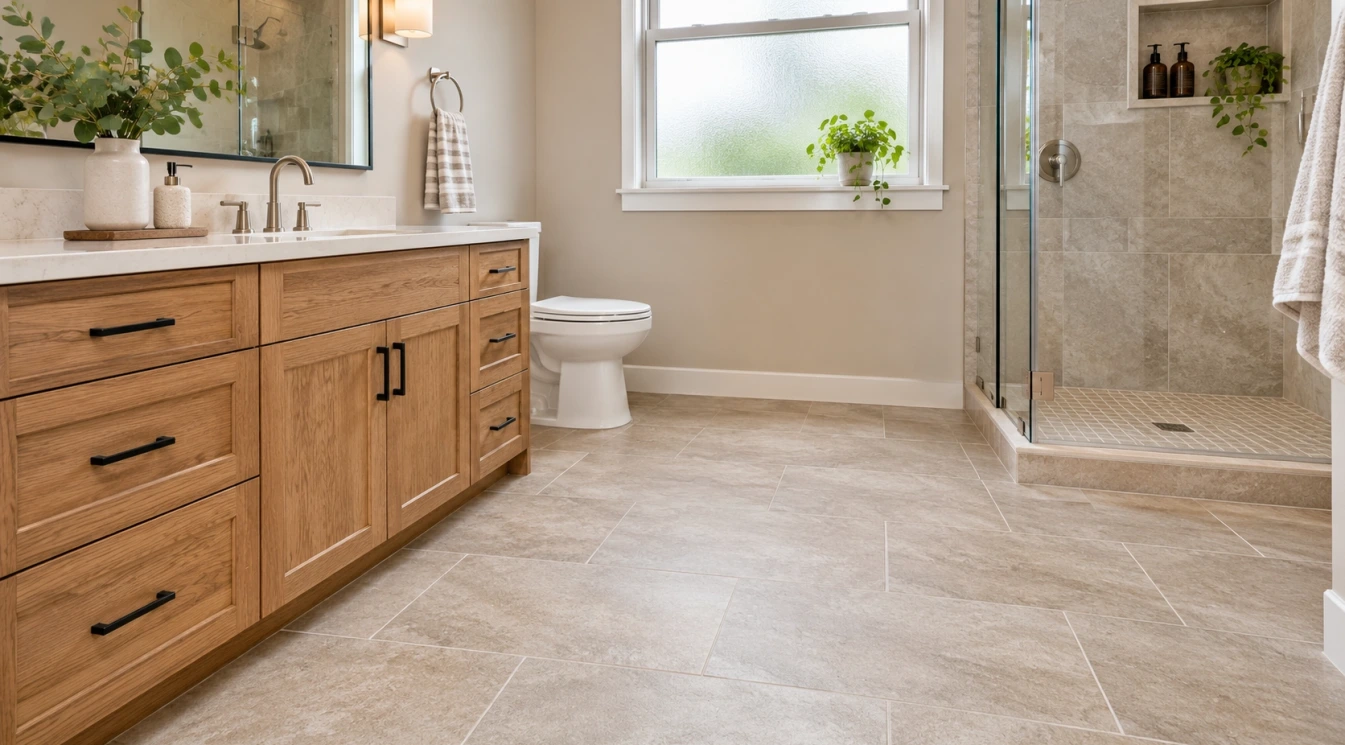
What Makes Bathroom Floor Tile Different?
A bathroom floor has to withstand foot traffic, water near the tub or shower, daily cleaning, and the occasional dropped bottle or laundry basket. It also has to feel comfortable when someone steps onto it with damp feet. Those requirements are different from a backsplash or a decorative shower wall.
Start with a tile specifically approved for floor use. Then look at the manufacturer's guidance for the expected conditions. A powder room floor, a family bathroom, and a shower enclosure do not all require the same specifications. Tile size, surface texture, grout, substrate preparation, and water management all play a role in the finished result.
Porcelain vs. Ceramic: Which Is Better for a Bathroom Floor?
Porcelain floor tile
Porcelain is a type of ceramic tile made to meet a particularly low water-absorption requirement. Under the common ANSI porcelain classification, its water absorption is 0.5% or less. That dense body makes porcelain an appealing choice for bathrooms, especially for a homeowner who wants durability and a lower-maintenance surface.
Porcelain is available in warm limestone looks, soft gray stone looks, terrazzo-inspired patterns, and natural wood visuals. However, a polished porcelain tile can behave very differently underfoot from a matte or textured one. Do not choose porcelain on the material name alone; check the actual product's floor-use and wet-use recommendations.
Ceramic floor tile
Ceramic tile can also perform well in a bathroom when the specific product is rated for floors and for the conditions in that room. It may offer attractive colors, sizes, patterns, and price points, particularly for traditional or smaller bathrooms. The mistake is assuming that every ceramic tile is a floor tile. Many decorative ceramic products are intended only for walls.
The practical comparison: porcelain usually provides lower water absorption and a broad selection of hard-wearing floor products; floor-rated ceramic remains a legitimate option when its specifications match the application. For either material, the finish and installation details matter as much as the category.
How to Think About Slip Resistance in Bathrooms
The phrase “non-slip bathroom tile” sounds reassuring, but no tile can eliminate the possibility of slipping. Water, soap residue, cleaning products, footwear, bare feet, floor slope, and maintenance all affect traction. Choose a surface that is appropriate for the intended use rather than relying on a marketing label.
One useful measure is DCOF, short for dynamic coefficient of friction. The ANSI A326.3 standard classifies hard-surface flooring for different conditions. For level interior floors expected to be walked on when wet, one route to the Interior, Wet classification is a measured wet DCOF of at least 0.42; the standard also permits qualifying manufacturer-declared classifications. That number is not a guarantee against slipping, and it is not a universal shower-floor threshold.
The Tile Council of North America explains that traction measurements are only one part of choosing a suitable surface. When comparing tiles, ask for the actual product specification and whether its manufacturer recommends it for your bathroom floor and expected wet conditions.
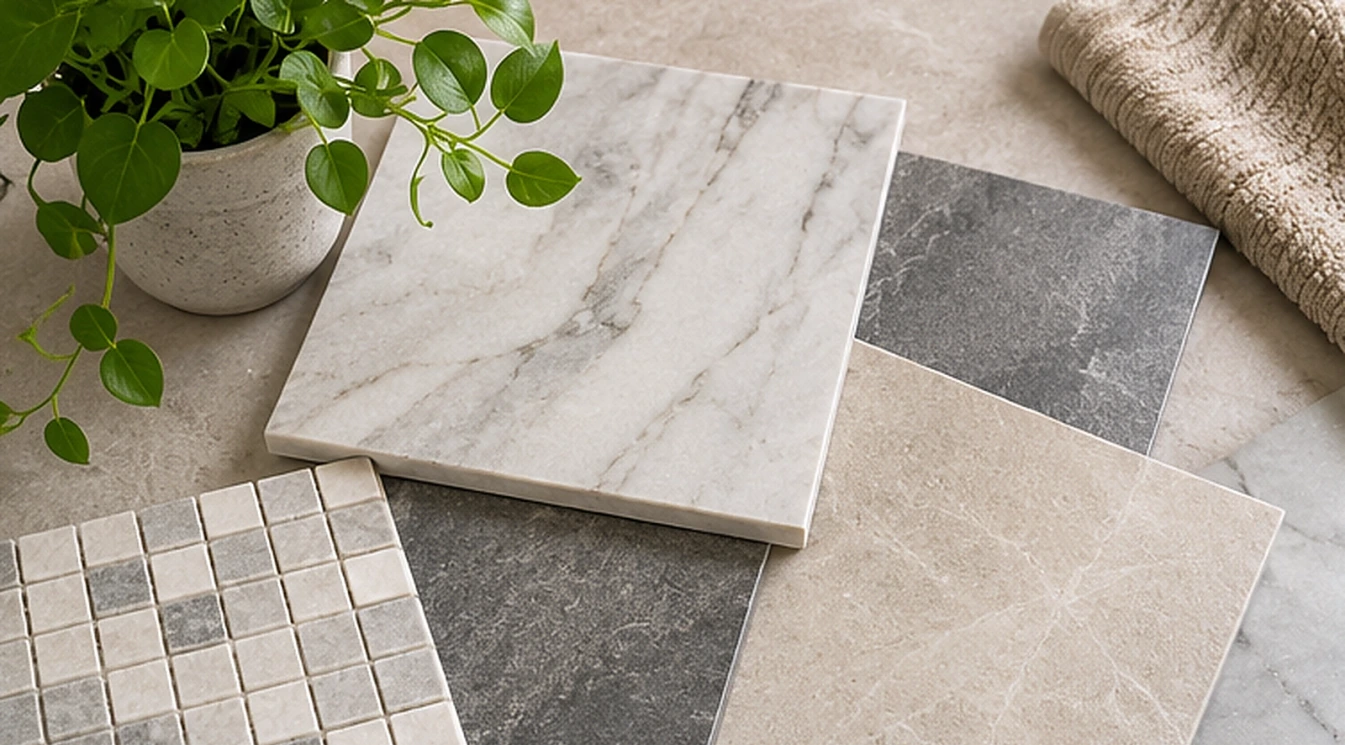
Matte, Textured, or Polished Tile?
Matte finishes are a useful starting point for a bathroom because they tend to reduce reflections and can provide a more comfortable-looking surface. A lightly textured finish may also add traction, but it should still be evaluated through the product's suitability information.
Heavily textured tile can be harder to wipe clean, particularly around toilets and vanities where dust or cleaning residue collects. Glossy or polished tile can create a dramatic look, yet it may be less appropriate for surfaces frequently walked on while wet. It often makes more sense on walls than on a busy bathroom floor.
Balance appearance with maintenance. A lightly textured, floor-rated tile that is easy to mop may be a better everyday choice than either an extremely rough surface or a mirror-smooth one.
What Size Bathroom Floor Tile Looks and Works Best?
For the main bathroom floor, 12-by-24-inch porcelain tile is a popular design direction because it offers an uncluttered look without requiring an enormous room. Square formats, smaller patterned tiles, and other rectangular sizes can work just as well. The right size depends on the floor plan, the shape of the room, and how the tile meets the tub, vanity, and doorway.
Large tile can create fewer grout joints and a more continuous surface, but it also demands careful subfloor preparation. A floor that looks flat to the eye may still need additional work to accommodate larger tile without awkward raised edges between pieces. Smaller tile can suit a traditional bath or tight layout, but it usually creates more grout lines to maintain.
Before choosing a size, ask an installer how the pattern will look around the toilet, near the door, and along narrow edges. A layout with balanced cuts often looks better than one selected only because the tile is fashionable.
The best bathroom floor is the one that feels comfortable underfoot, handles daily moisture, and still looks right after the room is back in use.
Is Shower Floor Tile the Same as Bathroom Floor Tile?
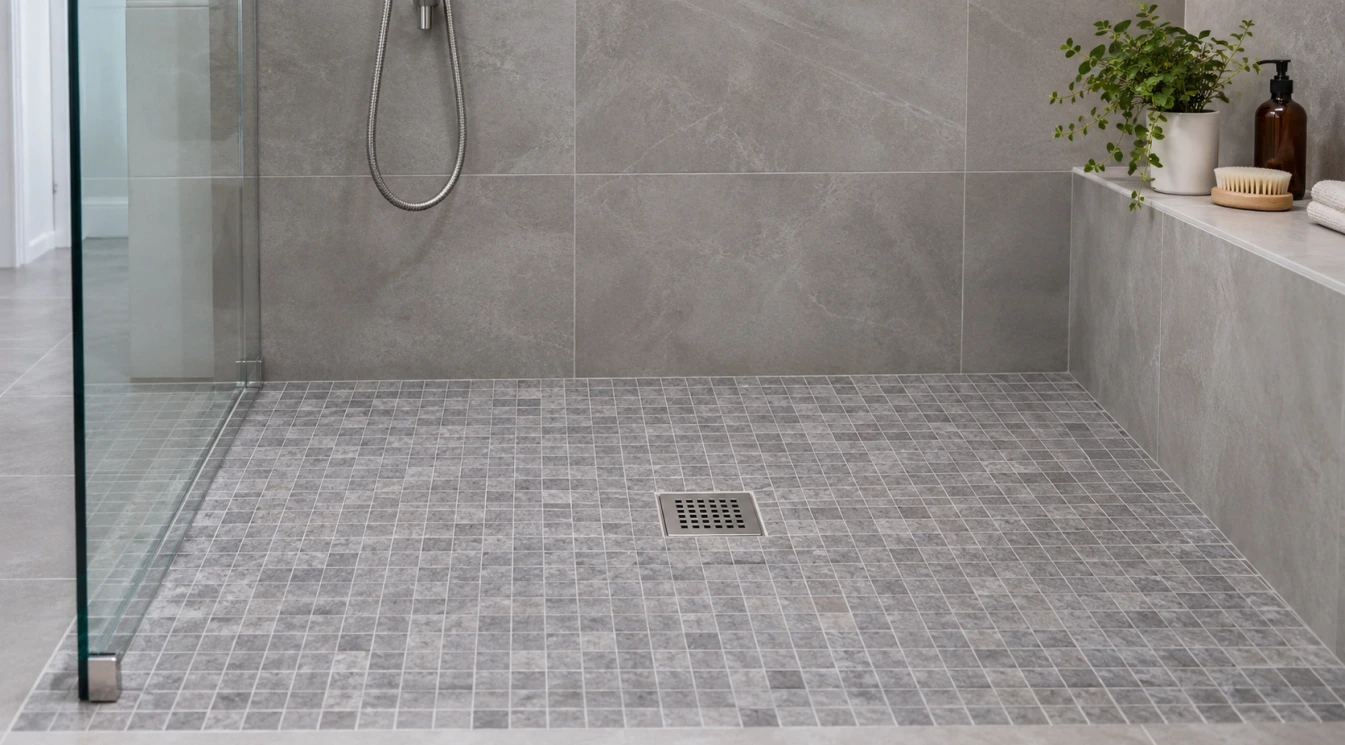
Not necessarily. The floor outside the shower is usually level; a conventional shower floor is sloped so water moves toward a drain. Smaller tiles and mosaics often accommodate that slope more easily, while the additional grout joints can contribute to traction. The tile still must be suitable for the intended wet use.
There is no single ANSI A326.3 DCOF value that determines suitability for every shower floor. Drainage, tile shape, grout joints, surface structure, and barefoot use must be considered together. Some specialized shower designs can use larger-format tile, but those installations require careful planning of slope, drainage, and the manufacturer's recommendations.
Equally important, tile and grout alone do not create a waterproof shower. The waterproofing system and installation method beneath them must be designed correctly. Do not select shower materials based only on the appearance of the tile face.
Grout Color, Cleaning, and Long-Term Maintenance
Grout affects both the appearance and everyday care of a bathroom. Light grout can create a seamless, calm floor, while contrasting grout emphasizes the tile pattern. Medium warm-gray or beige grout often coordinates well with stone-look tile and may be more forgiving of ordinary dust and discoloration than a very bright white.
Ask which grout system is planned. Traditional cementitious grout may need sealing or additional maintenance depending on the product. High-performance and epoxy grout products can offer different levels of stain and water resistance, along with their own installation and care requirements. None eliminates the need for cleaning or replaces proper waterproofing.
For daily care, follow the tile and grout manufacturer's cleaner recommendations. Mild, pH-appropriate cleaning is generally preferable to harsh acids or abrasive scrubbing, especially when the floor includes natural stone or specialized finishes. Address leaks and damaged grout or sealant promptly rather than relying on the tile to stop water.
Installation Details Matter as Much as the Tile
A quality tile can still disappoint when the floor underneath it is poorly prepared. Depending on the structure, the installer may need to correct uneven areas, address movement, select an appropriate underlayment or membrane, and plan transitions at doors. Wet rooms and showers need waterproofing systems designed for those conditions.
It is worth discussing floor height before purchasing tile. New tile, mortar, underlayment, and transition pieces can affect the height of the finished floor next to a hallway or bedroom. In a small bathroom, planning those details early helps avoid awkward thresholds and last-minute cuts.
Tile pricing is also only part of the project cost. Ask whether an estimate includes removal, floor preparation, waterproofing where required, setting materials, grout, trim, and installation. Comparing material-only prices with complete installed bids can make one option appear cheaper than it really is.
Three Bathroom Floor Looks That Work With Different Styles
- Warm limestone-look porcelain: A soft beige or greige floor with an oak vanity and simple white wall tile creates a welcoming bathroom without relying on a strong pattern.
- Quiet gray stone-look tile: Mid-tone matte porcelain works with black, chrome, or brushed metal fixtures and can give a contemporary bathroom a calmer foundation.
- Small patterned floor tile: A restrained geometric or classic pattern can bring character to a guest bath, especially when the vanity and wall finishes remain simple.
Remember that tile color changes under different light. Bring a cabinet finish or vanity photo when comparing samples, and consider the grout color alongside the tile rather than choosing it at the very end. For broader ideas across showers, walls, and backsplashes, read our guide to choosing tile for different surfaces.
What to Ask Before Buying Bathroom Floor Tile
- Is this exact tile approved for residential floor use?
- Is it suitable for a level bathroom floor that may be walked on while wet?
- What wet-use classification, test information, or manufacturer guidance is available?
- Would the same tile also be appropriate inside the shower, or should we select a separate mosaic?
- What grout and cleaning products are recommended for this finish?
- Will the chosen format require extra floor preparation or unusual cuts?
- How much tile should be ordered for the layout, cuts, and possible future repairs?
A useful showroom visit is not just about picking the nicest sample. It is a chance to confirm the right product for the right location. You can also use the Domus Surfaces materials visualizer to explore combinations before narrowing down your choices in person.
Frequently Asked Questions About Bathroom Floor Tile
Is porcelain better than ceramic for a bathroom floor?
Porcelain is often an excellent starting point because of its low water absorption and the range of floor-rated finishes available. A properly floor-rated ceramic tile can also work well. Compare the exact product specifications instead of choosing by name alone.
Can I use wall tile on a bathroom floor?
Only if the manufacturer also approves it for floor use and the intended conditions. Decorative wall-only tile may not be designed for foot traffic or wet traction.
Are larger bathroom floor tiles easier to clean?
They generally create fewer grout joints, which may simplify some cleaning. However, finish texture, grout type, tile layout, and installation quality are also important.
Does porcelain tile make a bathroom waterproof?
No. Porcelain tile itself is highly resistant to water absorption, but joints, edges, and the surrounding assembly still need appropriate moisture protection. A shower requires a correctly designed waterproofing system.
Compare Bathroom Floor Tile in the Sacramento Area
Choosing bathroom flooring is easier when you can compare matte finishes, stone looks, grout colors, and tile sizes side by side. Explore the porcelain, ceramic, and mosaic tile selections at Domus Surfaces, then confirm current product availability and suitability for your project.
Domus Surfaces is located at 7411 Watt Avenue, North Highlands, CA 95660, serving Sacramento and nearby communities. Bring a photo of your bathroom and rough floor dimensions, or contact the showroom at (916) 387-8300 to discuss suitable bathroom floor tile options.