Longest-Lasting Remodeling Materials for Kitchens, Bathrooms, and Living Spaces
Some remodeling materials are replaced because they fail. Others are removed while they are still functional because they cannot be repaired, their surface layer has worn through, or the design was so specific to one trend that the room feels dated long before the material reaches the end of its physical life.
For homeowners who would rather remodel once and live with the result for several decades, durability needs a broader definition. The best long-term material is not always the one that is hardest on the day it is installed. It is the material that resists the conditions of the room, can be maintained without unusual effort, and can often be repaired or renewed instead of completely removed.
True durability is not simply resisting wear; it is remaining useful, repairable, and attractive long after trends have passed.
What Service-Life Estimates Really Mean
Published lifespan figures are planning estimates, not guarantees. Product quality, installation, traffic, moisture, sunlight, cleaning methods and maintenance can shorten or extend the useful life of any surface. A well-installed midrange product may outlast a premium material installed over a poor substrate.
Industry references still provide useful comparisons. The Tile Council of North America uses a 60-year service life for ceramic tile in its environmental analysis. The National Wood Flooring Association notes that traditional solid hardwood can exceed 100 years and distinguishes between engineered floors that can be refinished twice, once or not at all. A National Association of Home Builders study describes natural stone countertops as lifetime materials and places kitchen cabinetry at up to about 50 years.
The important question is not simply, “How many years does it last?” Ask what happens when the material is scratched, stained, chipped, water-damaged or no longer looks fresh. Can it be polished, refinished, regrouted, repainted or repaired in one area? A material with a renewable surface may remain useful far longer than one that must be discarded after its top layer is damaged.
Countertops: Which Materials Have the Best Long-Term Potential?
Countertops face heat, impacts, spills, cleaning products and constant contact. For a long-life kitchen, the strongest candidates are usually suitable natural stones, well-made quartz and properly fabricated porcelain or ultracompact surfaces. Their strengths are different, so the best choice depends on how the kitchen is used.
Granite
- Realistic planning range: 50 years to lifetime potential
- Why it can last: Dense natural stone, strong heat tolerance and a thick surface that can often be professionally repaired or refinished
- Main long-term concern: Chips at exposed edges, staining in more absorbent varieties and poor seam or support planning
Quartzite
- Realistic planning range: 50 years to lifetime potential
- Why it can last: Many true quartzites offer exceptional hardness, abrasion resistance and natural depth
- Main long-term concern: Stone sold under broad commercial names varies, so the exact slab must be evaluated
Marble
- Realistic planning range: 50 years to lifetime potential
- Why it can last: It can remain structurally serviceable for generations and may be refinished
- Main long-term concern: Etching, scratching and patina appear sooner than on granite or many quartzites
Engineered Quartz
- Realistic planning range: 25 to 50 years or longer
- Why it can last: It is nonporous, consistent and supported by lifetime residential warranties from some major brands
- Main long-term concern: High heat, prolonged UV exposure and damage that may be difficult to repair invisibly
Porcelain or Ultracompact Slab
- Realistic planning range: 30 to 50 years or longer
- Why it can last: Strong resistance to stains, heat, sunlight and surface wear
- Main long-term concern: Thin edges and corners can chip, and fabrication quality is especially important
These ranges assume appropriate products, professional fabrication and normal residential use. They are not warranty periods. A lifetime material can still be damaged, and a lifetime warranty generally covers qualifying manufacturing defects rather than every type of wear, heat exposure, impact or installation problem.
Granite and Quartzite Usually Lead for Maximum Countertop Longevity
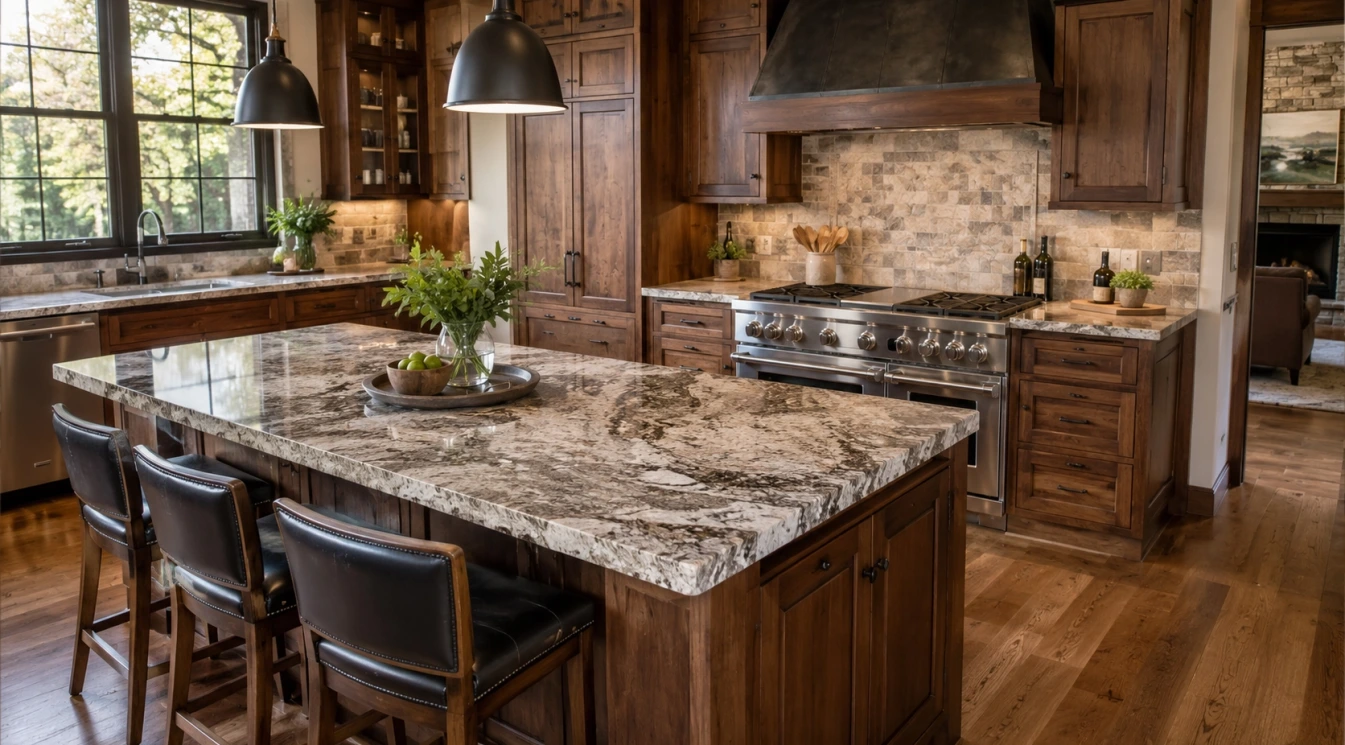
For a homeowner who wants the countertop itself to remain viable through several rounds of paint, hardware and cabinet-door updates, granite and suitable quartzite are difficult to dismiss. They are thick, mineral-based materials rather than a printed wear surface. Minor edge damage, seam work and some surface issues may be repairable by an experienced stone professional.
Granite is often the more predictable workhorse. It is available in a wide range of colors, from quiet black and gray selections to active patterns with visible crystals. Quartzite can offer marble-like movement with greater hardness, but names in the stone market are not always reliable geological classifications. Viewing the actual slab and discussing its expected care is more important than relying on the label alone.
Natural stone does not remain unchanged without care. Some slabs benefit from sealing, and all counters need reasonable protection from heavy impacts and extreme thermal shock. Its long-term advantage is that normal aging does not necessarily mean the countertop has reached the end of its useful life.
Quartz Is a Strong Decades-Long Choice, but It Ages Differently
Engineered quartz offers consistent patterning, low routine maintenance and strong stain resistance. Major manufacturers such as Cambria and Caesarstone offer lifetime residential warranties under their respective terms, which reflects confidence in the material. A warranty, however, should not be mistaken for permission to place hot cookware directly on the surface or ignore fabrication and installation requirements.
Quartz contains binders that make it more sensitive to high heat and prolonged outdoor UV exposure than many natural stones. It is also difficult to polish or patch invisibly once a prominent area is damaged. For many households, those limitations are manageable, and a quality quartz installation can remain attractive for decades. Homeowners seeking the greatest repairability may still prefer natural stone.
Porcelain Slabs Are Durable, but the Edge Deserves Attention
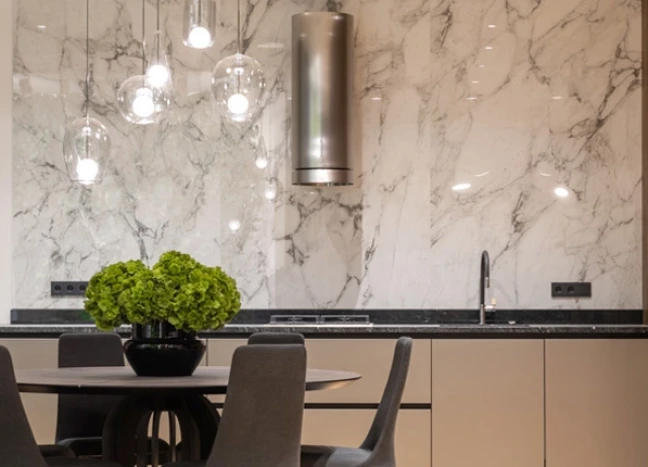
Large-format porcelain and ultracompact surfaces resist stains, heat and sunlight, making them attractive for kitchens, bathrooms, fireplace surrounds and full-height wall applications. Because the design is manufactured, appearance and pattern repeatability can be more predictable than natural stone.
The surface is hard, but thin profiles can be less forgiving at exposed corners. Fabrication, transport, support and edge design matter. A simple protected edge may be a better long-term choice than a sharp, delicate detail in a busy household. The material can last for many decades, but a highly visible chip may be more difficult to disguise than natural variation in stone.
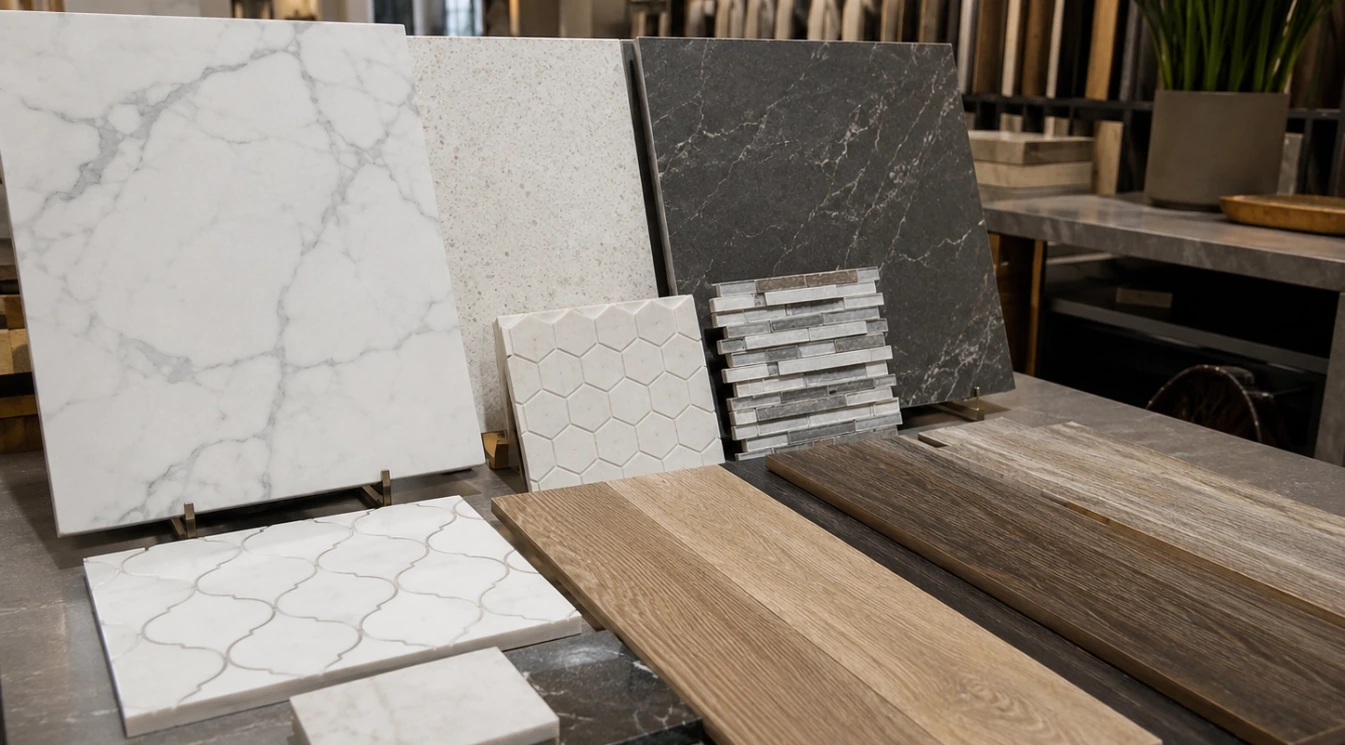
The materials that last longest are not always the ones that never show wear, but the ones that can be maintained, repaired and renewed without starting over.
Tile and Backsplashes: The Surface Often Outlasts the Installation Around It
Porcelain and ceramic tile are among the safest choices for a homeowner who wants a backsplash, bathroom wall or floor to remain in service for decades. TCNA life-cycle information uses a 60-year service life for ceramic tile, and separate flooring analyses commonly model porcelain and ceramic tile over 75-year building periods.
Porcelain is generally the stronger floor choice where water, traffic and abrasion are concerns. Through-body unglazed porcelain is especially forgiving because wear does not reveal a completely different-colored core. Glazed porcelain also performs well when its wear rating is appropriate for the location.
Ceramic tile remains an excellent backsplash and wall material because those surfaces receive little abrasion. A properly installed backsplash can remain functional until the kitchen is intentionally redesigned. In many cases, grout color or style preference prompts replacement before the tile itself wears out.
Natural stone tile can also last for generations. Marble, travertine, slate and granite have different maintenance needs, and the finish must suit the room. A polished stone that is appropriate on a wall may be a poor choice for a wet bathroom floor.
Why Tile Sometimes Fails Long Before Its Expected Lifespan
Tile is hard, but it is not flexible. Movement in the subfloor, inadequate mortar coverage, missing movement accommodation, poorly prepared walls or failed waterproofing can shorten the life of an otherwise durable product.
In showers, the visible tile and grout are not the entire water-management system. The membrane, drain connection, penetrations and changes of plane determine whether the installation can remain serviceable. Regrouting cannot correct a failed waterproofing assembly behind the tile.
For long-term value, select the tile and the installation system together. Keep several spare pieces from the same production run. A localized repair decades later is much easier when the original size, color and calibration are available.
Flooring: Durability and Renewability Are Not the Same Thing
Flooring comparisons often focus on scratch resistance, but the ability to recover from damage matters just as much. A floor that scratches but can be sanded several times may outlast a highly resistant floor that cannot be renewed after its wear layer is compromised.
Solid Hardwood
- Useful-life planning range: 75 to 100+ years
- Long-term advantage: It can often be repaired, sanded and refinished multiple times
- What usually ends its service: Major moisture damage, excessive sanding or structural movement
Refinishable Engineered Hardwood
- Useful-life planning range: 50 to 75 years
- Long-term advantage: Real wood appearance with greater dimensional stability and one or more possible refinishes
- What usually ends its service: A thin wear layer, water damage or delamination
Non-Refinishable Engineered Hardwood
- Useful-life planning range: 20 to 30 years
- Long-term advantage: Real wood surface with stable construction
- What usually ends its service: Wear-through or damage that cannot be sanded
Porcelain Tile
- Useful-life planning range: 60 to 75+ years
- Long-term advantage: Excellent resistance to water, abrasion and fading
- What usually ends its service: Substrate movement, impact damage or failed installation
Natural Stone Flooring
- Useful-life planning range: 75 to 100+ years
- Long-term advantage: Thick, refinishable material with long architectural use
- What usually ends its service: Neglected maintenance, unsuitable stone selection or substrate failure
Laminate
- Useful-life planning range: 15 to 25 years
- Long-term advantage: Wear-resistant surface and good value
- What usually ends its service: Core swelling, damaged joints or wear-through that cannot be refinished
Luxury Vinyl Plank or Rigid Core
- Useful-life planning range: 15 to 25 years
- Long-term advantage: Comfort, water resistance and straightforward replacement
- What usually ends its service: Wear-layer damage, gouging, joint failure or design obsolescence
Published life-cycle analysis used by the wood-flooring industry estimates roughly 20 years for laminate and about 15 years for luxury vinyl and rigid-core flooring in commercial conditions. Residential traffic may be lighter, but product construction varies widely. Warranties, wear-layer thickness and installation requirements should be reviewed for the specific selection.
Solid Hardwood Wins When Renewability Is the Priority
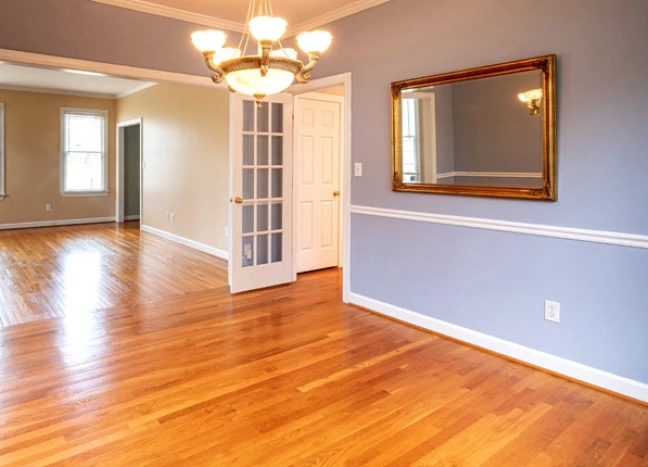
Traditional solid hardwood can exceed 100 years because its appearance is not limited to one thin printed surface. Scratches, finish wear and color changes can often be addressed through screening, recoating or full refinishing. Individual boards may also be repaired.
This does not make hardwood ideal for every bathroom or every household. Standing water and large humidity swings remain concerns. In living rooms, dining rooms, bedrooms and many kitchens, however, its ability to be renewed gives it a long-term advantage that disposable floor coverings cannot match.
Engineered Hardwood Can Be Long-Lived if the Wear Layer Is Substantial
“Engineered hardwood” describes a broad category. Some products have a substantial real-wood wear layer that can be refinished more than once. Others have such a thin top layer that sanding is not practical.
NWFA life-cycle comparisons distinguish twice-refinishable engineered wood at approximately 75 years, once-refinishable products at about 50 years and non-refinishable products at about 25 years. Those figures show why two floors that look similar in a showroom can have very different long-term value.
Ask for the wear-layer thickness, refinishing guidance and installation method rather than choosing only by color.
Laminate and Luxury Vinyl Are Practical, but They Are Usually Replacement Floors
Good laminate can resist everyday abrasion and dents, while quality luxury vinyl or rigid core can handle topical moisture better than many wood-based floors. Both can be sensible choices when budget, pets, comfort or rapid installation are the main priorities.
Their limitation in a generational remodel is repairability. Laminate cannot be sanded when the printed wear surface is damaged, and water reaching the core may cause permanent swelling. Luxury vinyl cannot be refinished after deep gouges or wear-through. Individual planks may sometimes be replaced, but matching an older production run can become difficult.
These products should not be dismissed; they simply belong in a different longevity category than solid hardwood, refinishable engineered wood, porcelain or natural stone.
Cabinets Can Last for Decades if the Boxes and Hardware Are Serviceable
A kitchen cabinet does not need to look exactly the same for 50 years to remain useful for 50 years. Durable boxes, strong joinery, replaceable hinges, quality drawer systems and protection around sinks and dishwashers matter more than a short-lived door style.
The NAHB life-expectancy study places kitchen cabinets at up to about 50 years. KCMA-certified cabinets are tested for structural strength, finish resistance and repeated door and drawer operation, including cycle testing that can reach 25,000 repetitions.
For a long-term kitchen, choose a layout that will accommodate normal appliance replacements and avoid highly specialized openings that may be difficult to reuse. Solid-wood doors can often be refinished; painted doors can be repainted; hinges and slides can be replaced. Water-damaged cabinet boxes are much harder to save, making leak detection and sink-base protection important.
Small Design Choices Can Add Years to the Remodel
- Use eased or gently rounded countertop edges in high-traffic areas instead of fragile sharp details.
- Support overhangs correctly and plan seams away from the most vulnerable locations.
- Select floor tile rated for the traffic and wet conditions of the room.
- Use movement joints, proper underlayment and complete shower waterproofing systems.
- Keep spare tile and flooring from the original production run.
- Choose cabinet hardware that can be replaced without modifying the doors or boxes.
- Favor restrained permanent surfaces and use paint, lighting and accessories for easier style changes.
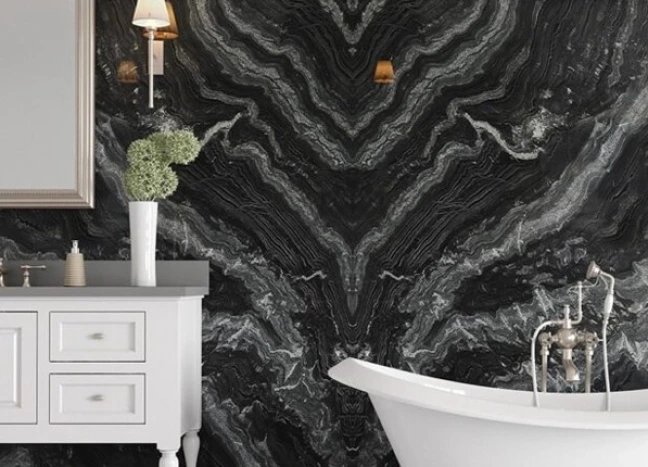
A dark veined slab or distinctive patterned tile can still be a long-term choice when it genuinely fits the architecture. The goal is not to make every room neutral. It is to avoid installing several competing trends that may make a perfectly sound remodel feel obsolete.
A Durable Room-by-Room Material Strategy
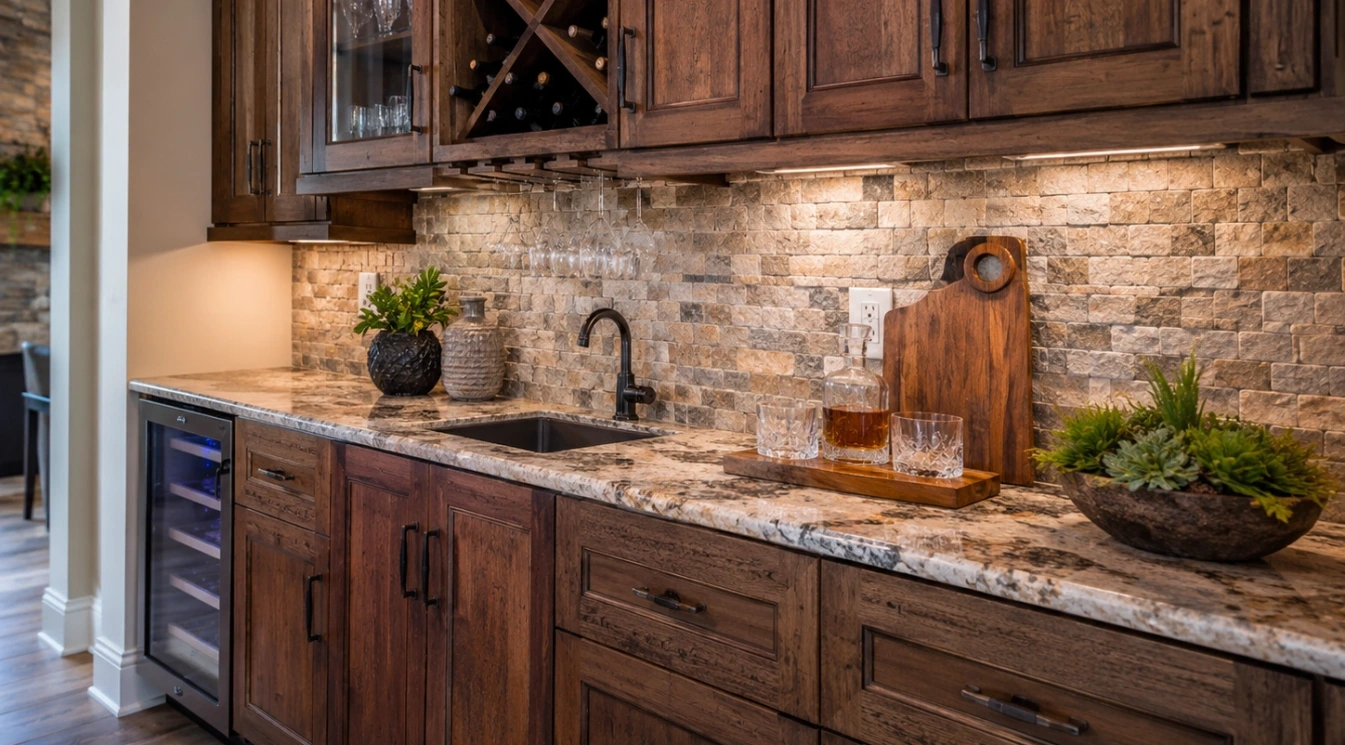
For the kitchen, a long-life combination might include granite or true quartzite counters, porcelain or ceramic backsplash tile, refinishable hardwood or porcelain flooring, and quality cabinets with serviceable hardware. Quartz is also a strong decades-long option for homeowners who value low routine maintenance and understand its heat limitations.
For bathrooms, porcelain tile is often the practical longevity leader because it handles moisture and is available for floors, walls and shower surfaces. Natural stone can last equally long when the specific stone, finish, waterproofing and maintenance plan are appropriate.
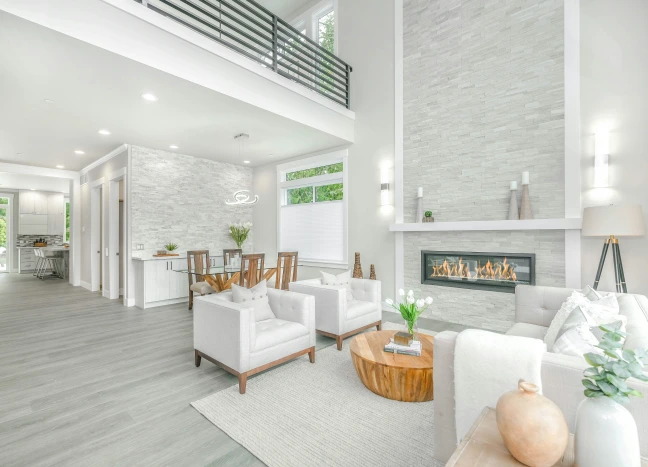
For living rooms and connected spaces, solid hardwood or refinishable engineered hardwood offers the strongest balance of warmth, repairability and future design flexibility. Porcelain tile may be the better choice where pets, water or very heavy traffic are expected.
Plan for the Next Refresh Without Planning Another Demolition
A long-lasting remodel should allow future owners to update the room without removing every major surface. Cabinet doors can be repainted, hardwood can be refinished, grout can be renewed, walls can change color and hardware can be replaced while the countertops, tile and cabinet boxes remain in service.
Domus Surfaces can help Sacramento homeowners compare slabs, countertops, tile, flooring and cabinetry as one long-term material system. Looking beyond the first few years makes it easier to choose finishes that remain functional, repairable and visually comfortable for decades rather than simply surviving until the next remodel.