Outdoor Kitchen Countertops and Patio Tile Materials for Sacramento Homes
An outdoor kitchen has to do more than look good on a sunny afternoon. It has to handle heat, shade, dust, winter rain, spilled drinks, cooking grease, patio furniture, foot traffic, and the everyday mess that comes with using the space. That makes material selection especially important. Countertops, patio tile, pavers, backsplashes, cabinet finishes, and feature walls all need to be chosen for outdoor conditions, not only for indoor-style appearance.
The strongest outdoor spaces feel connected to the home while still being built for the outside. A countertop that works beautifully indoors may not be the best choice beside a grill. A tile that looks polished in a bathroom may be too slippery or delicate for a patio. A stone that feels perfect in a showroom may need a different finish or care routine outdoors. The goal is to create an outdoor kitchen or patio area that looks intentional and holds up to real use.
Start With How the Outdoor Space Will Be Used
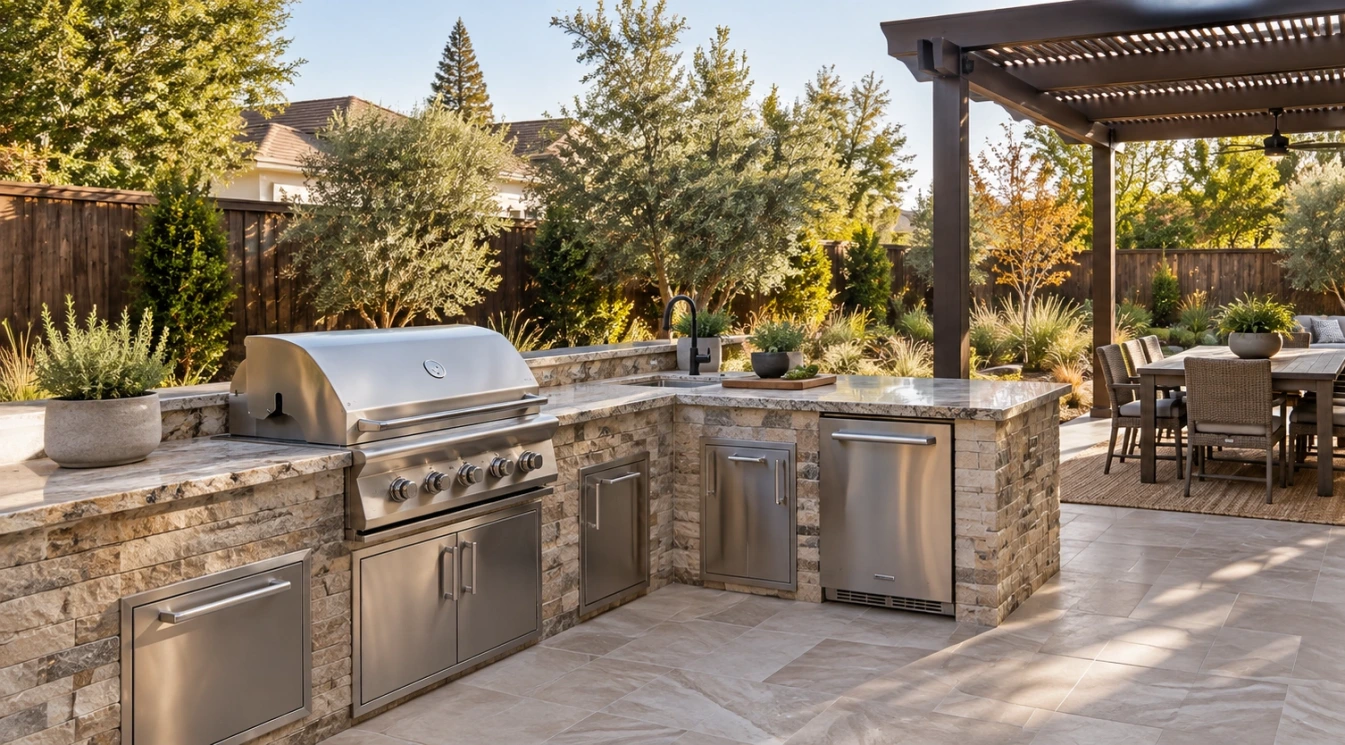
Before choosing a countertop or patio tile, think about how the space will actually function. A small grill counter needs different materials than a full outdoor kitchen with a sink, refrigerator, storage, bar seating, and dining area. A covered patio has different exposure than an uncovered cooking area. A backyard used for occasional entertaining has different needs than a family space used several evenings a week.
It also helps to separate the surfaces by job. The countertop handles cooking, prep, spills, nearby heat, serving, and cleaning. The floor handles foot traffic, furniture, water, dirt, and weather changes. The backsplash or wall surface may need to protect the area behind a grill or sink. Each surface can coordinate visually, but it should still be selected for its own role.
Outdoor Countertops Need More Than Indoor Beauty
Outdoor countertops are exposed to conditions that indoor kitchen counters do not face in the same way. Sunlight, temperature changes, moisture, cooking grease, dust, leaves, and windblown debris can all affect how a surface looks and performs. That does not mean the countertop has to look rough or utilitarian, but it does mean the material should be chosen with realistic outdoor use in mind.
Granite, quartzite, porcelain, and selected natural stones can all be considered for outdoor kitchen countertops when the exact material, finish, fabrication, and installation are appropriate. The best choice depends on the look of the home, whether the surface is covered, how often the space is used, and how much maintenance the homeowner is comfortable with.
Granite for Outdoor Kitchens
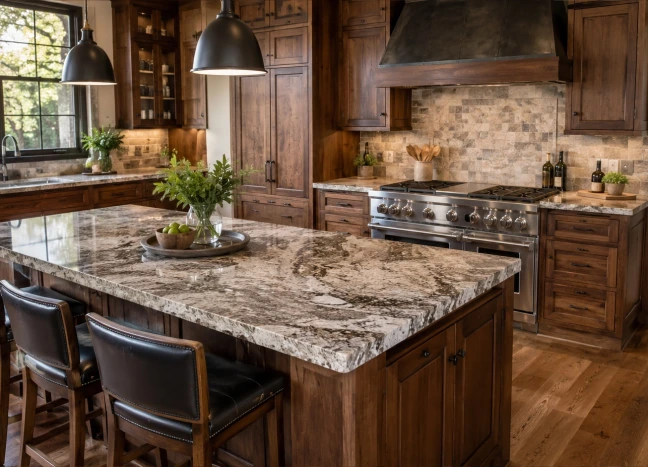
Granite can be a strong outdoor countertop option because many granites are dense, durable, and naturally varied. A darker granite can give an outdoor kitchen a grounded, substantial look. A lighter granite can keep a covered patio feeling brighter. Leathered or honed finishes may be worth considering when the homeowner wants a softer look than a high-polish indoor counter.
The exact stone still matters. Some granites are more porous or more sensitive than others, and outdoor conditions can make maintenance more important. Sealing, cleaning habits, finish selection, and exposure should all be discussed before the material is finalized. Granite is not a single universal product; the slab itself should be evaluated for the project.
Quartzite and Natural Stone for Outdoor Character
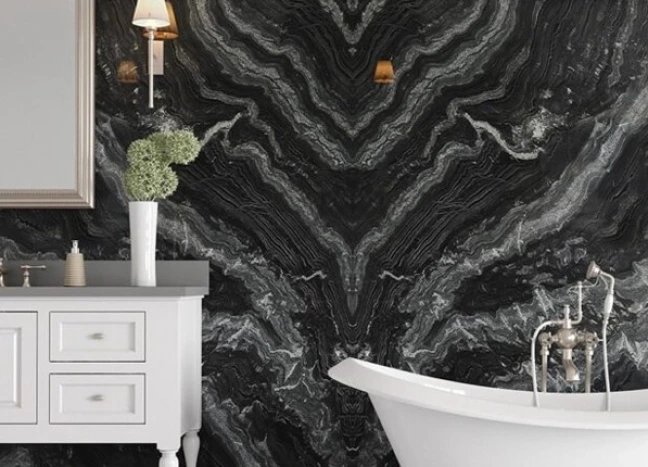
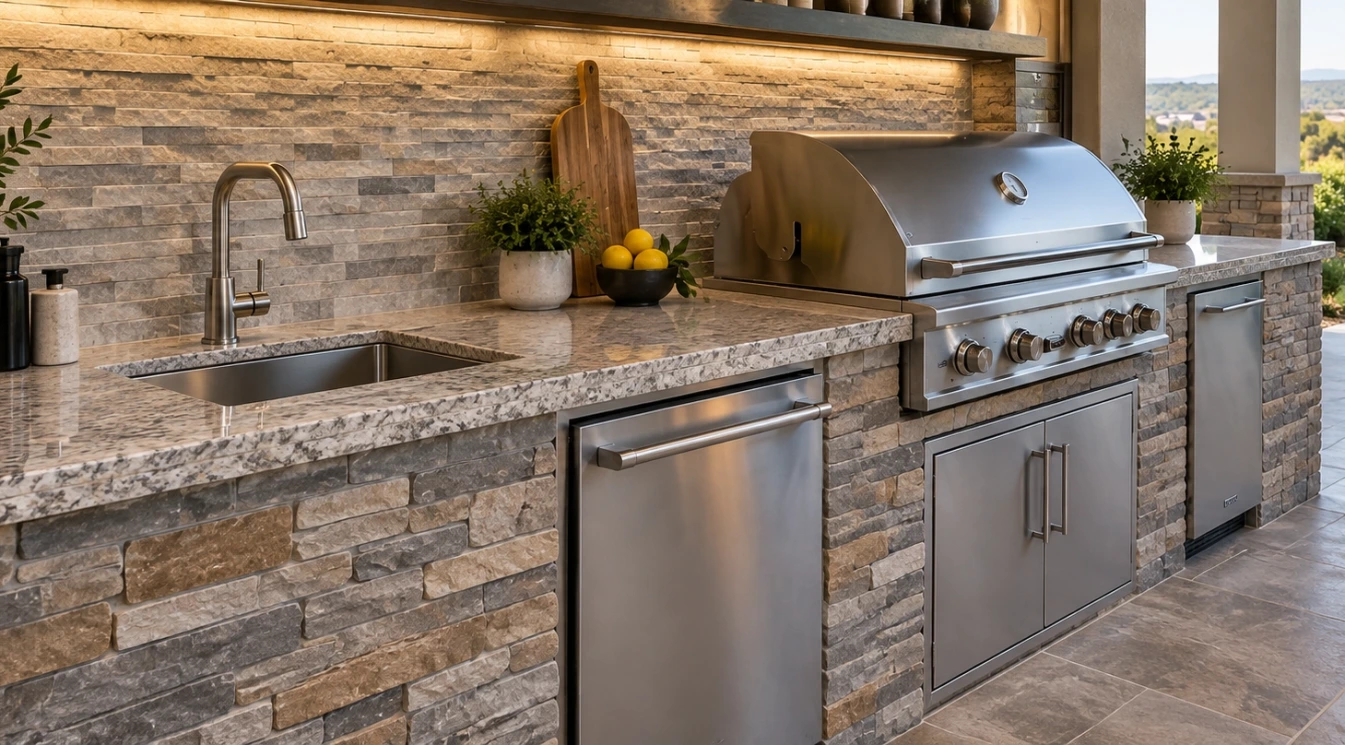
Quartzite can be attractive outdoors when the homeowner wants natural movement, depth, and a more refined stone appearance. It can look beautiful with wood accents, stucco walls, planted areas, darker metal finishes, and warm outdoor lighting. Some quartzites have dramatic veining that can make an outdoor bar or cooking counter feel more custom.
Other natural stones may also work in outdoor settings, but they need honest expectations. Limestone, travertine, slate, and similar surfaces can bring warmth and texture, but they may require more care and the right finish. Softer stones may stain, etch, weather, or absorb more than the homeowner expects. Outdoor stone should be selected for the specific exposure, not only for color.
Porcelain for Clean Outdoor Surfaces
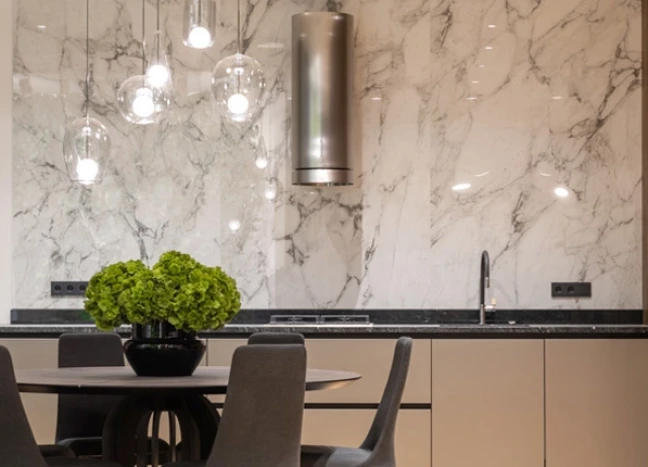
Porcelain can be useful outdoors because it offers large-format looks, stone-inspired patterns, and a more controlled appearance. Porcelain slabs may be considered for outdoor counters, vertical panels, backsplashes, or feature surfaces when the product and fabrication approach are appropriate. Porcelain pavers or outdoor-rated porcelain tile can also help create a cleaner patio surface.
The key is to choose products intended for exterior conditions and the specific use. A porcelain surface for a vertical wall does not automatically mean the same product is right for a floor or countertop. Outdoor flooring needs traction, proper installation, drainage planning, and durability under furniture and foot traffic. Countertop porcelain needs careful edge and cutout planning.
Patio Tile and Porcelain Pavers Set the Tone
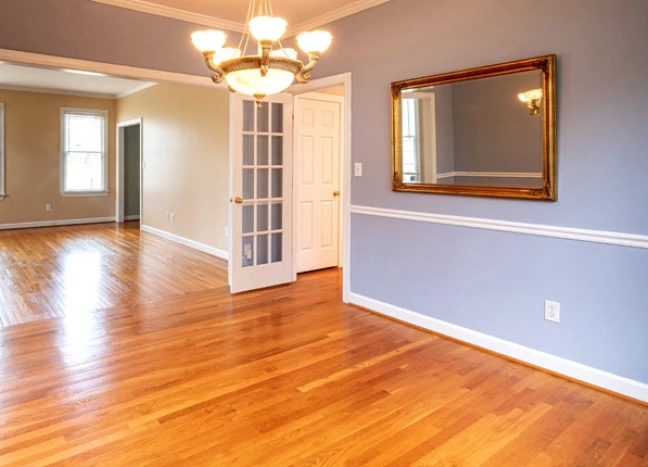
The patio floor often covers more visual area than the countertop, so it can decide whether the outdoor kitchen feels warm, modern, rustic, or heavy. Porcelain pavers, outdoor-rated porcelain tile, natural stone pavers, and stone-look surfaces can all create different moods. Large-format pavers can make the patio feel cleaner and more expansive. Smaller pieces or textured stone can add a more traditional or natural feel.
Slip resistance and drainage matter outdoors. A smooth surface that looks beautiful when dry may not feel comfortable after rain, irrigation, or pool use. Texture, finish, grout joints, slope, and installation method all affect how the patio performs. The material should look good, but it also has to feel safe and practical underfoot.
An outdoor kitchen feels finished when the surfaces are chosen not just for the first impression, but for sun, water, cooking, foot traffic, and the way people actually gather outside.
Backsplashes and Vertical Surfaces Should Not Be Forgotten
Outdoor backsplashes, grill walls, bar walls, and vertical surfaces are often what make the space feel complete. A simple stone-look porcelain panel behind a grill can make the cooking area feel like a finished outdoor kitchen. A textured tile wall can add warmth. A stacked-stone feature can connect the outdoor space to landscaping or a fire feature.
The backsplash should coordinate with the countertop without fighting it. If the countertop has strong movement, the wall surface usually needs to be calmer. If the countertop is simple, the backsplash can carry more texture. Outdoor walls also collect dust, smoke, and cooking residue, so cleanability should be part of the decision.
Covered vs Uncovered Areas Change the Material Choice
A covered patio protects materials from some direct sun and rain, but it does not make the space indoor. Heat, humidity, dust, insects, smoke, and temperature changes are still part of the environment. An uncovered area needs even more careful material planning because surfaces receive more direct exposure.
Sunlight can also affect color comfort. Very dark surfaces may absorb heat and feel uncomfortable in direct sun. Very light surfaces can reflect glare in certain conditions. A mid-tone stone, textured porcelain, or warm neutral tile may be more comfortable for everyday use than a surface chosen only for a dramatic photo.
Coordinate With the Home, Not Only the Patio
An outdoor kitchen should feel connected to the house. Exterior paint, stucco, siding, roof color, door and window frames, interior flooring visible through glass, and nearby landscaping all affect the material palette. A patio floor that clashes with the home’s exterior can make the outdoor kitchen feel added on rather than planned.
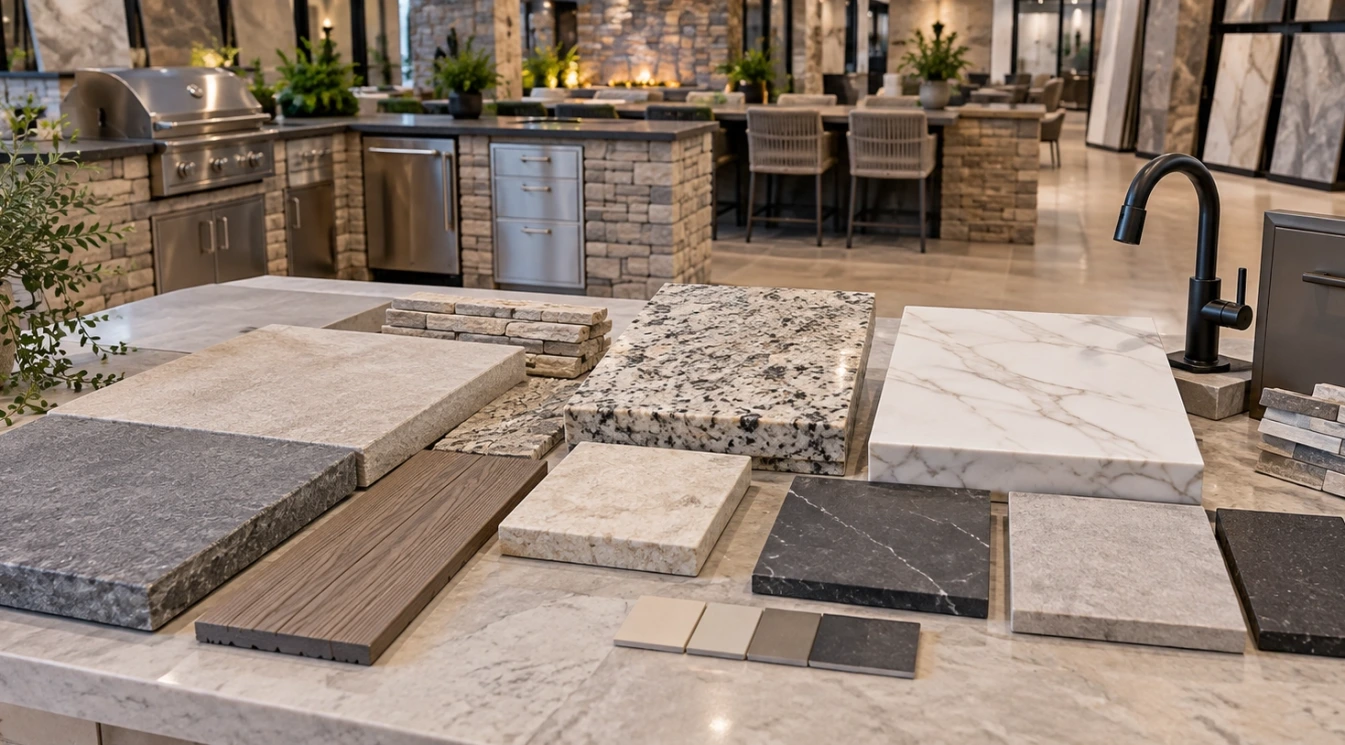
When possible, compare outdoor countertop and tile samples with the home exterior in natural light. A material that looks gray in a showroom may look blue outdoors. A beige paver may turn yellow next to the stucco. A bright white counter may feel too reflective in the afternoon. Outdoor light is less forgiving than indoor lighting.
Think About Edges, Overhangs, and Support
Outdoor countertops need proper support, especially around grills, sinks, bars, corners, and overhangs. A beautiful slab can still look wrong if the edge profile is too delicate, the overhang feels unsupported, or the counter does not align with the cabinet structure below. Outdoor cabinetry, masonry, framing, and appliances all affect the surface plan.
Edge details also change the style. A thicker mitered edge can make an outdoor bar feel substantial. A simple eased edge can keep the space cleaner and more modern. A textured stone edge may work in a rustic setting. The edge should fit the material and the way the counter will be used.
Do Not Ignore Cleaning and Maintenance
Outdoor surfaces get dirty in different ways than indoor surfaces. Pollen, dust, leaves, rain spots, grill smoke, oil, food spills, sunscreen, and pet traffic can all show up on counters and floors. Some materials need sealing. Some need specific cleaners. Some finishes hide dust better than others.
Maintenance should be discussed before the final selection. A surface that requires careful care may still be worth it if the homeowner loves the look and understands the routine. A lower-maintenance surface may be better for a busy family or a patio that sees frequent use. The best material is the one the homeowner will still enjoy after it has been lived with, cleaned, and used.
Material Combinations That Usually Work Well
Strong outdoor designs usually keep the palette connected but not overly matched. A granite countertop with porcelain pavers can feel durable and practical. A quartzite counter with warm stone-look tile can feel refined and natural. A porcelain slab backsplash with a simple outdoor counter can create a cleaner modern cooking wall.
- Granite countertop with porcelain pavers: practical for many outdoor kitchen layouts.
- Quartzite counter with warm neutral patio tile: good when the goal is natural movement and a softer outdoor palette.
- Porcelain slab backsplash with simple counters: useful for a clean modern grill wall.
- Stone-look porcelain with wood or dark metal accents: strong for contemporary covered patios.
- Textured natural stone with quiet countertops: best when the patio should feel rustic or organic.
Choose Outdoor Materials as a Complete System
An outdoor kitchen or patio should not be planned one surface at a time. The countertop, floor, backsplash, grill wall, cabinet finish, lighting, seating, and surrounding landscape all work together. When those pieces are selected separately, the space can feel patched together. When they are compared as a system, the outdoor area feels more finished and easier to use.
Domus Surfaces can help Sacramento homeowners compare outdoor kitchen countertops, porcelain pavers, patio tile, natural stone, porcelain slabs, and related surfaces so the finished space feels connected to the home. Outdoor materials have to look good, but they also need to understand heat, water, food, dirt, and the way people gather outside.