Bathroom Vanity Countertops: Quartz, Granite, Quartzite, Marble, and Porcelain Compared
A bathroom vanity countertop has a different job than a kitchen counter. It may not see cutting boards, heavy pans, or daily meal prep, but it does live with water, toothpaste, cosmetics, shaving products, hair tools, soap, cleaning sprays, and humidity. It also sits directly below the mirror, which means the surface is seen up close every day.
That makes material selection more personal than many homeowners expect. A vanity top has to look good with the cabinet, wall tile, floor tile, mirror, lighting, faucet finish, and shower surfaces. It also has to match the way the bathroom is used. A powder room can handle a more delicate showpiece. A busy primary bathroom or children’s bathroom usually needs a more forgiving surface.
Start With How the Bathroom Is Used
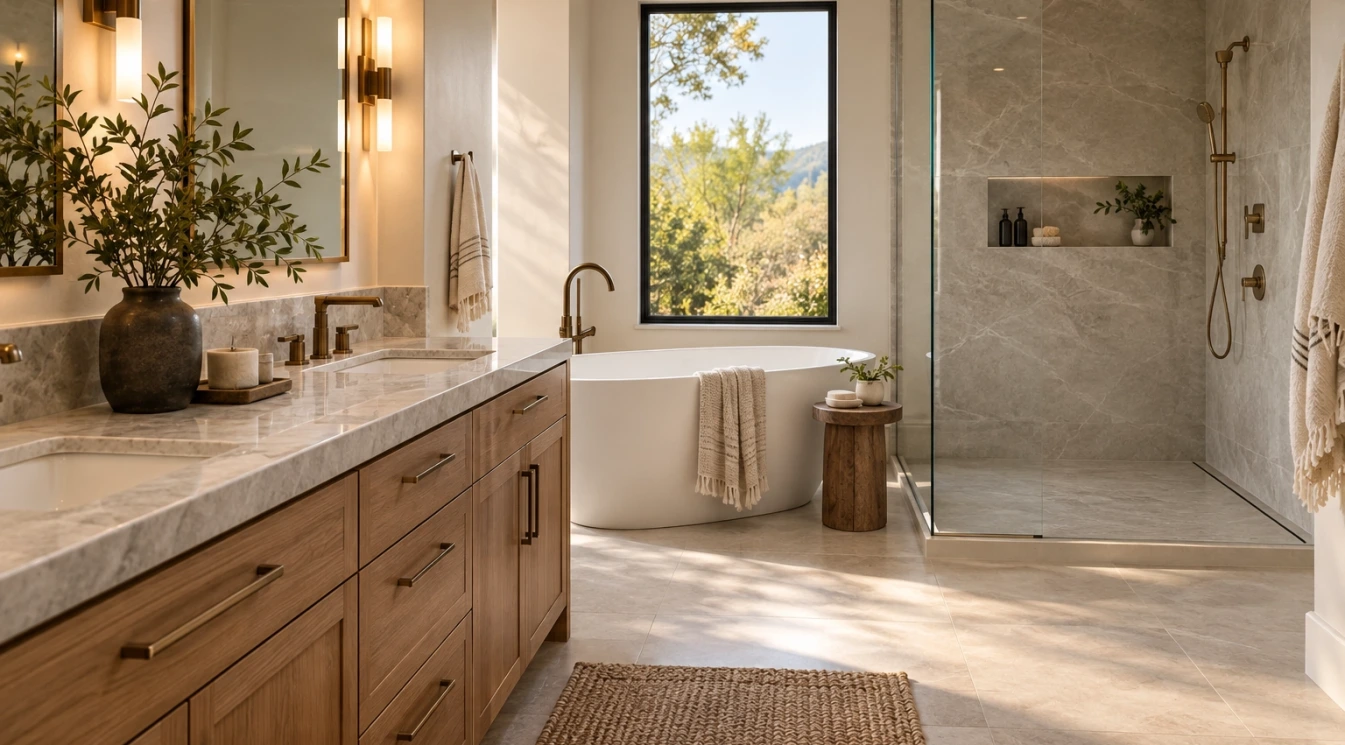
Before comparing quartz, granite, quartzite, marble, or porcelain, think about the room itself. A guest powder room may be used lightly and can support a more dramatic or delicate material. A shared family bathroom needs a surface that handles splashes, toothpaste, soap residue, dropped bottles, and rushed cleaning. A primary bathroom may need to feel calm and refined, but still perform well every morning and night.
The sink layout matters too. A single undermount sink leaves more open counter space. A double vanity creates longer runs where slab movement and seams become more visible. Vessel sinks can make the countertop more decorative, but they also change how water lands on the surface. The right material should fit both the design and the way people actually use the vanity.
Quartz Vanity Countertops: Consistent, Clean, and Easy to Coordinate
Quartz is one of the most practical vanity choices because it gives homeowners a controlled look with a relatively simple care routine. It is engineered to provide consistent color and pattern, so it works well when the bathroom needs a clean white, soft cream, warm gray, concrete look, or marble-inspired surface without the unpredictability of natural stone.
Quartz can be especially useful in bathrooms with painted cabinets, modern tile, or a specific color palette. A homeowner can choose a quiet surface for a spa-like bathroom or a stronger veined quartz for a more finished vanity wall. Since quartz does not need sealing in the same way many natural stones do, it is often attractive for busy bathrooms.
Quartz still needs reasonable care. Harsh chemicals, abrasive pads, and extreme heat from styling tools should be avoided. It is durable, but it should not be treated as indestructible. For many homes, though, quartz offers one of the best combinations of appearance, predictability, and daily practicality.
Granite Vanity Countertops: Natural Character With Strong Everyday Performance
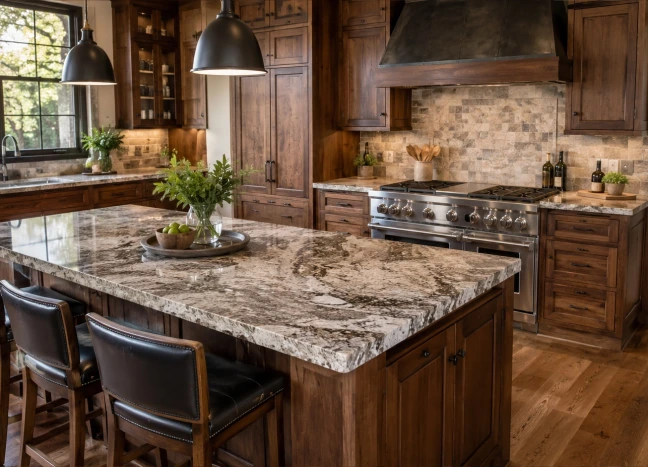
Granite can be a strong bathroom choice when the homeowner wants natural stone character without choosing a material as delicate as marble. It comes in a wide range of colors, from quiet whites and grays to deeper blacks, browns, creams, and dramatic mineral patterns. Each slab has its own movement, which can make even a smaller vanity feel more custom.
In bathrooms, granite often works well with stained wood vanities, traditional cabinet profiles, dark fixtures, and earthy tile palettes. A polished granite can bring depth and reflection. A more muted finish can feel softer and less formal. The key is to choose a slab that works with the bathroom’s tile and lighting, not just one that looks good in isolation.
Many granites benefit from sealing, and the care requirements can vary by stone. That should be part of the selection conversation. Granite is often forgiving in daily use, but makeup, oils, cleaners, and standing water should still be wiped up rather than ignored.
Quartzite Vanity Countertops: Elegant Movement and Natural Depth
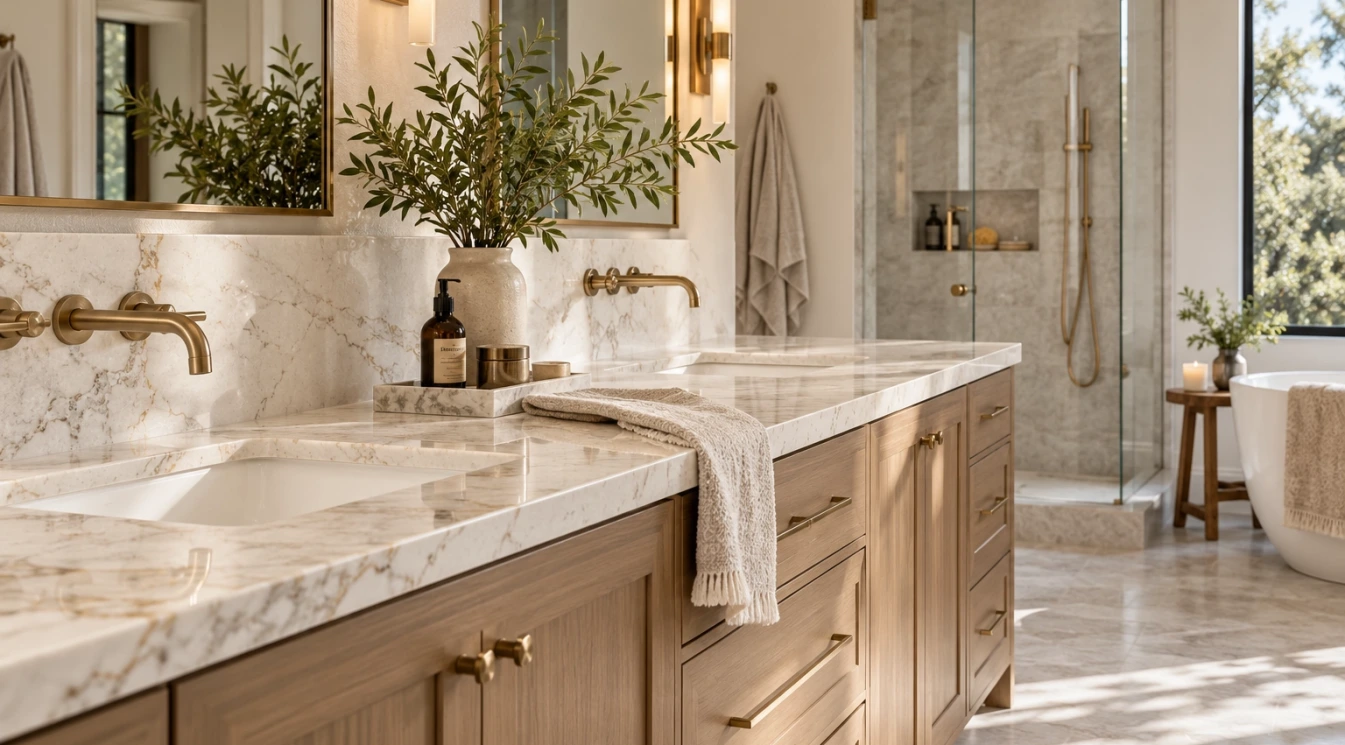
Quartzite is often chosen when a homeowner wants natural stone movement with a refined, premium appearance. Many quartzites have soft veining, layered color, and a sense of depth that can make a vanity feel more substantial. In a primary bathroom, quartzite can pair beautifully with warm cabinets, porcelain tile, natural stone tile, or brass and bronze fixtures.
Because quartzite is natural stone, every slab should be viewed in person when possible. Some quartzites are quiet and creamy. Others have dramatic movement, crystalline areas, or strong color shifts. A small sample may not show how the full slab will look across a long double vanity or up a matching backsplash.
Quartzite also needs honest care expectations. It is usually selected for durability and natural beauty, but it is still a stone surface. Sealing, appropriate cleaning products, and good habits matter. The best result comes from matching the exact slab to the bathroom, not choosing the name alone.
Marble Vanity Countertops: Beautiful, Classic, and More Sensitive
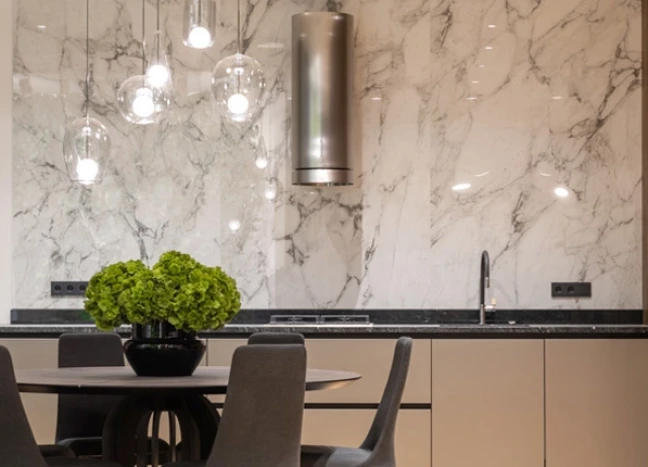
Marble has a softness and elegance that many manufactured surfaces try to imitate. It can make a powder room, guest bath, or traditional primary bathroom feel graceful and established. White marble, gray marble, warm beige marble, and richly colored marble can all create a memorable vanity.
The caution is that marble changes with use. It can etch from acidic products, react to certain cleaners, absorb stains if not cared for properly, and develop a patina over time. Some homeowners love that natural aging. Others expect the surface to stay perfect and become frustrated when it does not.
Marble can be a wonderful choice when the homeowner understands the tradeoff. It is often better suited to powder rooms, adult bathrooms, or spaces where beauty and character matter more than the easiest possible maintenance routine.
Porcelain Vanity Countertops: Clean Lines and Modern Surface Options
Porcelain slabs can work well in modern bathrooms, especially when the design calls for a clean, large-format look. Porcelain can mimic marble, stone, concrete, or softer neutral surfaces while coordinating with porcelain shower walls or floor tile. It can also help create a more continuous bathroom design when the same visual language appears in several areas.
The most important porcelain consideration is fabrication. Edges, sink cutouts, thickness, mitered details, and installation quality can affect the finished result. Porcelain can look sleek and refined, but it should be handled by people who understand the material. It is not simply a direct substitute for every stone or quartz application.
For bathrooms, porcelain is worth considering when the homeowner wants a crisp modern look, a coordinated tile-and-vanity plan, or a surface that feels visually light. As with any material, the exact product and installer matter.
A bathroom vanity surface should not only look beautiful under showroom lights; it should hold its composure through water, mirrors, daily routines, and the quiet details of the room around it.
Think About the Backsplash Before the Slab Is Final
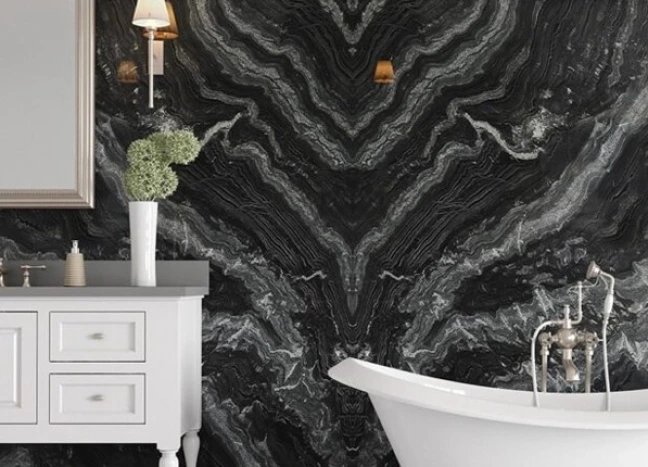
Bathroom vanity backsplashes are small compared with kitchen backsplashes, but they still change the look of the countertop. A short matching backsplash can protect the wall while keeping the design simple. A full-height slab backsplash behind the vanity can feel more polished and custom, especially when paired with wall-mounted faucets or large mirrors.
Tile behind the vanity creates a different effect. It can add texture, soften a clean quartz top, or connect the vanity to the shower tile. The main risk is combining too many active surfaces. If the countertop has strong veining, the wall tile should usually be quieter. If the countertop is calm, the backsplash can carry more texture or pattern.
Cabinet Color Changes How the Countertop Reads
White cabinets can make a bathroom feel bright and clean, but they also make countertop undertones more obvious. A warm white cabinet beside a cool gray countertop may look mismatched. A creamy vanity may need a warmer quartz, marble, or natural stone to feel intentional.
Wood vanities usually work best when the countertop respects the warmth of the grain. White oak, walnut, maple, and darker stains each respond differently to white, cream, gray, and beige surfaces. A soft warm stone look can make wood feel calm and natural, while a sharper gray surface can make the cabinet color appear more yellow or orange.
Dark vanities can look elegant with light countertops, especially in powder rooms or primary bathrooms with good lighting. A dark cabinet with a white or cream stone top creates contrast and keeps the room from feeling too heavy. A dark countertop on a dark cabinet can work, but it needs careful lighting and wall color.
Do Not Ignore Edge Profiles and Sink Details
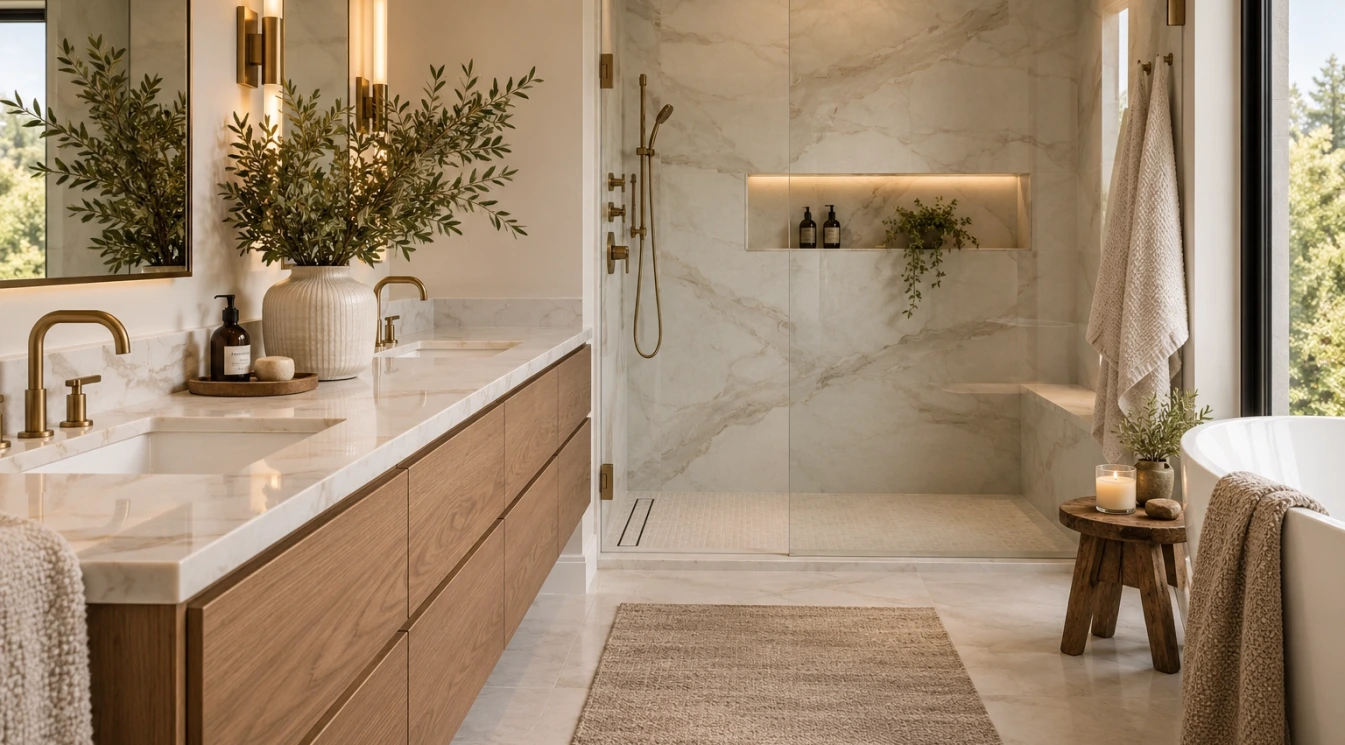
On a bathroom vanity, small details are close to the eye. Edge thickness, corner radius, sink cutout, faucet placement, and backsplash height all affect the final appearance. A simple eased edge can keep the vanity clean and modern. A thicker mitered edge can make the surface feel more substantial. A decorative edge may suit a more traditional bathroom, but it can look heavy in a small space.
Undermount sinks are common because they keep the counter easy to wipe. Integrated or vessel sinks can create a stronger design statement, but they should be chosen with the countertop material and cleaning habits in mind. A beautiful sink that makes the counter harder to use may not be the best long-term choice.
Lighting Can Change the Material Dramatically
Bathroom lighting is usually close to the vanity, so it can exaggerate shine, shadow, and undertone. Warm sconces can make beige, cream, and gold veining feel richer. Cool lighting can make white and gray surfaces feel cleaner, but it can also make some bathrooms feel harsh. Natural light from a window can reveal veining and color shifts that are less visible in a showroom.
View samples under the type of light the bathroom will actually have. If the vanity will sit below warm brass sconces, test the surface with warm light. If the room has bright daylight, check how the slab looks near a window. A countertop chosen under one lighting condition may feel different once installed.
Which Vanity Countertop Material Is the Best Fit?
- Quartz: best for consistent color, easy coordination, and a straightforward care routine.
- Granite: best for natural variation, strong character, and a durable stone look.
- Quartzite: best for refined natural movement and a more premium slab appearance.
- Marble: best for homeowners who value classic beauty and accept patina over time.
- Porcelain: best for clean modern bathrooms, large-format looks, and coordinated tile surfaces.
Choose the Vanity Top With the Whole Bathroom in Mind
A bathroom vanity countertop should not be chosen as a separate object. It should be compared with the cabinet finish, floor tile, shower walls, mirror shape, faucet finish, wall color, and the amount of light in the room. The right surface makes those other decisions feel more complete.
Domus Surfaces can help Sacramento homeowners compare quartz, granite, quartzite, marble, porcelain, tile, flooring, and cabinets in one place so the bathroom feels coordinated from the vanity to the shower. The best vanity countertop is not just the one that looks impressive on a sample rack. It is the one that belongs in the room.