Waterfall Countertops and Islands: Pros, Cons, Materials and Design Ideas
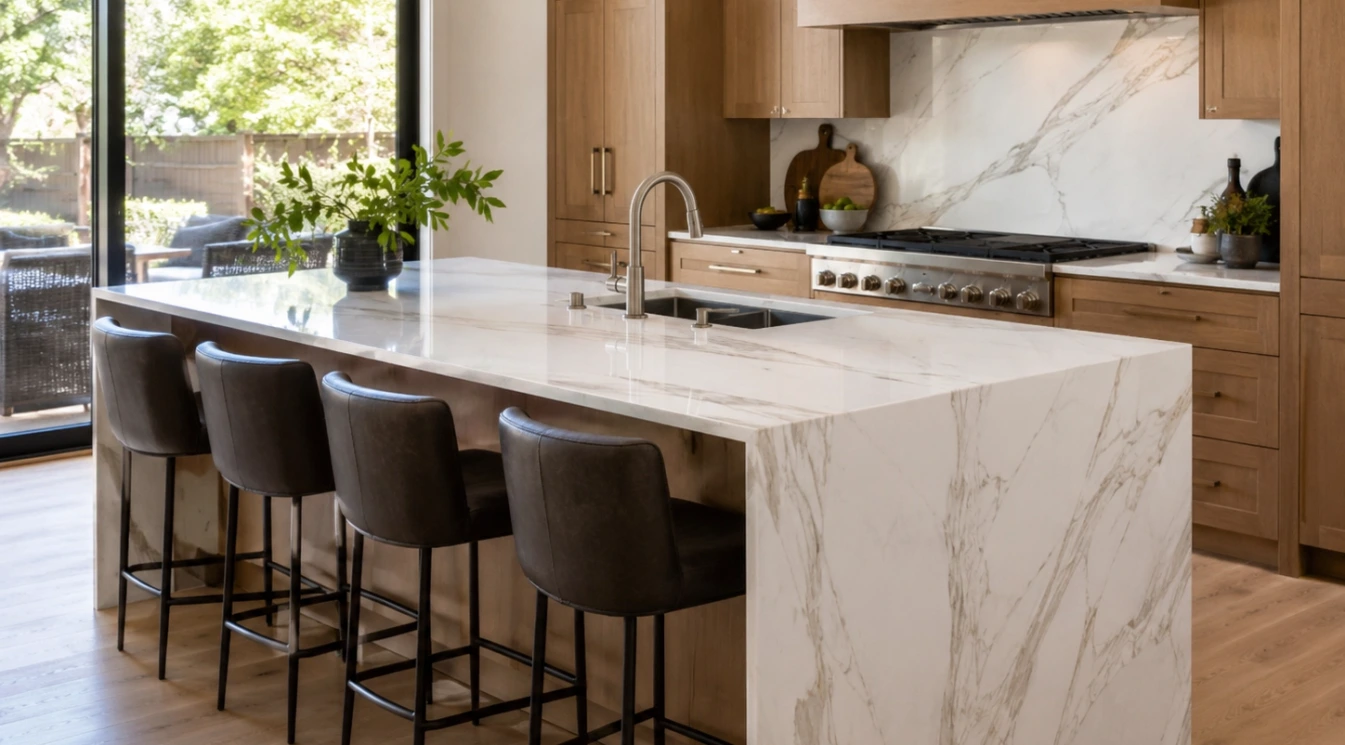
A waterfall countertop continues over the edge of an island or cabinet and runs vertically toward the floor. Instead of ending with a standard finished edge, the surface drops down the side and turns the countertop material into a larger architectural feature.
The look can be clean and minimal or dramatic and luxurious, depending on the material. It also requires more planning than a conventional countertop. Slab quantity, vein direction, corner fabrication, seating, cabinetry, outlets, and appliance placement all affect whether the finished island feels refined or unnecessarily heavy.
Why Waterfall Islands Make a Strong Statement
A standard island separates the countertop from the cabinet below. A waterfall end visually connects them with one continuous plane. This can make the island feel more substantial and allows the stone or quartz pattern to be seen from adjoining rooms.
In an open-concept home, the side of an island may be one of the first surfaces visible from the entry or living area. Extending the countertop down that side creates a finished focal point rather than leaving a plain cabinet panel exposed.
Quartz, Quartzite, Granite, or Porcelain?
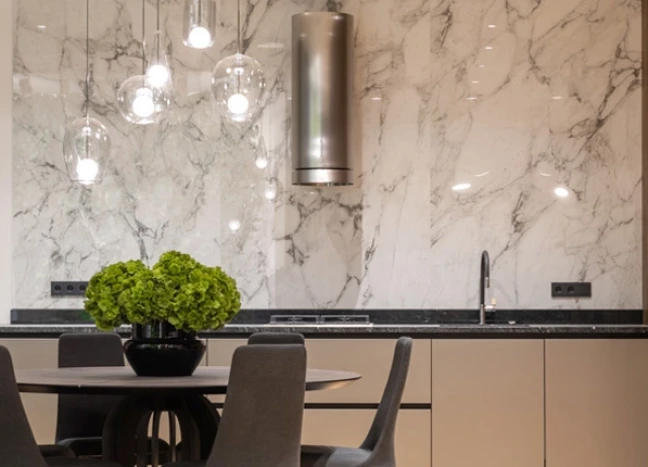
Quartz is popular for waterfall islands because consistent patterns can make matching adjoining pieces more predictable. Subtle marble-look quartz creates a clean continuous effect, while bolder designs can make the island the center of the room.
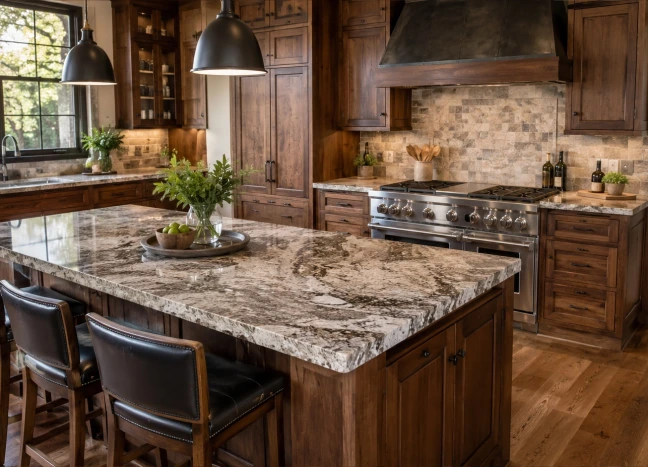
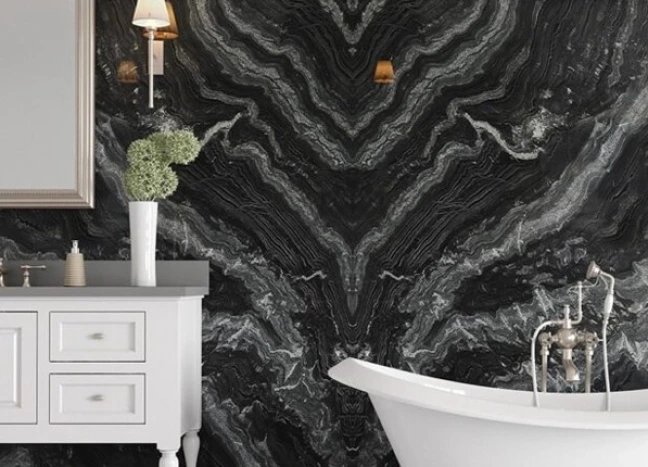
Quartzite and granite provide natural variation that cannot be duplicated. A carefully planned waterfall can display long veins, crystals, and movement across the top and vertical end. Because each slab is unique, layout and photography before cutting become especially important.
Porcelain and other large-format surfaces can also be considered, depending on the product, application, fabrication system, and installer experience. The best material is the one that supports both the design and practical requirements of the kitchen.
Vein Direction and Pattern Continuity
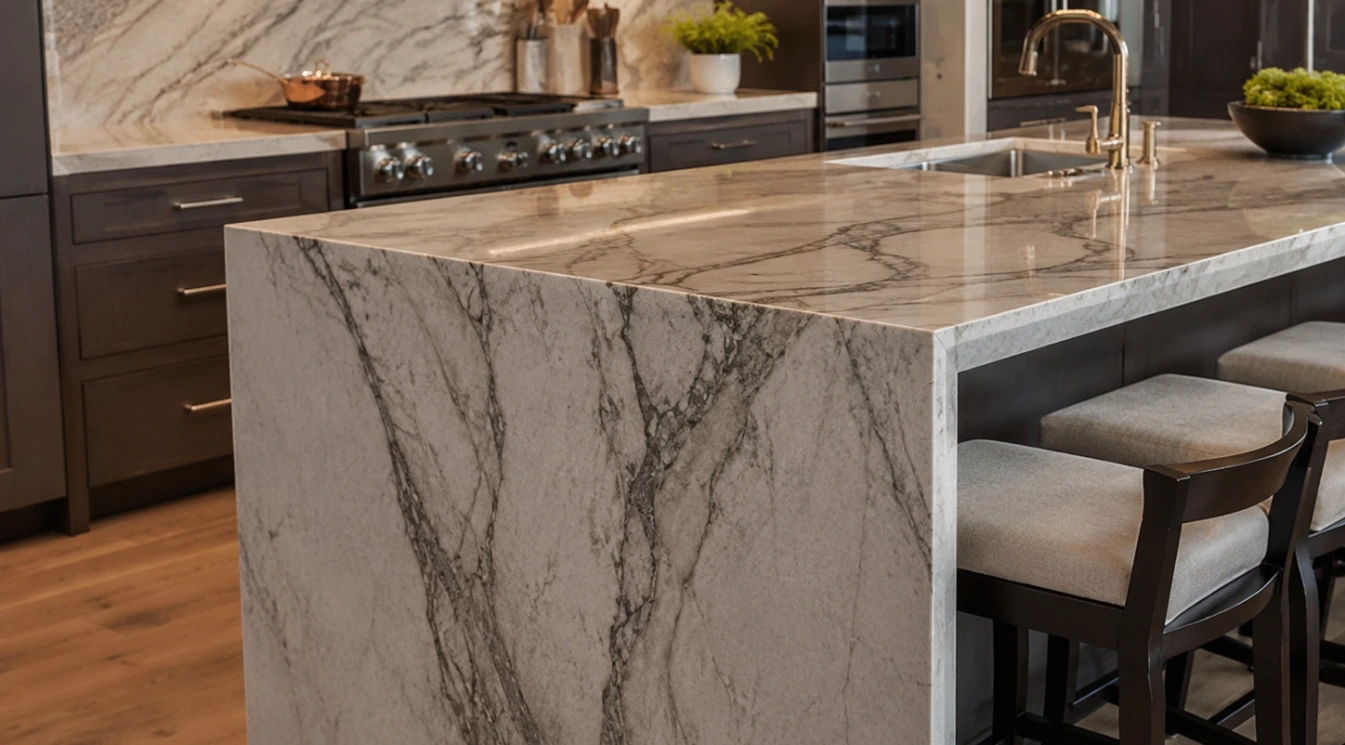
The most convincing waterfall countertops appear to continue naturally over the edge. Fabricators often plan the cuts so a vein near the end of the horizontal piece aligns with the vertical panel. Perfect continuity is not always possible, but thoughtful slab layout can make the transition feel intentional.
With natural stone, this planning may influence which areas of the slab are used for the island, sink cutout, perimeter counters, or backsplash. A dramatic vein that looks ideal across the top may not align well at the drop unless the full fabrication map is considered in advance.
A waterfall edge should make the stone appear to flow, not simply stop.
Mitered Corners and Visual Thickness
Many waterfall installations use a mitered corner, where the top and side pieces meet at an angled joint. This can create the appearance of a thick continuous surface while helping the pattern move around the edge.
The quality of the miter, reinforcement, seam, color match, and installation is important because the corner becomes a prominent detail. Visual thickness should also match the scale of the island. A very substantial edge can feel luxurious in a large kitchen but may overpower a compact space.
What Affects the Cost of a Waterfall Countertop?
A waterfall design uses more material than a standard countertop and may require an additional slab. The final price is also affected by pattern matching, fabrication complexity, mitered edges, transport, support, site access, and the number of finished ends.
Using the treatment on one highly visible end can create much of the visual effect with less material than wrapping both sides. The right approach depends on room layout, seating, cabinetry, and which side is seen most often.
Practical Details That Need Early Planning
Island seating should be considered before deciding where the material will drop. A waterfall panel can close one end and reduce available knee space. Outlets, switches, appliance panels, cabinet doors, and floor transitions may also affect the design.
The vertical surface is durable, but an exposed outside corner can still be struck by chairs, carts, or heavy objects. The edge position and traffic flow should make sense for the household rather than being chosen from inspiration photographs alone.
When a Waterfall Countertop Works Best
The design is especially effective when the island is visible from several rooms, when the slab has movement worth displaying, or when the kitchen uses clean lines and limited ornament. It can also conceal the side of cabinetry and give the island a more furniture-like presence.
A conventional cabinet end may be better when the kitchen is compact, highly traditional, or already contains several bold materials. In some rooms, the countertop pattern deserves attention on the horizontal surface without continuing to the floor.
How to Keep the Design Balanced
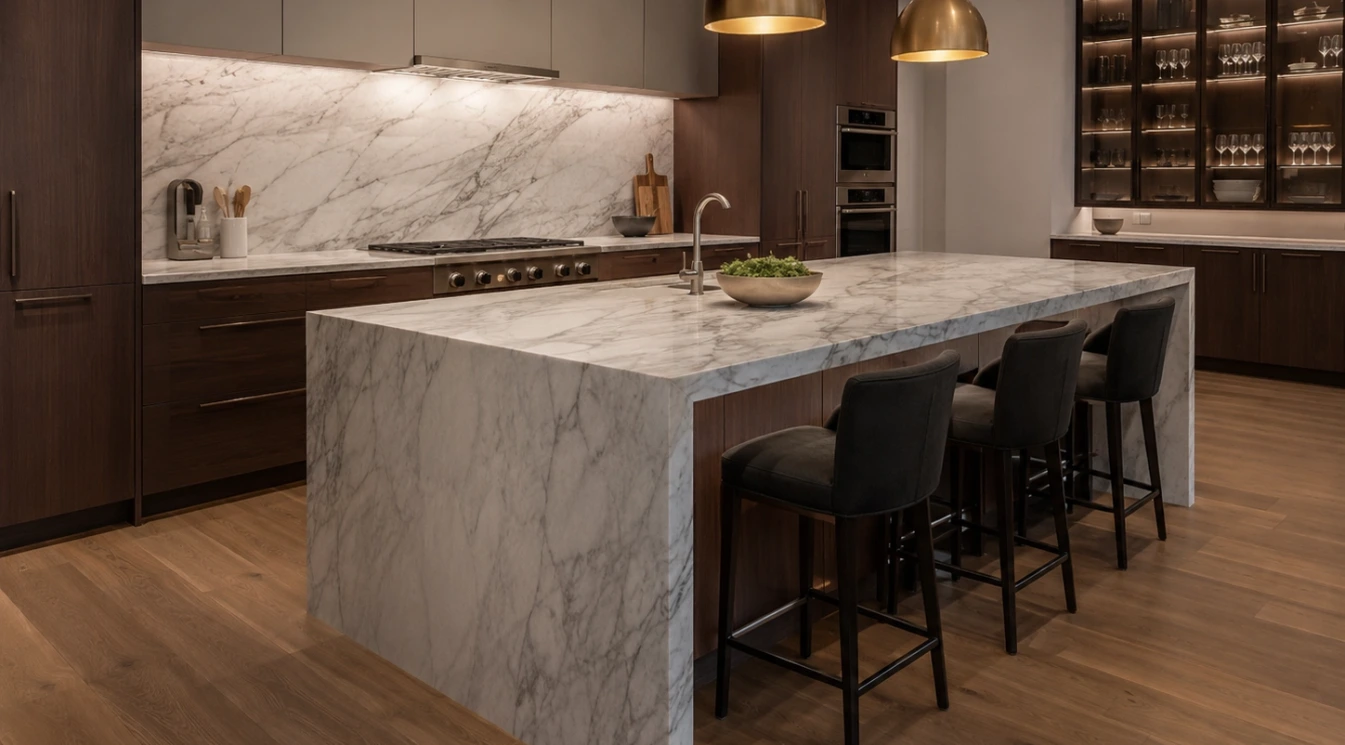
A waterfall island naturally draws attention, so the backsplash, flooring, cabinets, and lighting should support it. If the stone has strong movement, quieter finishes around it can prevent the room from becoming visually crowded.
With a subtle surface, the waterfall shape itself may provide enough interest. Warm wood cabinets can soften a bright white quartz, while painted cabinetry can frame a richly patterned quartzite or granite.
Plan the Waterfall Before Choosing the Slab
It is easier to select the right slab when the fabricator already knows a waterfall is planned. Usable slab dimensions, vein direction, island size, sink or cooktop cutouts, and the number of finished ends can all influence material selection.
Bring accurate measurements and inspiration photos when comparing surfaces. Ask to review the slab layout before cutting, especially when natural veining is central to the design.
Explore Waterfall Countertops in Sacramento
Domus Surfaces offers quartz, quartzite, granite, marble, porcelain, and other countertop and slab materials for kitchen islands and custom surfaces. Comparing full slabs in person makes it easier to evaluate scale, movement, finish, and whether the pattern will support a waterfall design.
A waterfall countertop can be a beautiful investment when it belongs in the room and is planned from the beginning. The strongest designs feel integrated with the kitchen rather than added simply because the feature is popular.