Slab Backsplash vs Tile Backsplash: Which Is Better for Your Kitchen?
A backsplash may cover less space than the cabinets or countertops, yet it can completely change the character of a kitchen. A full-height slab creates a continuous architectural surface, while tile introduces pattern, texture, scale, and a wider range of design directions.
Both approaches can look beautiful. The better choice depends on the countertop, cabinet style, cooking area, maintenance expectations, budget, and how much visual activity the room can comfortably support.
What Is a Slab Backsplash?
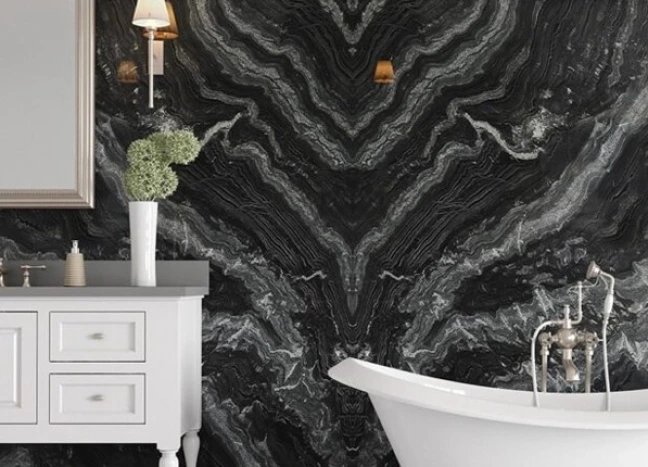
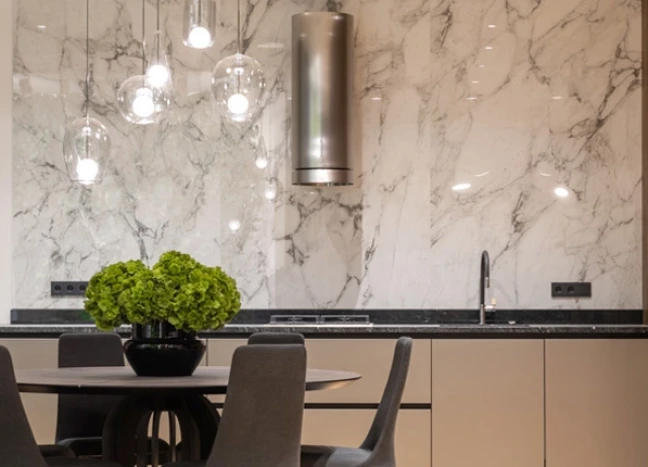
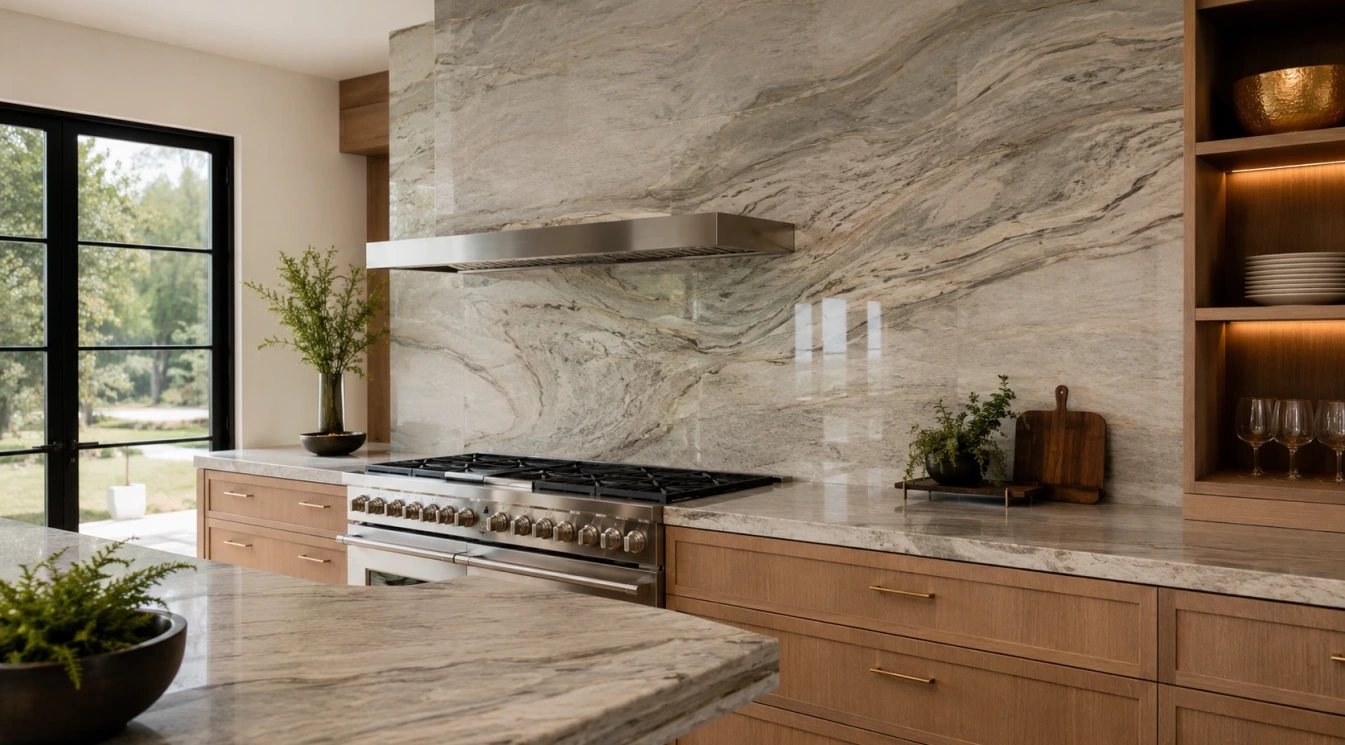
A slab backsplash uses a large piece of quartz, quartzite, granite, marble, porcelain, or another suitable surface material instead of rows of individual tile. It may fill the area between the countertop and upper cabinets or continue to the ceiling for a more dramatic full-height backsplash.
Using the same material on the countertop and wall creates continuity. The eye follows the color and movement upward without being interrupted by a grid of grout lines. This can make the kitchen feel polished, spacious, and custom.
Why Homeowners Choose a Tile Backsplash
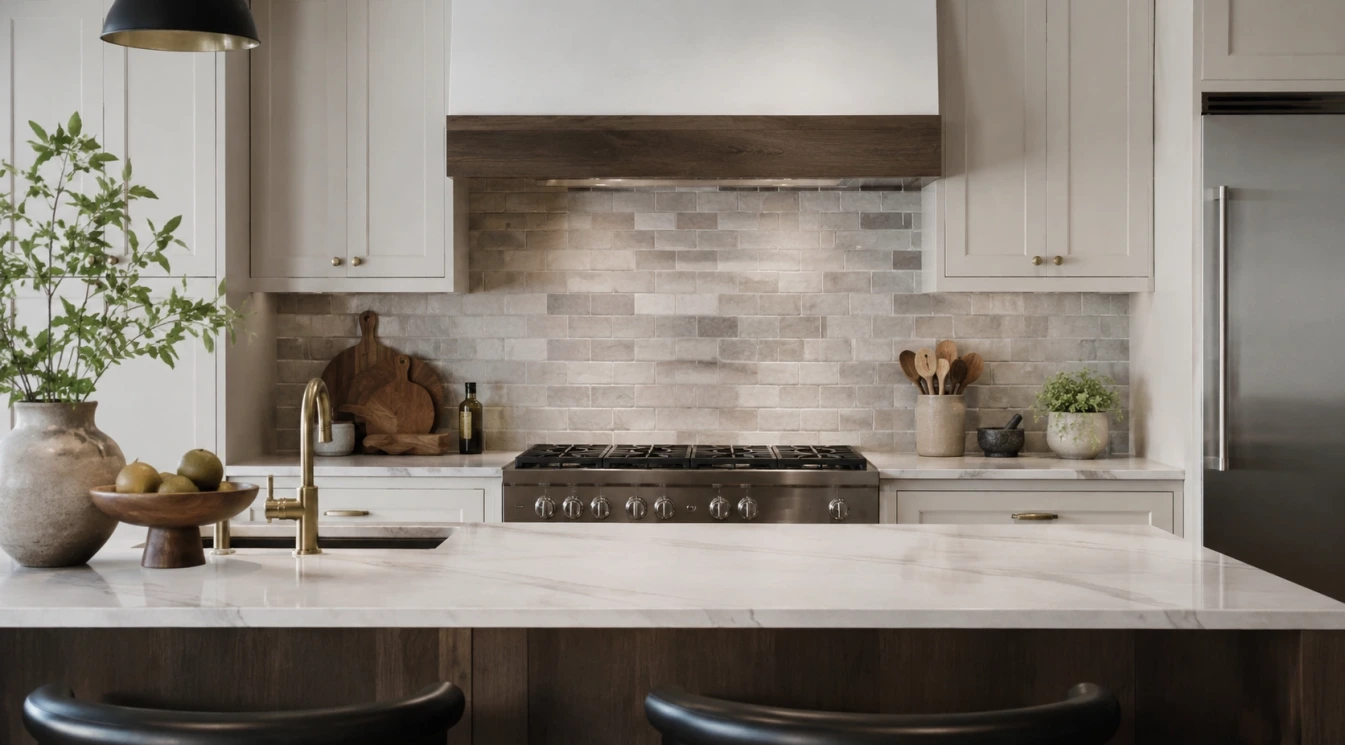
Tile provides far more variation in shape, texture, color, pattern, and layout. A quiet handmade-look ceramic tile can soften a modern kitchen, while a mosaic, geometric pattern, or natural stone tile can create a clear focal point.
Tile also allows the backsplash to have its own identity instead of repeating the countertop. This is useful when the counters are simple and the room needs another layer of interest. Tile can also make later design changes more approachable because a backsplash can often be replaced without changing the countertop.
The best backsplash completes the countertop instead of competing with it.
Cleaning, Grout, and Everyday Maintenance
A slab backsplash has very few joints, making splashes and cooking residue easier to wipe away across most of the surface. There may still be seams, perimeter joints, and transitions around outlets or corners, but the overall appearance remains more continuous.
Tile introduces grout lines, and the amount depends on tile size and layout. Larger tile reduces the number of joints, while mosaics create more. Modern grout products and sealers can make upkeep easier, but grout color and product type should be selected with cooking and cleaning in mind.
The material matters as much as the format. Natural stone may require sealing and stone-safe cleaners. Glazed ceramic and porcelain are often straightforward to maintain. A quartz backsplash should be installed according to the manufacturer's requirements, particularly near high-heat cooking appliances.
How the Countertop Pattern Affects the Choice
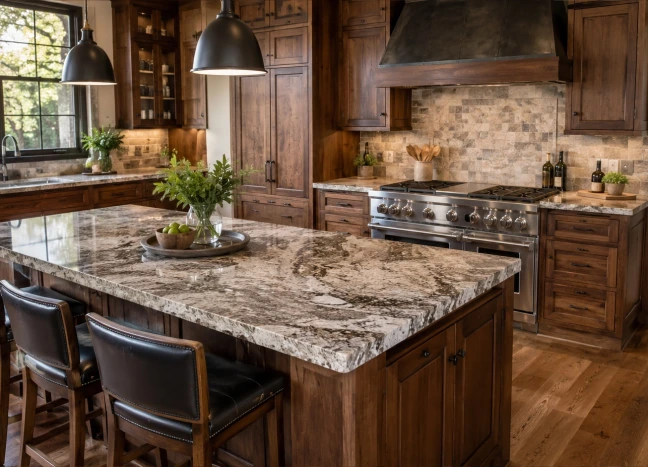
A dramatic countertop already carries a strong visual message. Extending that material up the wall can create a striking composition, especially when the vein direction is planned carefully. In other kitchens, repeating a bold slab across every vertical surface may feel too heavy.
When the countertop has strong movement, a quieter tile can provide balance. When the countertop is solid or softly patterned, a textured or decorative backsplash can add personality. Samples should be viewed together because two attractive materials can still compete when placed side by side.
Cost Is More Than the Material Price
A slab backsplash may require additional slab material, templating, fabrication, pattern planning, transport, and careful installation. The amount of usable material can increase when the design calls for specific veining or continuity between the countertop and wall.
Tile ranges from accessible ceramic designs to handmade, glass, mosaic, porcelain, and natural stone collections. Labor can increase with intricate patterns, small pieces, difficult cuts, or extensive wall preparation. A modestly priced tile is not always the least expensive finished installation, just as a slab backsplash is not always beyond reach.
Slab and Tile Behind a Range
The wall behind a range is often the most visible and heavily used part of the backsplash. A slab can look impressive here, but the selected material must be appropriate for the appliance and installation conditions. Heat exposure, clearances, wall construction, seams, and the surface manufacturer's requirements should be reviewed before fabrication.
Tile remains a flexible option behind cooking areas because many porcelain, ceramic, and natural stone products are suitable for this application. Proper substrate, grout, sealant, and installation details still matter.
Which Choice Fits Your Kitchen Style?
Slab backsplashes often complement contemporary, transitional, and luxury kitchens where uninterrupted surfaces are part of the design. They can also work beautifully in traditional interiors when the stone has warm, classic movement.
Tile can suit nearly any style because the range is so broad. Stacked rectangular tile creates a cleaner modern effect, handmade-look tile adds softness, mosaics introduce detail, and natural stone can create a timeless finish.
How to Make the Final Decision
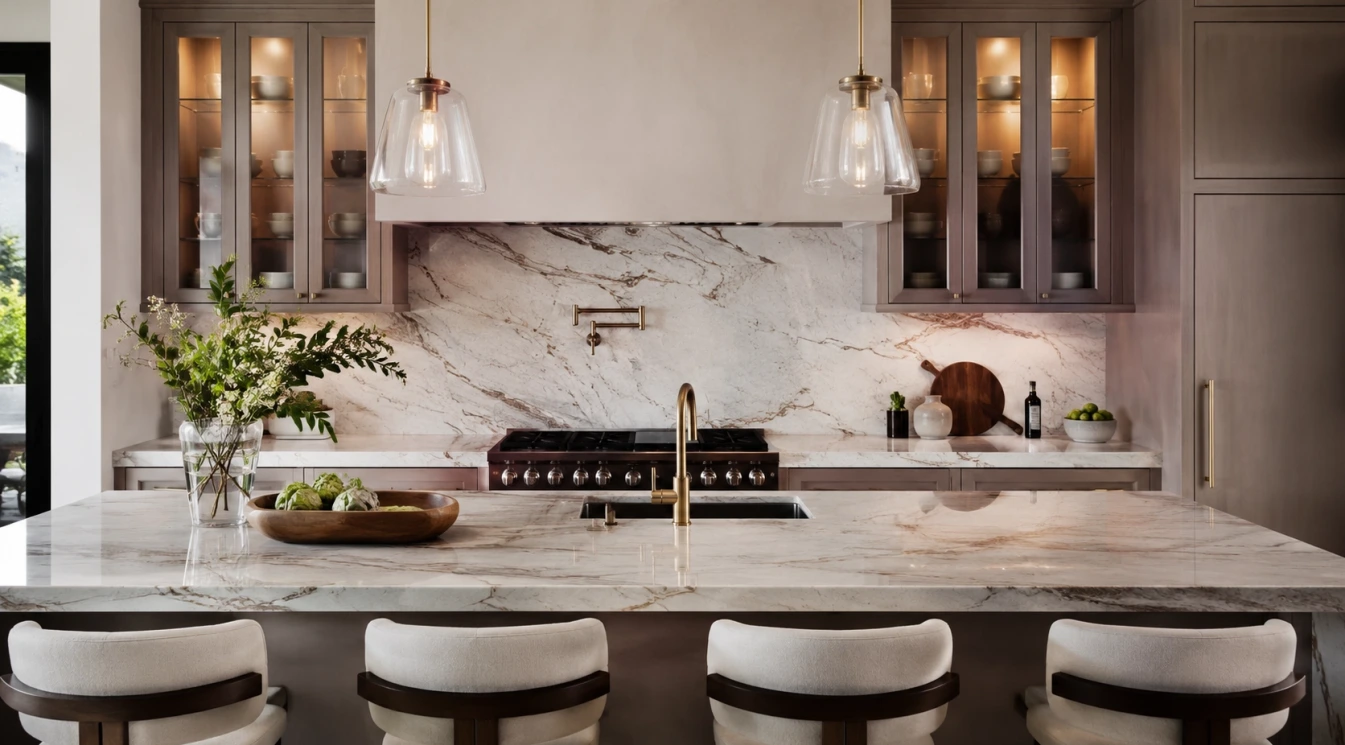
Begin with the countertop because a particular slab usually has fewer exact alternatives than the backsplash. Once the countertop is selected, compare several tile and slab-back options beside the cabinet finish and flooring. Consider what the kitchen will look like from adjoining rooms, not only from a close-up sample board.
Some projects benefit from a combination, such as slab behind the range and tile elsewhere, or a quiet tile paired with a short countertop upstand. The best design does not have to follow one formula.
Compare Slabs and Tile in Sacramento
Domus Surfaces offers countertop and slab materials together with a broad Sacramento tile selection. Seeing the countertop, backsplash, cabinetry, and flooring together can reveal which option gives the kitchen the right balance of movement, texture, and practical performance.