Countertop Edge Profiles: Small Details That Change the Entire Kitchen
The edge profile is one of the smallest decisions in a countertop project, but it has a surprisingly large effect on the finished kitchen. It determines how thick the surface appears, how light moves across the edge, how comfortable the counter feels to touch, and whether the overall design reads as modern, traditional, understated, or dramatic.
Homeowners often focus first on color and veining, then treat the edge as a final technical choice. A better approach is to consider the edge while selecting the slab, cabinetry, island design, and overall style of the room. The right profile should support the material rather than compete with it.
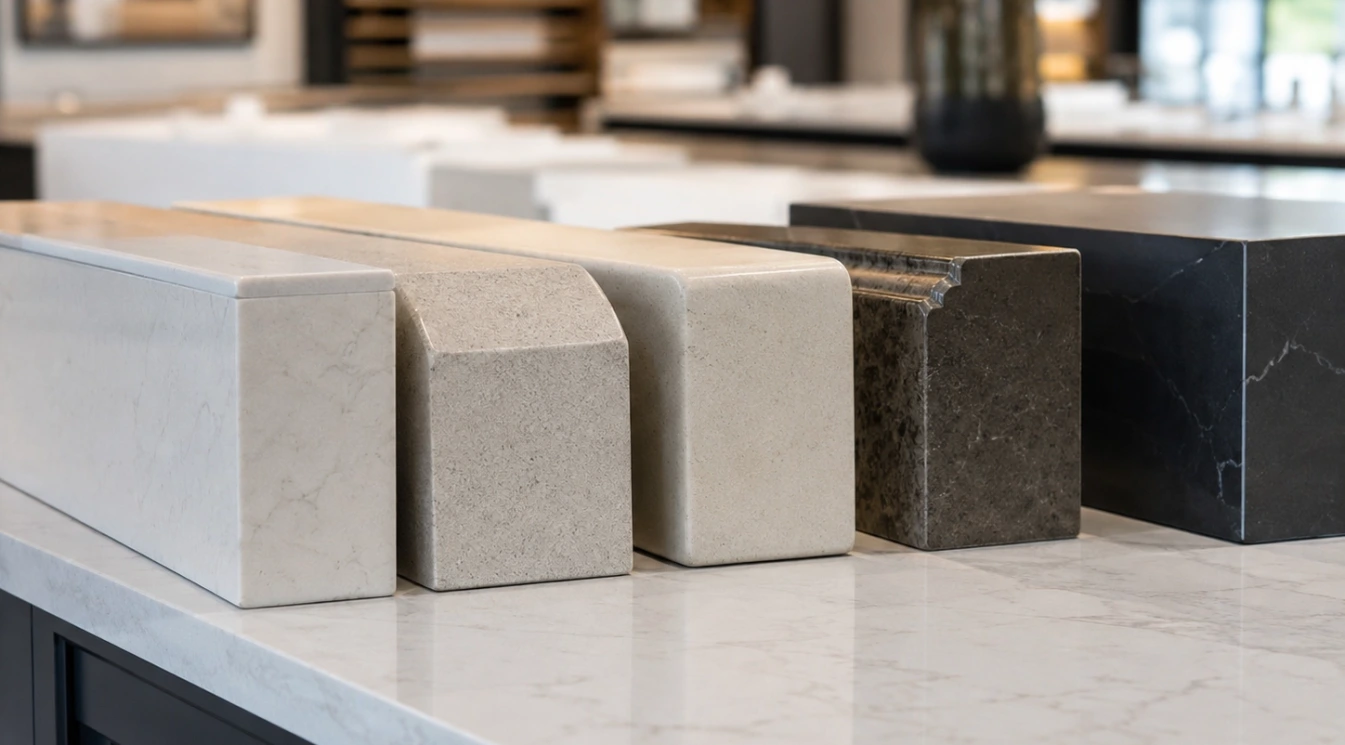
A countertop edge may be a small detail, but it can define the character of the entire kitchen.
Why the Edge Profile Matters
A countertop is viewed from several directions. Across a large island, the front edge may be one of the longest uninterrupted lines in the room. Even a subtle change in shape can make that line feel sharper, softer, heavier, or more decorative.
The edge also changes how the slab thickness is perceived. A simple eased edge can make the surface feel clean and honest. A mitered edge can create the appearance of a much thicker slab. A decorative ogee can add shadow and craftsmanship, particularly in a traditional kitchen.
Function matters as well. Rounded edges can feel comfortable in a busy household, while sharper profiles may emphasize a crisp contemporary design. Fabrication limitations, material strength, overhangs, seams, and manufacturer requirements must also be considered.
Eased Edge: Clean, Versatile and Quiet
An eased edge has a mostly straight face with the sharp corners lightly softened. It is one of the most versatile choices because it allows the countertop color and pattern to remain the main feature.
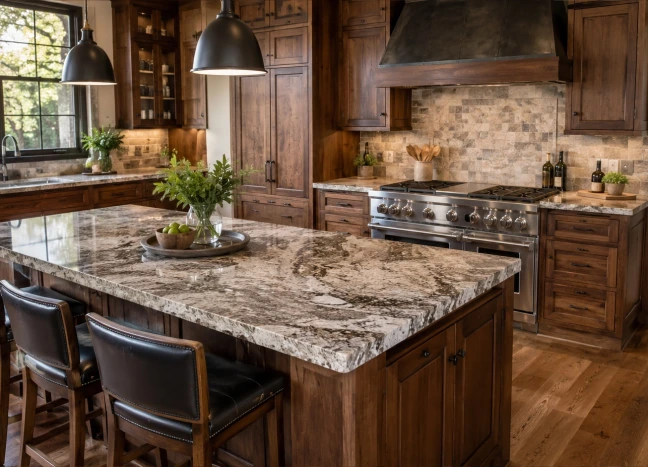
This profile works with modern, transitional, and traditional cabinetry. On a subtle quartz surface, it creates a clean architectural line. On dramatic granite or quartzite, it avoids adding another decorative element that could distract from the natural movement.
An eased edge is often a practical option for perimeter counters and islands. The exact amount of softening can vary, so reviewing a physical sample or fabricator detail is important before approval.
Beveled Edge: A Crisp Line with More Dimension
A beveled edge removes the upper corner at an angle, creating a visible line along the countertop. The bevel may be small and restrained or wider and more noticeable.
This profile adds dimension without becoming highly decorative. It can work especially well in transitional kitchens where the cabinetry has some detail but the room still needs a clean, organized appearance.
Because the angled surface catches light differently, a bevel can make a solid or lightly patterned countertop feel more tailored. On a highly active stone, however, the extra line may be less noticeable or may add more visual activity than necessary.
Half Bullnose and Full Bullnose: Softer Curves
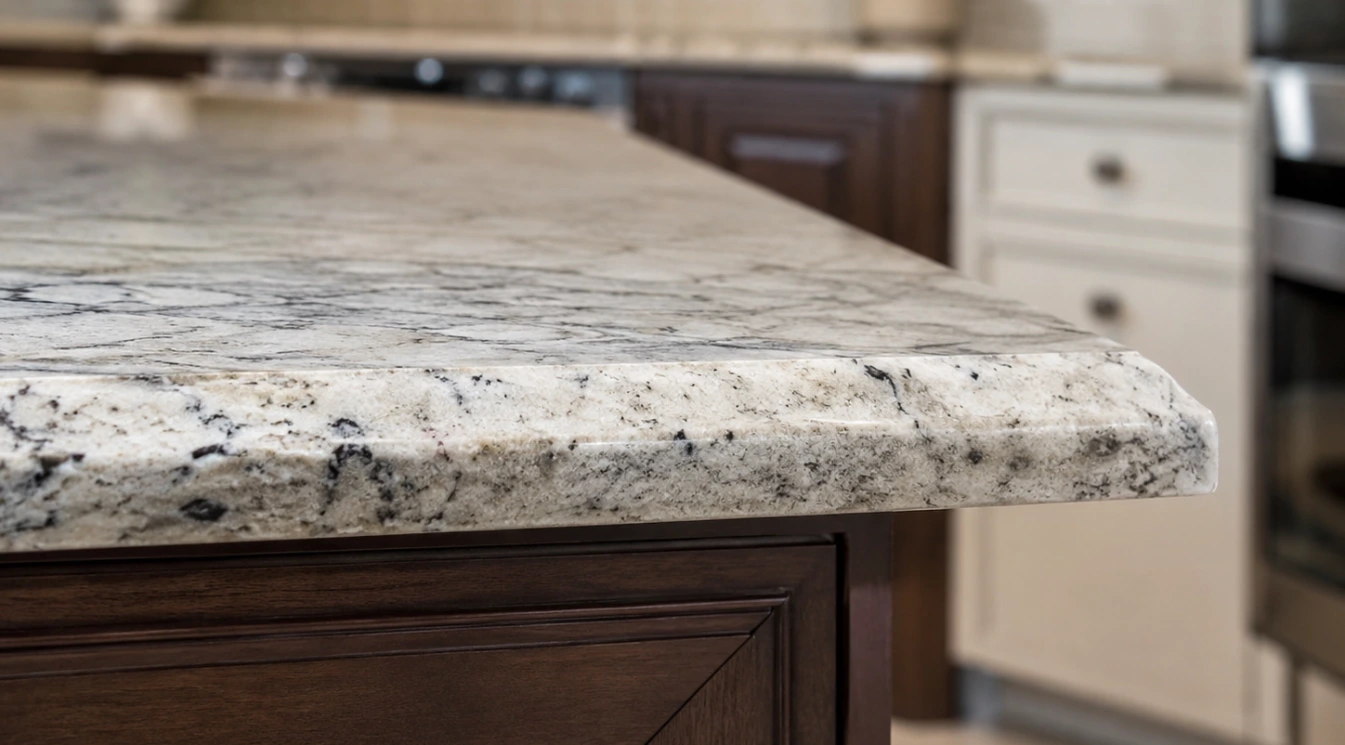
A half bullnose rounds the upper portion of the edge while leaving the lower portion more defined. It creates a comfortable curve without making the entire edge fully round. A full bullnose rounds both the top and bottom, producing a smooth continuous shape.
Rounded profiles can suit family kitchens, traditional interiors, and spaces where the homeowner wants the countertop to feel softer. They also reduce the visual sharpness of corners, although no stone edge should be treated as impact-proof.
A full bullnose can make the slab appear thinner because the lower edge curves away from view. A half bullnose often preserves more visual thickness while still offering a rounded touch.
Ogee Edge: Decorative and Traditional
An ogee edge uses a combination of concave and convex curves to create a sculpted profile. It is commonly associated with formal, traditional, and luxury interiors.
This profile can complement raised-panel cabinets, detailed millwork, decorative range hoods, and furniture-style islands. It creates visible shadow lines and makes the countertop edge part of the room''s ornamentation.
An ogee may feel too busy when paired with a heavily patterned slab, minimalist cabinetry, or a very small kitchen. It is usually most successful when the rest of the design intentionally supports a more detailed look.
A countertop edge should not be chosen in isolation. It should complete the relationship between the slab, the cabinets, and the architecture of the room.
Mitered Edge: Creating the Look of a Thicker Slab
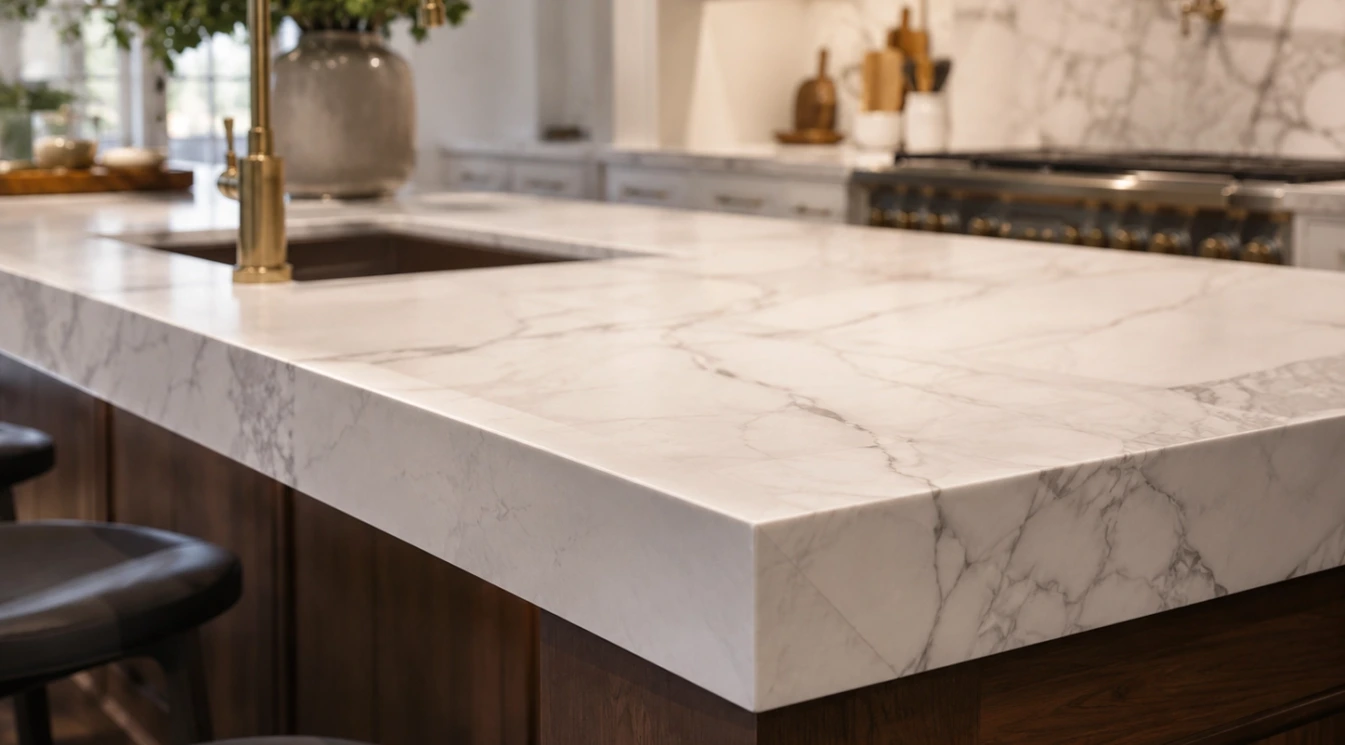
A mitered edge joins pieces at an angle so the countertop appears thicker than the material itself. It is frequently used on islands, waterfall panels, and contemporary designs where a substantial architectural edge is desired.
The visible face can be sized to create a moderate build-up or a bold, furniture-like presence. This flexibility is one reason mitered edges are popular in large kitchens. They can make an island feel more important and help a strongly veined surface read as a major design feature.
Execution is critical. Pattern alignment, corner quality, support, seam placement, and fabricator experience all influence the result. Natural stone may require careful slab layout so veins continue convincingly across the joint.
Chiseled and Textured Edges: Intentionally Organic
A chiseled or textured edge exposes an irregular, natural-looking surface rather than a smooth fabricated profile. It can work in rustic, lodge-inspired, outdoor, or highly organic designs.
This treatment is more distinctive than a standard edge and should be selected deliberately. The texture may collect dust or residue more easily, and the irregular shape can feel rougher to the touch. It is best used where the visual character supports the room and where maintenance expectations are understood.
Waterfall Ends Are More Than an Edge Choice
A waterfall design continues the countertop material vertically down the side of an island or cabinet. Although it involves an edge transition, it is really a larger architectural feature rather than a simple profile selection.
The corner may use a mitered joint to make the pattern appear continuous. Vein direction, slab quantity, seating, cabinet access, floor transitions, and side visibility all need to be planned before fabrication.
A waterfall end can be striking, but it should have a purpose. It works best when the side of the island is highly visible and the material is worth showcasing.
How Cabinet Style Influences the Best Edge
Flat-panel cabinets often pair naturally with eased, small bevel, or mitered edges because these profiles reinforce clean horizontal lines. Shaker cabinets are flexible and can work with simple or moderately decorative edges. Traditional raised-panel cabinetry can support ogee, bullnose, or layered profiles when the rest of the room includes comparable detail.
The goal is not to match every line exactly. It is to maintain the same level of visual formality. A highly ornate edge can feel disconnected from minimal cabinets, while an extremely plain edge may feel unfinished in a richly detailed traditional kitchen.
Consider the Slab Pattern Before Adding Detail
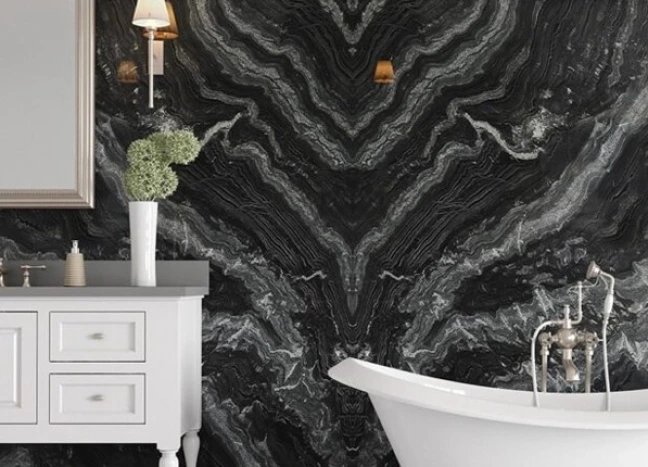
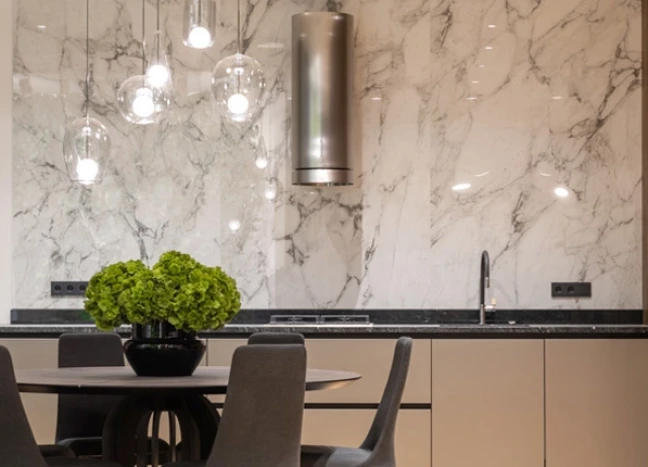
Bold veining, crystals, color movement, and bookmatched layouts already create visual interest. A simple edge often lets those characteristics remain clear. Quiet, consistent materials may have more room for a bevel, ogee, or thicker mitered build-up.
Dark materials can reveal edge shape through highlights and reflections, while pale materials may show the profile more through shadow. Finish also matters. Polished, honed, and leathered surfaces interact with light differently across the edge.
Practical Questions to Ask Before Approval
- Is the profile available for the selected material and thickness?
- Will the edge be comfortable at seating areas and high-use counters?
- Does the profile continue around sink openings, corners, and appliance panels?
- Will a mitered or laminated edge require extra material or fabrication?
- How will the edge meet a waterfall panel, backsplash, or adjoining surface?
- Can the fabricator provide a physical sample or detailed drawing?
These questions help prevent assumptions and make the final fabrication plan easier to review.
Selecting an Edge for a Sacramento Kitchen Remodel
The best countertop edge is not necessarily the most elaborate or the most fashionable. It is the profile that fits the material, cabinetry, room scale, household, and fabrication plan.
Domus Surfaces can help homeowners compare countertop materials alongside cabinets, tile, flooring, and other finishes. Looking at the complete palette makes it easier to choose an edge that feels intentional and supports the finished kitchen rather than becoming an isolated detail.