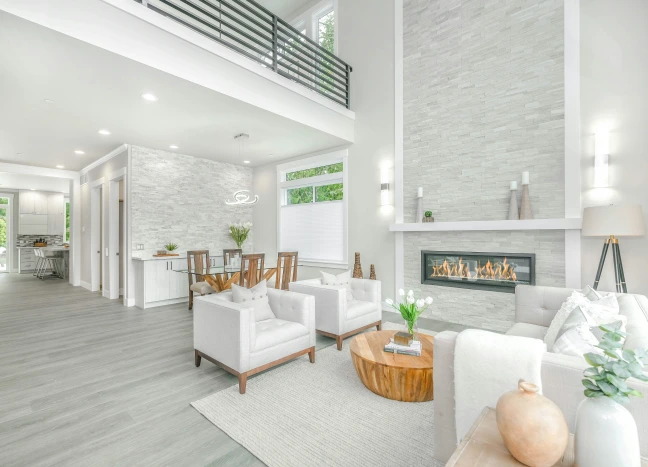
Small Kitchen Material Choices That Make the Room Feel Bigger
A small kitchen does not have to feel cramped, but it does have less room for material mistakes. Countertops, backsplash tile, flooring, cabinet color, grout, hardware, and lighting sit close together, so every finish affects the next one. A surface that looks beautiful in a large showroom display can feel too busy, too dark, or too heavy once it is installed in a compact kitchen.
The goal is not to make every small kitchen white or plain. The goal is to choose materials with the right scale, contrast, and visual rhythm. A smaller room often looks better when the surfaces work together quietly, with one clear focal point and fewer interruptions. The right countertop, backsplash, floor, and cabinet combination can make the kitchen feel brighter, wider, calmer, and more comfortable to use.
Start by Reducing Visual Clutter
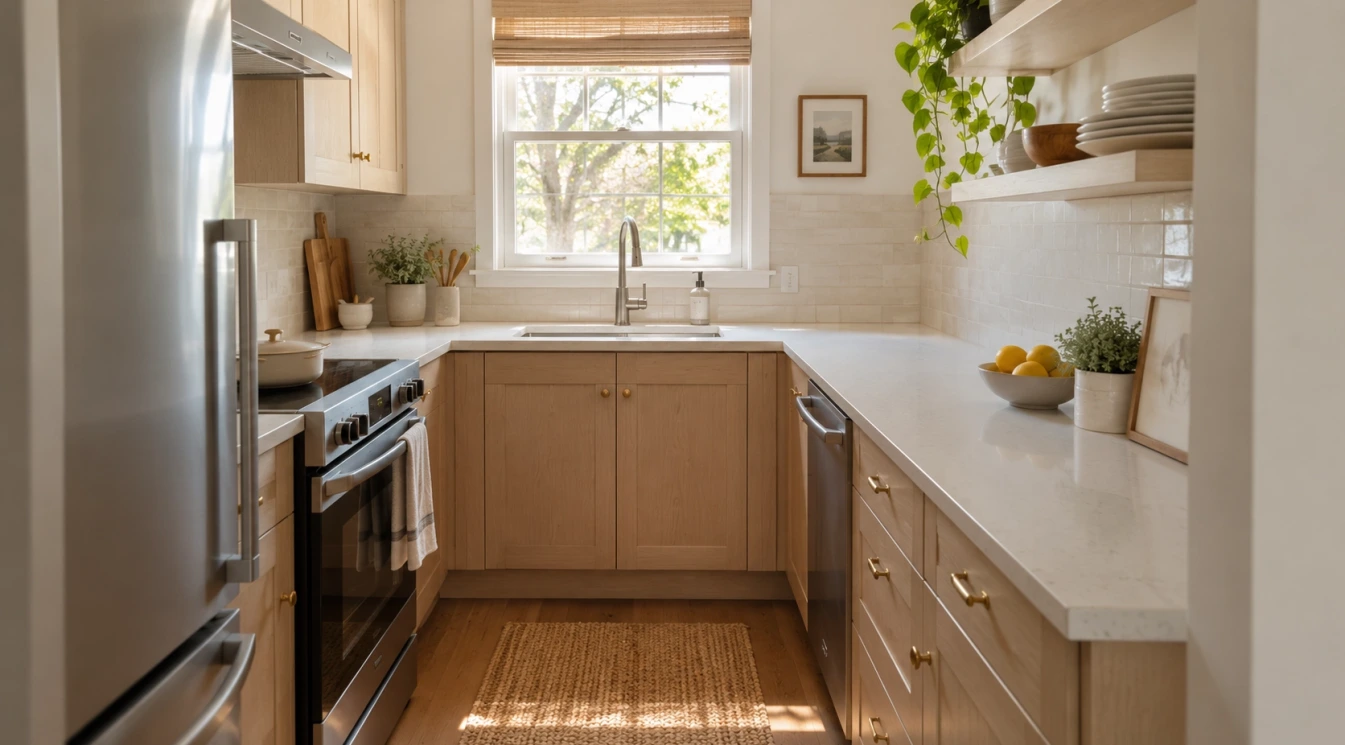
Small kitchens usually feel larger when the eye can move through the room without stopping at too many strong contrasts. Every hard line, color change, busy pattern, and high-contrast grout joint becomes more noticeable because the space is compact. This does not mean the design has to be flat. It means the strongest details should be chosen carefully.
A calm countertop, simple backsplash, and continuous floor can do more for a small kitchen than a collection of dramatic materials. If the cabinets already have detail, a quieter backsplash may be stronger. If the countertop has veining, the backsplash may need to stay simple. If the floor has a lot of movement, the cabinets and counters should usually be more restrained.
Use Light Colors, But Avoid a Cold Room
Light surfaces can help a small kitchen feel more open because they reflect more light and reduce the feeling of heaviness. White quartz, soft cream countertops, pale greige tile, warm stone-look porcelain, light oak flooring, and muted cabinet colors can all work well in a compact kitchen. But light does not have to mean cold.
Many small kitchens look better with warm whites, soft beiges, natural wood, and gentle taupe or greige tones instead of stark white and sharp gray everywhere. A slightly warm countertop can keep the kitchen from feeling clinical. A soft wood floor or wood cabinet detail can add warmth without making the room feel smaller.
Choose Countertops With the Right Pattern Scale
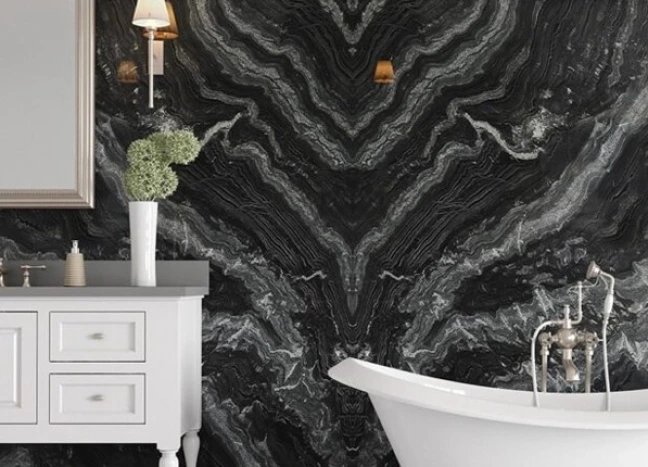
Countertop pattern scale matters in a small kitchen. A bold slab with heavy veining can look impressive on a large island, but in a compact kitchen it may dominate every view. A subtle quartz, quiet granite, soft quartzite, or lightly veined porcelain surface may make the kitchen feel more spacious because the eye is not constantly pulled into the counter.
This is especially important when the countertop wraps around corners or sits close to the backsplash. Strong veining can become busy where it turns a corner, meets a sink, or runs beneath wall cabinets. A small kitchen can still use movement, but the movement should fit the size of the surface.
Let the Backsplash Stretch the Room
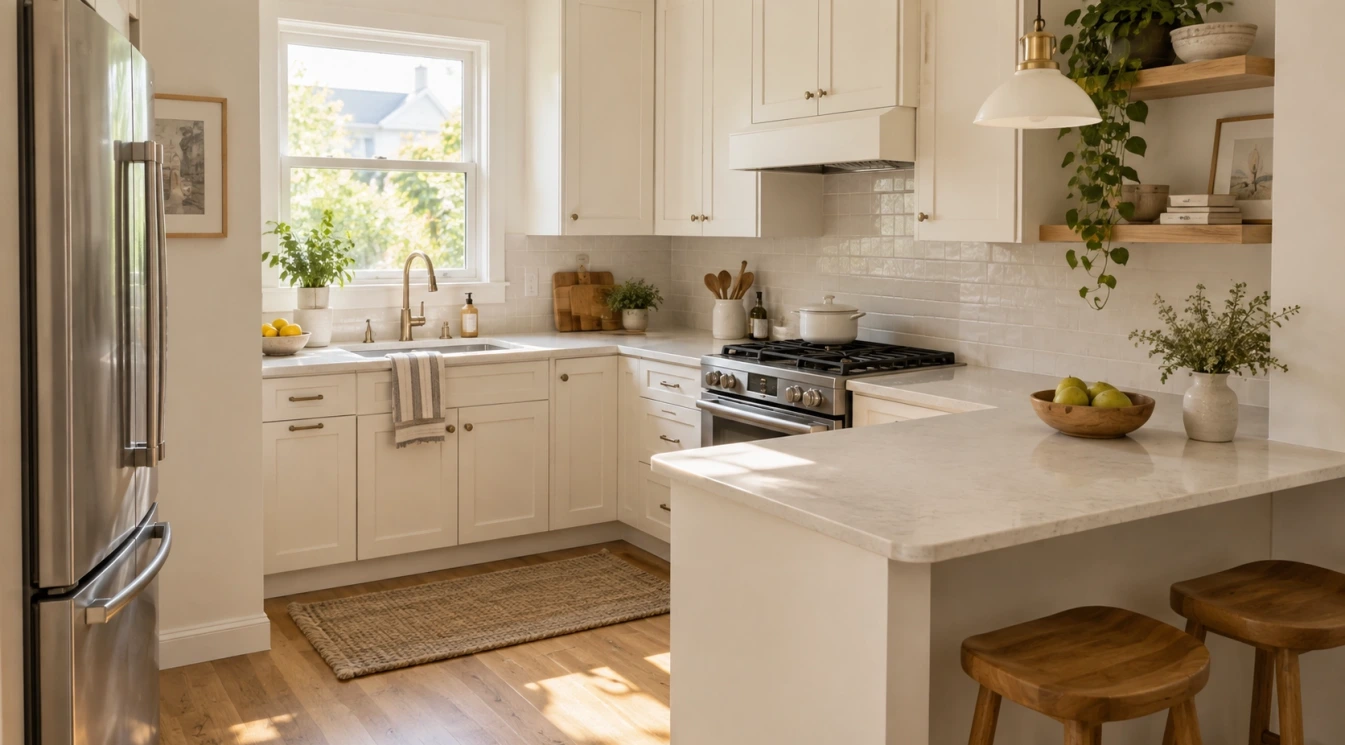
The backsplash can either open the kitchen or make it feel chopped up. In a small kitchen, a clean backsplash with low-contrast grout often creates a more continuous wall. Elongated tile, vertical tile, stacked tile, subtle texture, and full-height backsplash designs can all change the way the eye reads the room.
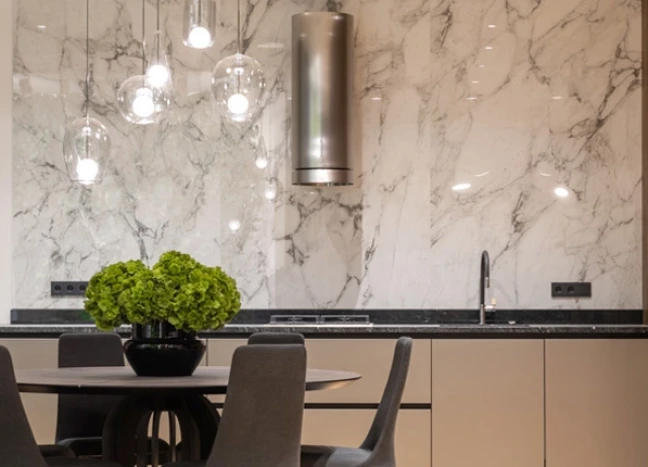
A full-height backsplash can be effective when it is simple enough to stay calm. Running the same material or a closely related material from the counter to the upper cabinets can reduce visual breaks. On the other hand, a small strip of busy tile with high-contrast grout can make the room feel more fragmented than it really is.
Be Careful With High-Contrast Grout
Grout is one of the easiest details to underestimate. A white tile with dark grout may look sharp in a large kitchen, but in a small kitchen it can create a grid that draws attention to the size of the wall. That grid may be useful in some designs, but it should be chosen on purpose.
For a calmer look, choose grout that is close to the tile color. The tile shape and texture will still be visible, but the wall will feel less busy. This can be especially helpful behind the range, around small windows, or in kitchens where outlets, shelves, and cabinet breaks already create enough visual activity.
Keep Flooring Continuous When Possible
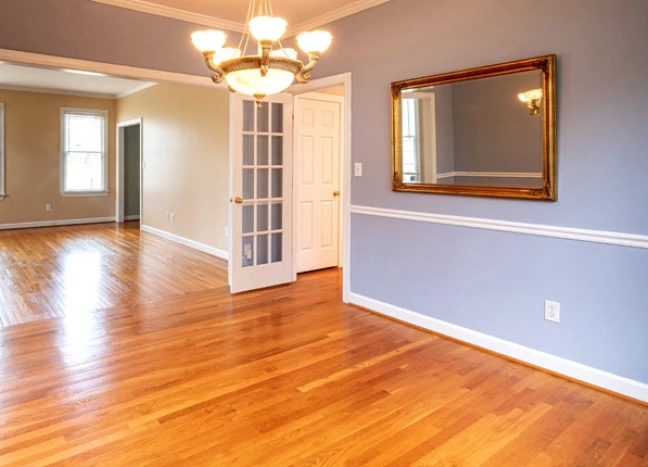
Flooring has a major effect on how large a small kitchen feels. A floor that changes abruptly at the kitchen entrance can make the room feel boxed in. When practical, continuous flooring from the nearby living area, dining area, or hallway can make the kitchen feel connected to the rest of the home.
Luxury vinyl plank, engineered wood, hardwood, laminate, porcelain tile, and stone-look tile can all work depending on the home and the room’s demands. The main design point is continuity. A floor with a calm pattern and a color that relates to nearby rooms usually helps a small kitchen feel less isolated.
A small kitchen feels larger when the materials guide the eye through the room instead of asking every surface to compete for attention.
Cabinet Color Can Make or Break the Space
Cabinets take up more visual space than countertops, so their color strongly affects the room. White and off-white cabinets can make a kitchen feel brighter, but they need the right countertop and backsplash undertones. Light wood cabinets can add warmth while keeping the room open. Soft greige, taupe, muted green, or pale gray cabinets can work when the rest of the palette is controlled.
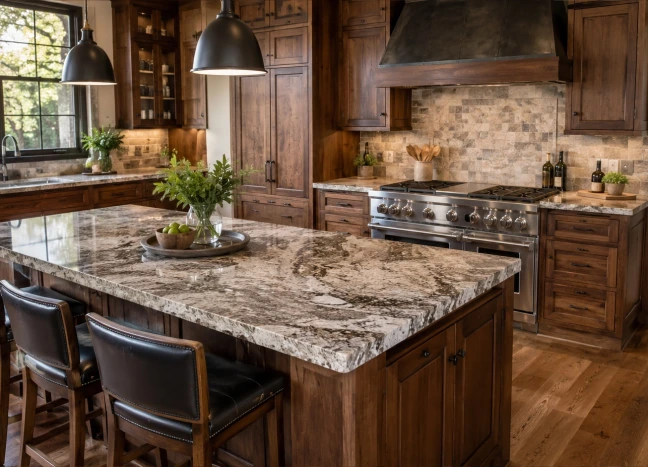
Dark cabinets can still work in a small kitchen, especially on lower cabinets or an island, but they need balance. A dark cabinet with a light countertop and light backsplash can feel grounded rather than heavy. Dark upper cabinets in a compact room require more caution because they bring weight closer to eye level.
Use One Focal Point, Not Five
A small kitchen often looks more expensive when it has one strong focal point instead of several competing features. That focal point might be a veined quartz countertop, a small full-height backsplash behind the range, a beautiful wood cabinet finish, a stone-look porcelain wall, or a carefully chosen floor. The rest of the materials should support that decision.
If the countertop is dramatic, keep the backsplash quieter. If the backsplash has texture or color, choose a calmer counter. If the floor has personality, avoid making the counter and backsplash equally active. A compact kitchen needs hierarchy. Without it, the space can feel crowded even when the layout is functional.
Reflective and Satin Finishes Can Help, But Use Shine Carefully
Finish affects how light moves through the kitchen. Polished countertops, satin tile, glass cabinet inserts, brushed metal hardware, and soft reflective surfaces can help a smaller room feel brighter. But too much shine can also reveal clutter, glare, fingerprints, and uneven lighting.
A balanced approach usually works best. A polished or softly reflective countertop can pair well with a quieter backsplash. A satin tile can bounce light without feeling glossy. Brushed hardware can add detail without creating too many bright spots. The goal is light movement, not glare.
Do Not Ignore Cabinet Hardware and Open Shelving
Small details matter more in a small kitchen because they are closer to the eye. Oversized hardware can make cabinet doors feel crowded, while hardware that is too small can disappear. Simple pulls, clean knobs, and finishes that relate to the faucet or lighting can keep the design organized.
Open shelving can make a small kitchen feel lighter, but only when it is used with restraint. A few wood shelves against a quiet backsplash can be attractive. Too many shelves, mixed objects, and strong tile patterns can make the same wall feel busy. Open storage should create breathing room, not more visual clutter.
Use the Island or Peninsula Carefully
In a small kitchen, an island or peninsula can be useful, but it should not overpower the room. A lighter countertop, clean edge profile, and simple paneling can keep the feature from feeling bulky. Waterfall sides can look refined, but they add more visible surface and should be used only when the material scale fits the room.
If the island is small, a bold slab may feel stronger than expected. A quieter surface with good lighting and well-chosen stools can look more balanced. The island should improve function and visual flow, not simply add another heavy object in the center of the room.
Small Kitchens Still Need Practical Materials
Design matters, but the kitchen still has to work. Countertops should handle daily cooking habits. Backsplash materials should clean easily behind the sink and range. Flooring should fit the household’s daily use, pets, moisture exposure, and comfort needs. Cabinets should provide storage without making the room feel closed in.
Quartz, granite, quartzite, porcelain slabs, ceramic tile, porcelain tile, LVP, hardwood, engineered wood, and laminate can all have a place in a smaller kitchen. The best choice depends on how the room is used and how the materials work together. A small kitchen does not need the most dramatic option. It needs the right combination.
Bring Samples Together Before Making the Final Choice
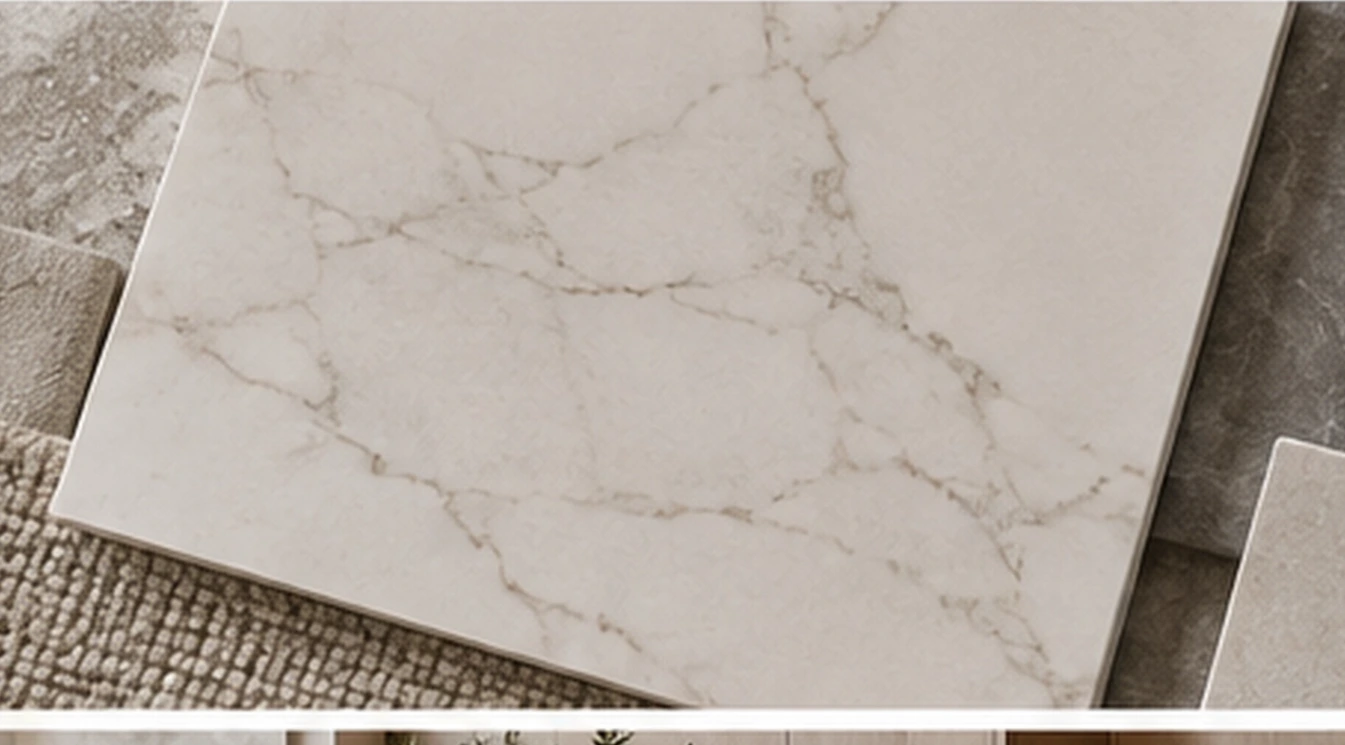
The safest way to choose materials for a small kitchen is to compare them together. Place the cabinet sample beside the countertop. Add the backsplash tile. Add the flooring. Look at the combination in warm and cool light. Step back and see whether the room feels calmer or busier.
Domus Surfaces can help Sacramento homeowners compare countertops, slabs, tile, flooring, and cabinets so small kitchen material choices feel connected instead of pieced together. In a compact kitchen, every surface is visible. When those surfaces are chosen with care, the room can feel larger, warmer, and more complete.