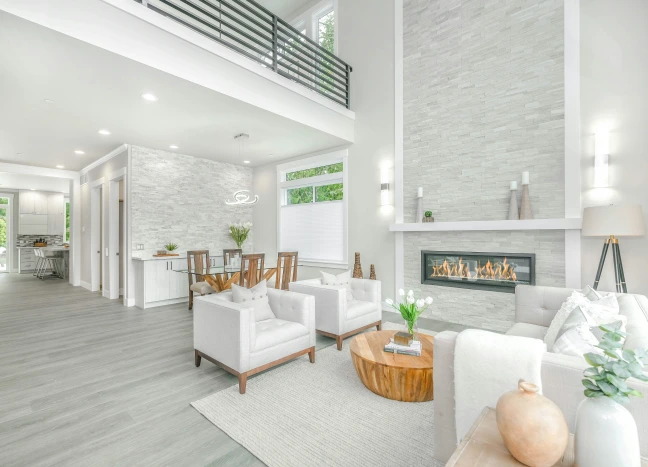
Large-Format Tile: Pros, Cons and Best Uses for Bathrooms, Floors and Fireplaces
Large format tile can make a room feel calmer, cleaner, and more architectural. By reducing the number of visible grout lines, it allows the surface itself to become the design—whether the look resembles marble, natural stone, concrete, limestone, or a quiet solid color.
That simplicity is one reason large-format porcelain tile has become popular in bathrooms, kitchens, open living spaces, fireplace surrounds, and commercial interiors. The finished look may appear effortless, but successful installation requires careful planning. Tile size, surface preparation, layout, finish, grout, and the shape of the room all influence the result.
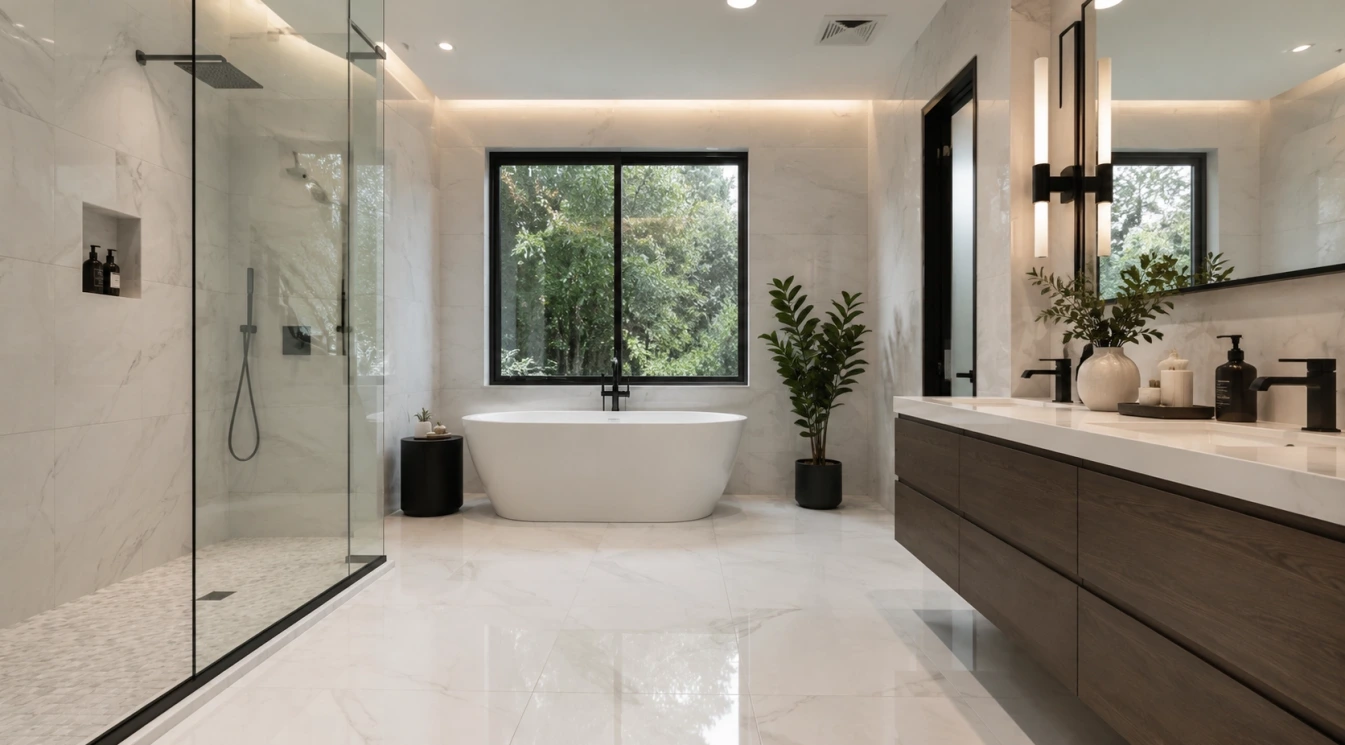
Large-format tile brings calm, scale, and continuity to a space - sometimes fewer lines make the strongest statement.
What Is Considered Large-Format Tile?
Large-format tile generally refers to tile with at least one long dimension compared with traditional formats. The category now includes generous rectangular floor tiles, oversized squares, and thin porcelain panels capable of covering much of a wall with only a few pieces.
Porcelain is especially common because it can reproduce the appearance of marble, stone, concrete, and other materials while offering consistent performance. Many collections include several pattern variations so the finished room looks natural rather than visibly repeated.
Why Fewer Grout Lines Change a Room
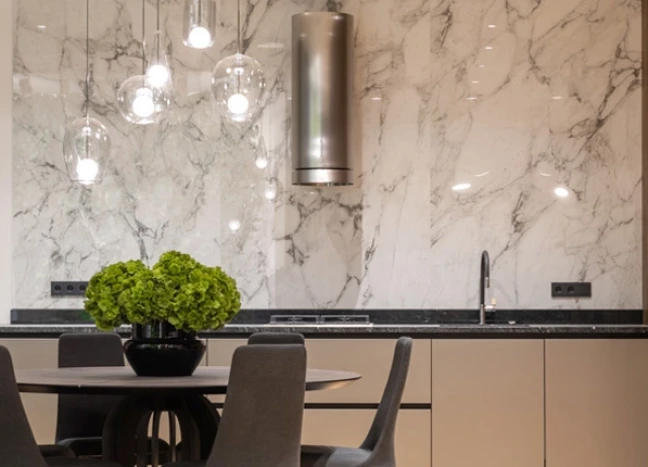
Grout creates a visible grid. Reducing that grid can make walls feel taller, floors feel wider, and compact rooms feel less interrupted. In a shower, a large marble-look porcelain tile can create a spa-like atmosphere. Across a kitchen or great room, a larger format can help adjoining areas feel visually connected.
Fewer grout joints may also simplify routine cleaning, but they do not eliminate maintenance. The joints that remain still need proper installation and care, and the tile surface should be cleaned according to the product manufacturer's recommendations.
Fewer grout lines can make a room feel larger, calmer, and more continuous.
Large-Format Tile for Bathroom and Shower Walls
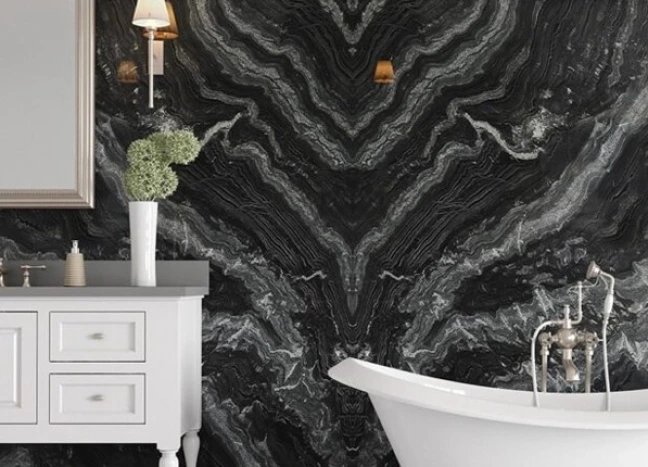
Bathroom walls are among the strongest applications for large-format tile. Broad porcelain surfaces reduce visual clutter and allow the pattern to become a feature. They work particularly well on shower walls, behind freestanding tubs, and across full-height vanity walls.
Shower floors require more caution. The floor must slope properly toward the drain and provide suitable traction. Smaller mosaics often follow the slope more easily and place more grout joints underfoot. Large tile can work in selected shower-floor designs, but the drain location, cuts, slope, finish, and product rating must be considered before installation.
Using Large-Format Tile on Floors
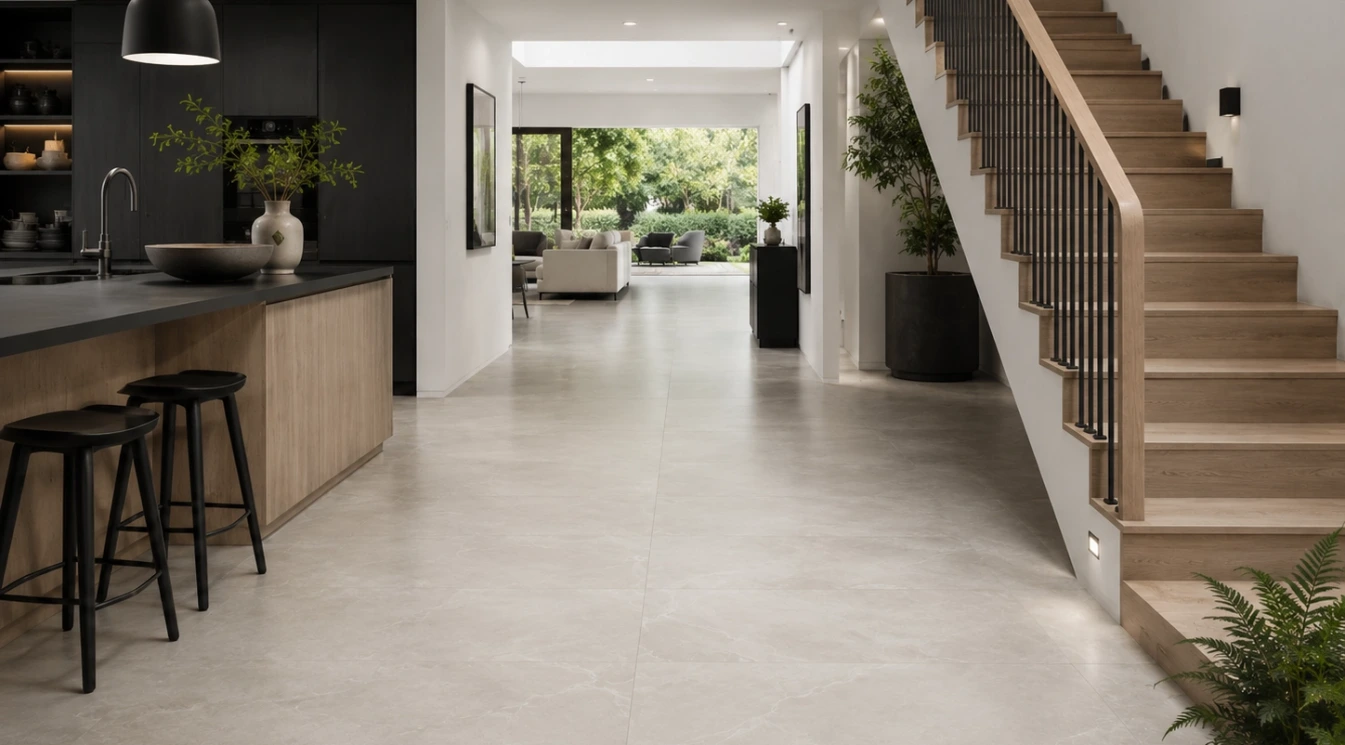
Large-format floor tile can make kitchens, entryways, living rooms, and connected spaces feel more expansive. It is especially effective when the layout continues through several areas with minimal interruption.
The supporting surface must be sufficiently flat because a large rigid tile cannot easily follow dips or high spots. Inadequate preparation can contribute to lippage, hollow areas, or alignment problems. Proper mortar coverage and a layout planned around doors, cabinets, transitions, and focal points are essential.
Fireplaces and Feature Walls
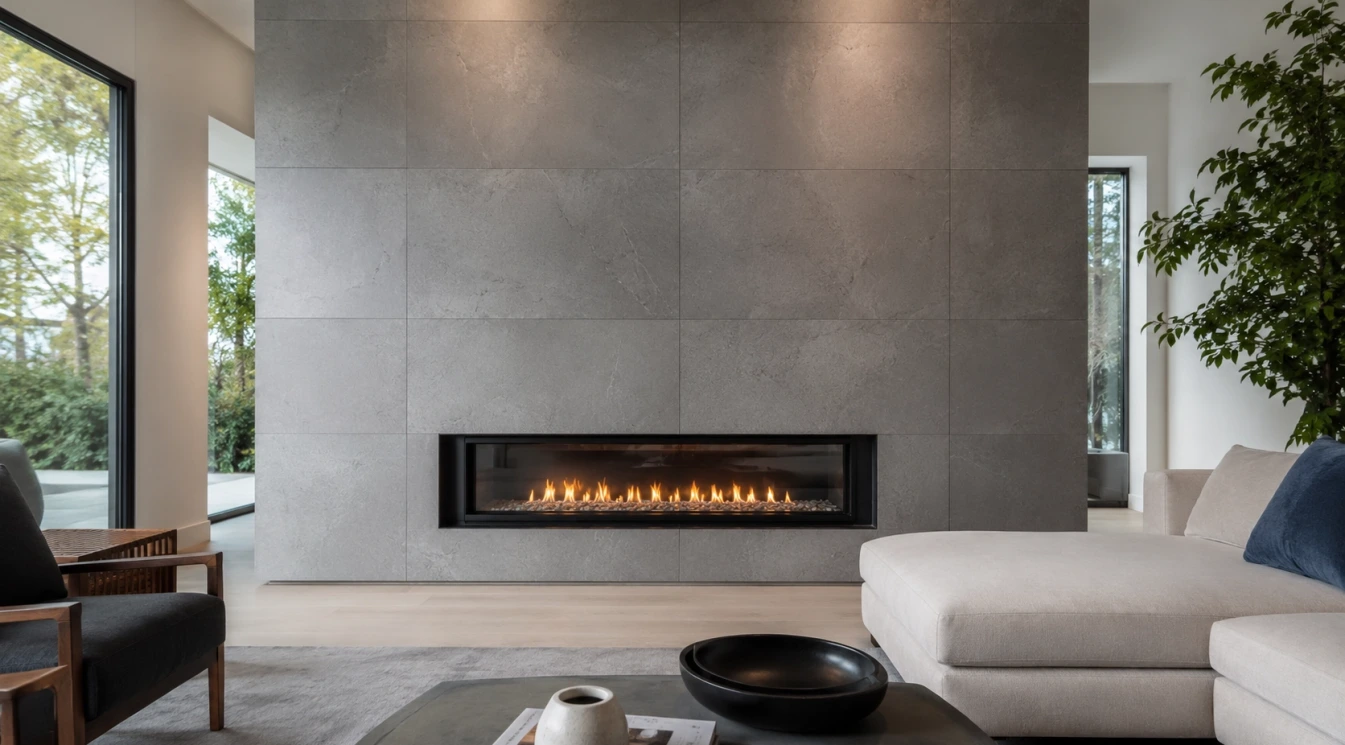
A fireplace surround is an ideal place to use large tile as a visual statement. Stone-look porcelain can suggest the scale of a slab with fewer individual pieces, while concrete, metal-look, and textured designs can support a more contemporary interior.
Large tile can also work on television walls, entry features, and commercial reception areas. Pattern placement matters. Veining that looks balanced on a small sample may feel very different once several large pieces are arranged across a tall wall.
The Benefits and Tradeoffs
The main appeal is visual continuity. Large tile can create a cleaner appearance, reduce the dominance of grout, and give stone or marble patterns more room to develop. Porcelain options can also provide a durable surface for many residential and commercial applications.
The tradeoff is that oversized pieces are heavier and less forgiving to handle. Cutting, transporting, setting, and aligning them may require specialized equipment and experienced installers. Waste can also increase when a room has many corners, niches, outlets, or unusual dimensions.
Choosing the Right Size, Pattern, and Finish
The largest available tile is not automatically the best choice. A moderately large format may fit a bathroom wall with cleaner cuts, while an oversized panel may be ideal for a tall fireplace or feature wall. The dimensions of the room should guide the format rather than the trend alone.
Matte and lightly textured finishes can feel softer and may offer better traction on suitable floors. Polished surfaces reflect more light and emphasize pattern, but they may not be appropriate for every wet or high-traffic application. Grout color matters as well: a close match makes the installation feel more continuous, while contrast creates a stronger graphic grid.
Explore Large-Format Tile in Sacramento
Large-format tile can deliver a refined result, but the success of the design depends on more than choosing an attractive sample. Scale, placement, surface preparation, grout, and installation all need to work together.
Domus Surfaces offers porcelain, ceramic, mosaic, glass, and natural stone options for floors, walls, showers, backsplashes, and feature areas. Explore the Sacramento tile selection and compare formats, finishes, and patterns in person before finalizing the layout.