Polished vs Honed vs Leathered Countertops: Which Finish Is Right for Your Kitchen?
Countertop selection often begins with color and veining, but the finish can change the personality of a stone just as much as the slab itself. Polished stone reflects light and emphasizes depth. Honed stone feels softer and more understated. Leathered stone introduces texture that can make granite or quartzite feel especially rich and tactile.
The same material may look dramatically different in each finish. Choosing well means considering the room's lighting, cabinet style, cleaning habits, and how the surface should feel in everyday use.
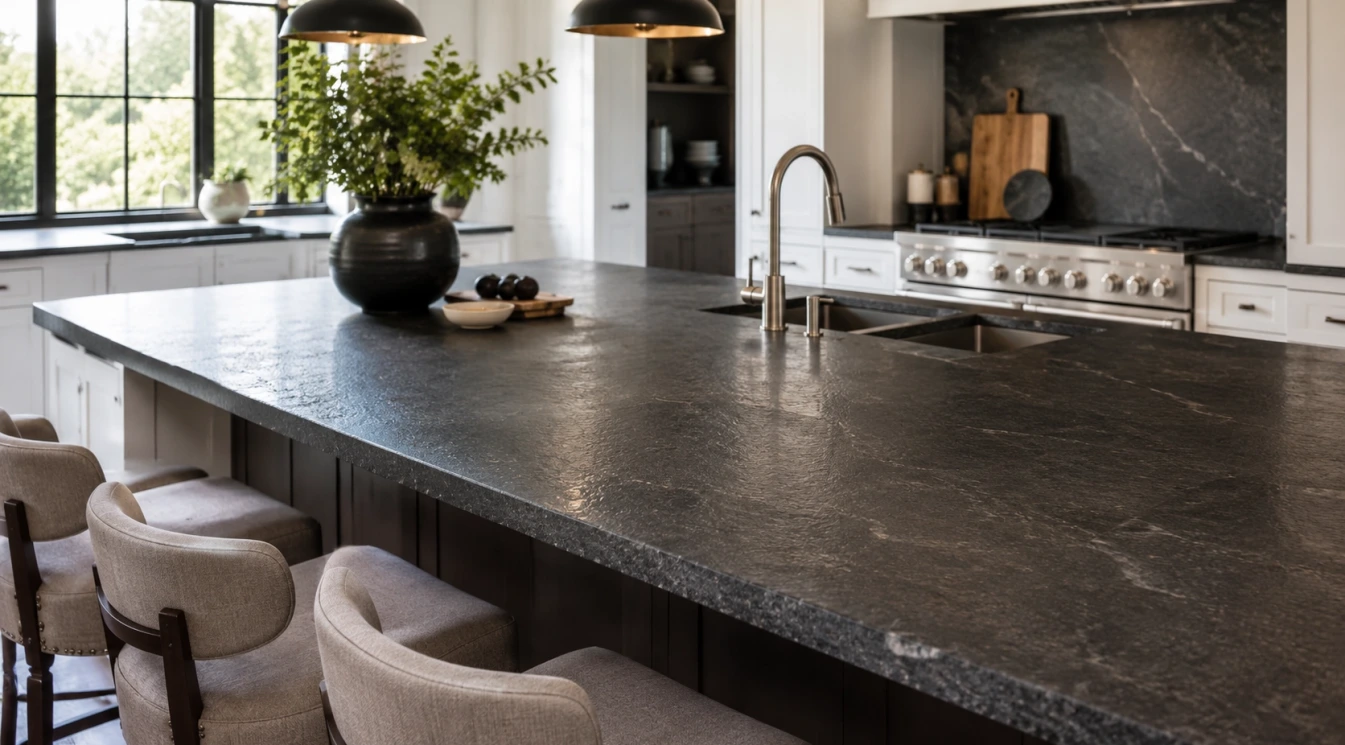
Polished Countertops: Bright, Reflective, and Classic
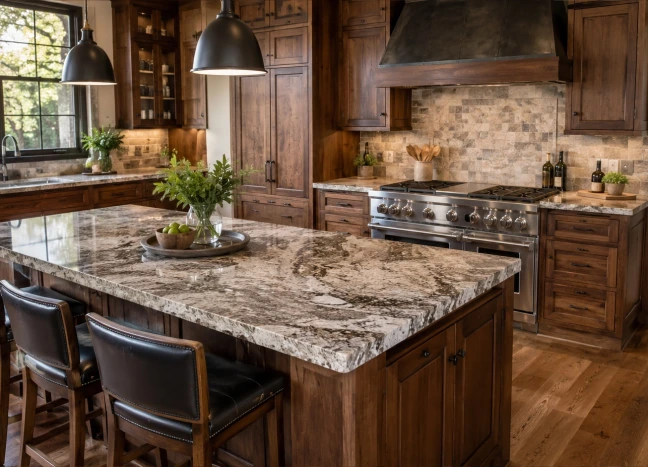
A polished finish is smooth and reflective. It typically deepens the apparent color of the stone and makes veining, crystals, and contrast more visible. This is the finish many people picture when they think of granite, marble, or quartzite countertops.
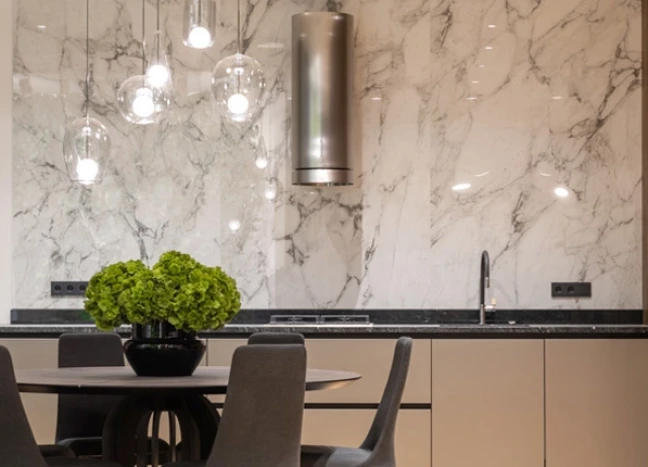
Polished stone can help a kitchen feel brighter because it reflects natural and artificial light. It works in classic, transitional, and contemporary interiors, depending on the slab. The smooth surface is also generally easy to wipe clean.
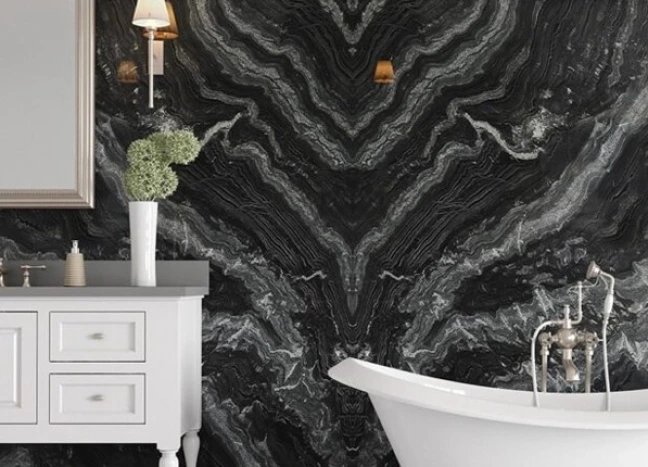
Fingerprints, water spots, and streaks may be more noticeable on dark polished materials. Strong reflections can also make a highly patterned slab feel busier, so the finish should be viewed under lighting similar to the finished room.
Honed Countertops: Soft, Matte, and Understated
A honed finish is smooth but has little or no shine. It softens reflections and can make bold stone movement feel calmer. In modern, organic, and transitional interiors, honed stone often creates a quieter and more relaxed appearance than a high polish.
The muted surface can be especially attractive on marble, limestone, granite, and selected quartzites. However, honing may make the stone appear lighter or less saturated. On some dark stones, oils, fingerprints, and uneven wiping can remain visible even though glare is reduced.
Sealing and cleaning recommendations vary by material. A honed countertop should not be assumed to be maintenance-free simply because it has a matte appearance.
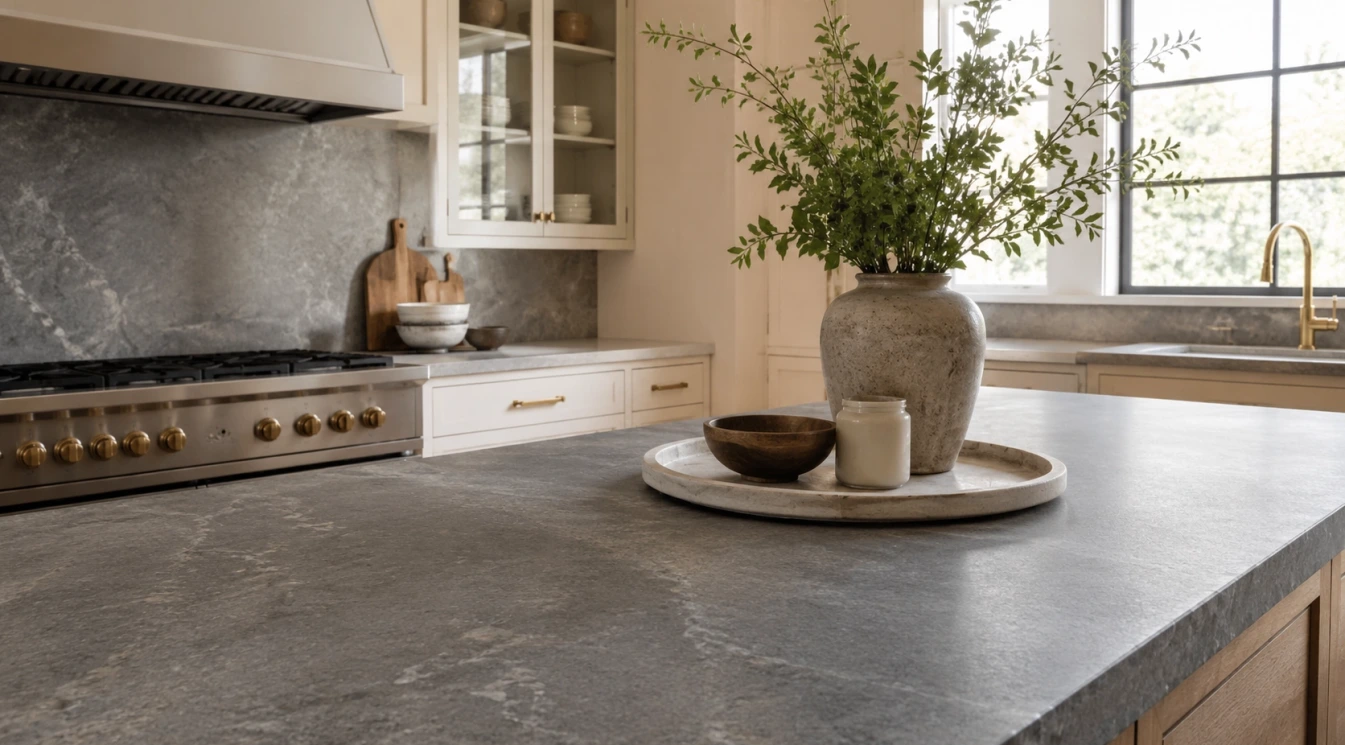
Leathered Countertops: Textured and Distinctive
A leathered finish has a subtle to pronounced texture created by brushing the stone after processing. The result is less reflective than polished stone but more tactile than a typical honed finish. Leathered granite countertops are especially popular, and selected quartzites can also respond beautifully to this treatment.
Leathering can emphasize natural crystals and movement while giving the surface a warm, substantial feel. It often disguises fingerprints and minor water marks better than a glossy dark surface, although deeper texture can require more attention when wiping crumbs or residue.
The final appearance depends heavily on the stone. A leathered black granite may look velvety and restrained, while a textured quartzite can highlight layers and mineral movement. It is important to touch a finished sample because the feel cannot be judged from a photograph alone.
Finish changes the stone as much as color or veining.
How Finish Changes Color and Pattern
Polishing usually creates the deepest color and sharpest contrast. Honing reduces reflection and can soften the pattern. Leathering creates small highlights and shadows across the texture, which may make mineral details appear more dimensional.
On a heavily veined slab, a polished finish can make the movement dramatic, while honing may make it more subtle. On a quieter granite, leathering can add interest without introducing another color or pattern.
Which Countertop Finish Is Easiest to Maintain?
There is no universal winner. Polished surfaces are smooth and easy to wipe, but streaks may show. Honed finishes hide glare but can reveal oils or uneven cleaning on certain stones. Leathered surfaces may disguise fingerprints, yet the texture can hold residue if it is not cleaned thoroughly.
The stone type, color, sealer, household habits, and frequency of use matter more than the finish name by itself. Ask how the exact slab and finish are expected to perform rather than relying on a general rule.
Matching the Finish to the Kitchen Style
Polished stone supports a crisp, formal, or luminous kitchen. Honed stone pairs naturally with matte cabinets, warm wood, plaster textures, and quieter interiors. Leathered stone works well in spaces that need depth and a more tactile natural element.
Mixing finishes can also be effective. A polished perimeter and leathered island can create contrast, or a honed stone backsplash can balance a polished countertop. The materials should still share a clear design relationship so the room feels intentional.
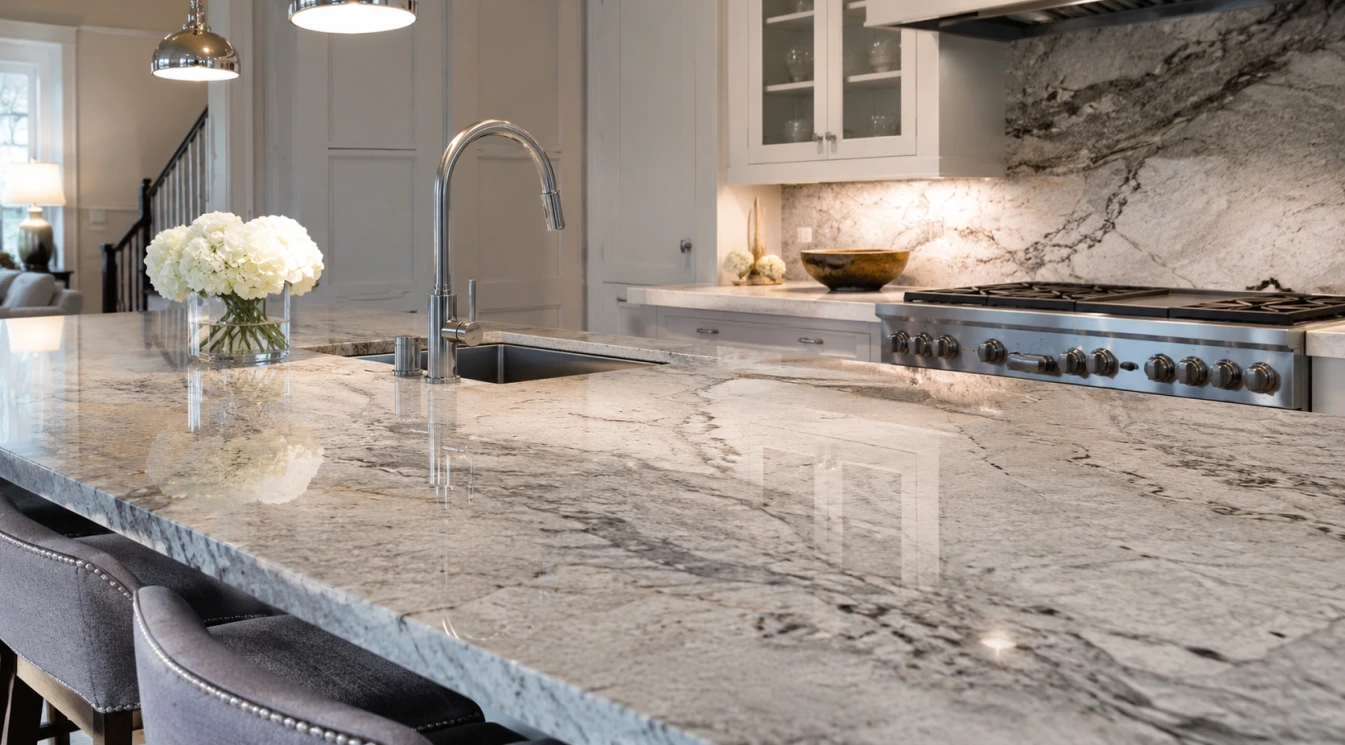
See the Actual Finish Before Fabrication
Small samples are useful, but a full slab shows how the finish affects movement across a large area. View it from several angles and under different lighting. Ask whether the displayed slab is already finished or whether the finish will be applied later, because the final appearance may vary.
Not every stone is available or advisable in every finish. Fabrication details, edge profiles, sinks, seams, and backsplash plans should be discussed before the slab is processed.
Compare Countertop Finishes in Sacramento
Domus Surfaces offers quartz, granite, quartzite, marble, porcelain, and other countertop and slab options for Sacramento-area projects. Homeowners considering natural stone can also explore the quartzite countertop guide before comparing polished, honed, and leathered finishes in person.
The right finish should support the design while remaining realistic for daily use. Once the stone, finish, lighting, and surrounding materials are considered together, the best choice usually becomes much clearer.