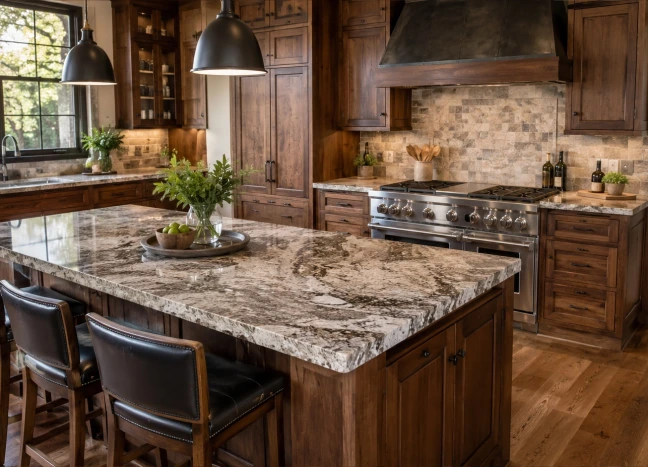
How to Clean and Care for Quartzite Countertops Without Damaging the Stone
Quartzite is chosen for its natural movement, strength, and one-of-a-kind character, but even a durable stone benefits from the right care. The good news is that maintaining a quartzite countertop does not require a complicated routine. Most problems can be avoided with gentle daily cleaning, sensible spill care, and an understanding of how sealing works.
For homeowners who have invested in a quartzite kitchen island, bathroom vanity, or full-height backsplash, the goal is simple: keep the surface looking beautiful without using products that are too harsh for natural stone.
Quartzite does not need complicated care—gentle cleaning, quick attention to spills, and proper sealing help preserve its natural beauty.
Start With Gentle Everyday Cleaning
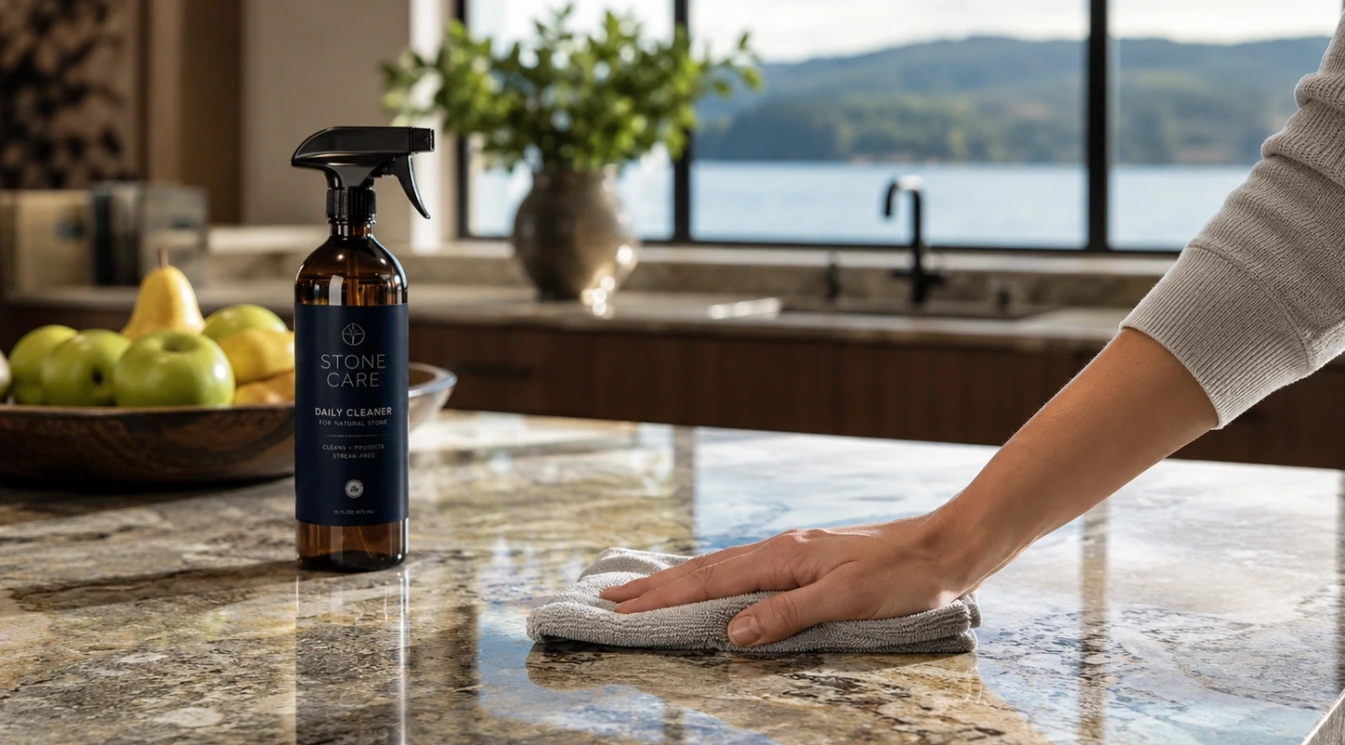
For routine cleaning, use a soft microfiber cloth or nonabrasive sponge with warm water and a small amount of mild dish soap. A pH-neutral cleaner made for natural stone is another good option. Wipe the surface, rinse away any soap residue, and dry it with a clean cloth to reduce streaks and water marks.
Avoid abrasive powders, rough scrub pads, and strong multipurpose cleaners unless the product is specifically approved for natural stone. Harsh cleaners can leave residue, affect the sealer, or gradually dull the finish. More cleaning power is not always better; a light, consistent routine is usually all the stone needs.
Clean Spills Before They Have Time to Set
Quartzite is dense, but no natural stone should be treated as completely stain-proof. Oils, coffee, wine, sauces, cosmetics, and other deeply colored liquids are easier to remove when they are cleaned promptly. Blot the spill instead of spreading it across the surface, then clean the area with mild soap or a stone-safe cleaner.
If a mark remains, do not immediately reach for bleach, vinegar, or a heavy-duty degreaser. The correct treatment depends on what caused the stain and how deeply it penetrated. A fabricator or stone-care professional can recommend an appropriate poultice or treatment without risking unnecessary damage.
The best quartzite care routine is not aggressive. It is gentle, consistent, and matched to the specific stone.
Does Quartzite Need to Be Sealed?
Many quartzite countertops are sealed during fabrication or installation, but sealing needs vary from one slab to another. Some stones absorb very little moisture, while others benefit from periodic resealing. The finish, porosity, amount of use, and type of sealer all affect how long the protection lasts.
A simple water test can offer a clue. Place a few drops of water on a clean, dry area and watch what happens. If the water darkens the stone relatively quickly, the surface may be ready for evaluation and resealing. If the droplets remain on top without changing the stone, the existing protection may still be working. This test is only a general indicator, so follow the advice of the fabricator or stone-care professional familiar with the material.

Be Careful With Acidic and Harsh Products
True quartzite is generally more resistant to common kitchen acids than marble, but stones sold under the quartzite name do not all behave exactly the same way. Some slabs contain minerals that react more readily, and some materials marketed as quartzite may perform closer to marble or dolomitic stone.
For that reason, it is still wise to avoid leaving lemon juice, vinegar, strong bathroom cleaners, or acidic food spills on the surface. Clean them promptly and avoid using acidic products as everyday cleaners. If a dull spot appears, it may be etching rather than staining, and adding more cleaner will not solve it.
Use Trivets and Cutting Boards
Quartzite is known for strength and heat resistance, but a trivet is still a smart habit under hot cookware and small appliances that generate concentrated heat. Sudden temperature changes can stress stone, seams, adhesives, and nearby cabinetry even when the slab itself is durable.
A cutting board protects both the countertop finish and the knife. Cutting directly on quartzite may dull knives and can leave metal marks or wear on the finish over time. It also keeps food preparation more hygienic and makes cleanup easier.
A Simple Quartzite Care Routine
- Wipe the surface with warm water, mild soap, or a pH-neutral stone cleaner.
- Blot oil, wine, coffee, and acidic spills as soon as practical.
- Use cutting boards, trivets, and protective pads for everyday work.
- Check periodically for changes in water absorption or surface appearance.
- Ask a professional before treating deep stains, chips, etching, or seam concerns.
This routine keeps maintenance manageable without turning the countertop into a surface that feels too delicate to use. A well-selected quartzite is meant to be lived with, not simply admired.

Care Can Vary by Slab and Finish
Polished, honed, and textured finishes can show fingerprints, water marks, and wear differently. Light-colored quartzites may make certain spills easier to notice, while darker or highly patterned slabs can conceal everyday marks more effectively. The sealing and cleaning advice that works for one stone may not be ideal for another.
Before choosing a slab, ask how the material is expected to perform, whether it has been tested for absorption, and what maintenance the fabricator recommends. Seeing full slabs in person also makes it easier to evaluate natural fissures, color variation, and movement before fabrication begins.
Explore Quartzite Countertops in Sacramento
Quartzite offers the natural depth of stone with a wide range of looks, from quiet warm neutrals to bold crystalline movement. Homeowners comparing options can explore the quartzite countertop guide, learn more about Taj Mahal quartzite, or view the broader countertop and slab selection available through Domus Surfaces.
With the right cleaning habits and realistic maintenance expectations, a quartzite countertop can remain a distinctive and practical part of a Sacramento kitchen or bathroom for years to come.