Laundry Room Countertops, Flooring, and Tile That Can Handle Real Use
A laundry room may not be the most public room in the house, but it works hard every week. It handles damp towels, detergent, bleach, cleaning sprays, muddy clothes, pet blankets, baskets, folding, storage, and sometimes utility sinks or dog-washing areas. The materials in that room should not be chosen only because they look pleasant in a photo. They have to survive real use.
The best laundry room remodels balance durability with comfort. A good countertop gives the homeowner a place to fold clothes, sort laundry, set baskets, or work around a sink. The floor needs to handle moisture, daily wear, and cleaning. The backsplash should protect the wall without making the room feel busy. Cabinets should organize the space without trapping the room in a heavy or cramped design.
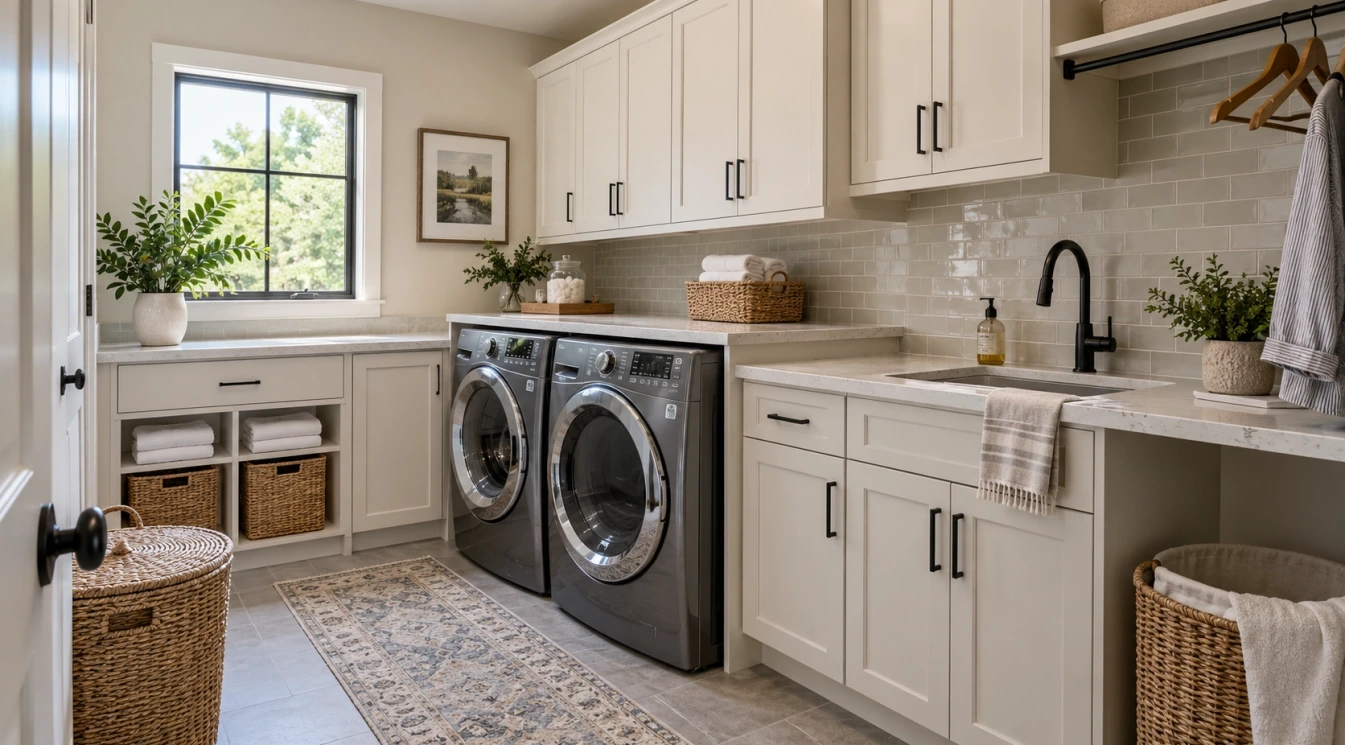
Start With the Work the Room Has to Do
Before choosing a countertop, tile, or floor, think about how the laundry room is actually used. A small laundry closet with side-by-side machines needs different materials than a larger room with cabinets, a sink, a folding counter, and storage for cleaning supplies. A family laundry room with pets and kids has different priorities than a lightly used upstairs laundry area.
Some laundry rooms are only for washing clothes. Others double as mudrooms, cleaning stations, pet areas, craft areas, utility storage, or secondary entrances from a garage or backyard. Those uses affect every material decision. The more jobs the room performs, the more important durability, cleanability, and layout become.
Countertops: Folding Space, Sink Support, and Everyday Durability
A laundry room countertop is useful because it turns the room from a machine area into a functional workspace. It can provide a surface above front-load machines, a folding counter beside a sink, a spot for baskets, or a place to organize cleaning products before putting them away. Even a modest counter can make the room feel more complete.
Quartz is often a practical choice because it offers consistent color, easy coordination, and a straightforward care routine. Granite and quartzite can work when the homeowner wants natural stone character. Porcelain can create a clean modern look, especially when coordinated with tile or wall surfaces. Laminate may also be considered in budget-focused spaces, but it needs to be selected and protected carefully around moisture.
Think About Moisture Before You Think About Color
Laundry rooms are not wet rooms, but moisture still matters. Damp clothes, leaking bottles, utility sinks, washer issues, mopping, and humidity can all affect materials over time. A countertop near a sink should be more forgiving than a decorative shelf. A floor near a washer should be able to tolerate everyday splashes and cleaning. A backsplash behind a sink or folding area should be easy to wipe.
This does not mean every surface has to feel commercial or cold. Durable materials can still look warm and residential. The goal is to choose finishes that can handle the room’s work without making the space feel like an afterthought.
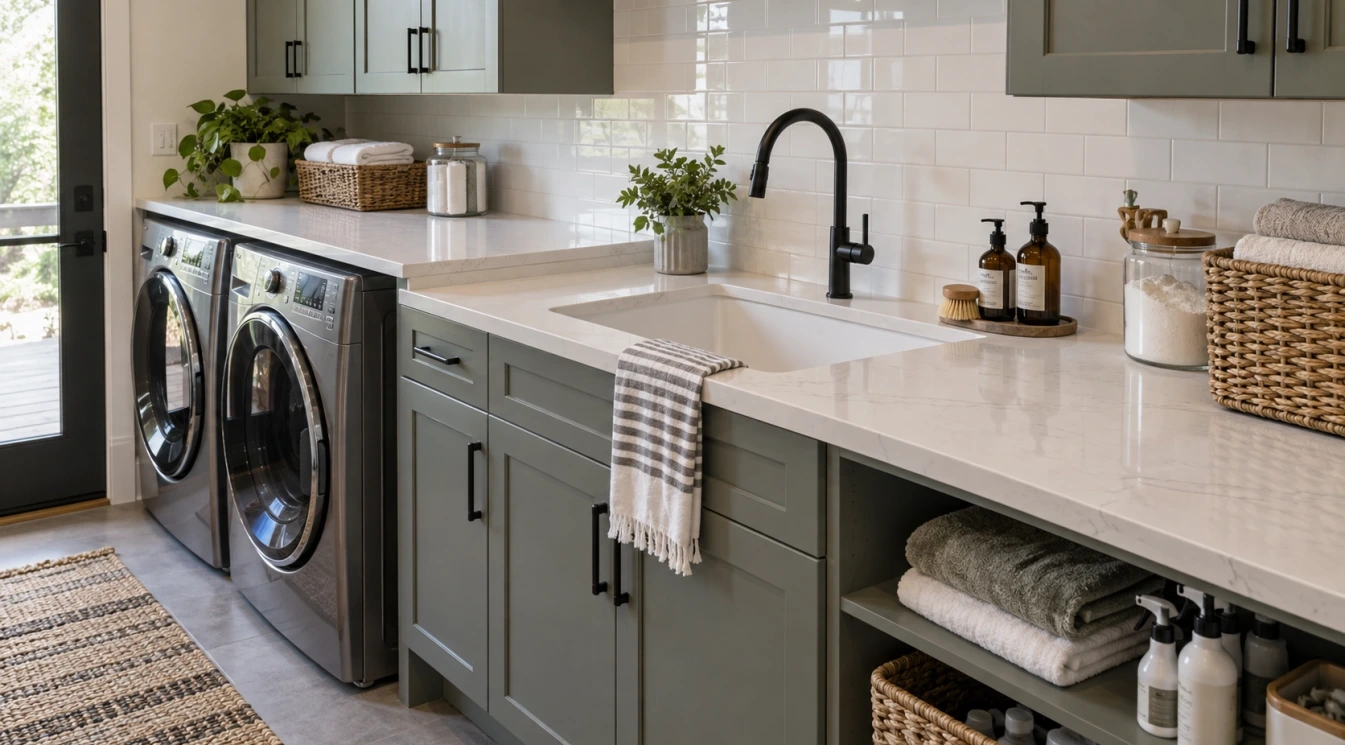
Flooring: The Surface That Takes the Most Abuse
Flooring is one of the most important laundry room choices because it receives the most direct wear. Laundry baskets get dragged across it. Shoes bring in dirt. Water can drip from clothing or cleaning tools. If the room connects to a garage or backyard, the floor may also handle dust, mud, and heavier use.
Porcelain tile is a strong option because it handles moisture well and offers many design choices, from stone looks to concrete looks to quiet neutrals. Luxury vinyl plank can also be practical when the homeowner wants a warmer feel underfoot and a wood-look surface. Natural stone can be attractive, but it may require more maintenance and careful sealing. Wood-based flooring should be chosen with caution in rooms where water exposure is likely.
Backsplash Tile Protects More Than It Decorates
A laundry room backsplash does not need to be elaborate, but it should be useful. Behind a utility sink, it protects the wall from splashes and cleaning. Behind a folding counter, it can prevent scuffs and marks. Around open shelving, it can make the wall easier to maintain.
Simple ceramic tile, porcelain tile, stone-look tile, handmade-look tile, and mosaic accents can all work. The best backsplash is often quieter than what a homeowner might choose for a kitchen feature wall. Laundry rooms are usually smaller, and too much pattern can make the space feel crowded. A subtle tile with close grout can make the room feel cleaner and more finished.
Cabinets Should Add Storage Without Making the Room Heavy
Cabinetry can make a laundry room far more useful. Tall cabinets can hide brooms, vacuums, and cleaning supplies. Upper cabinets can hold detergent and household products. Base cabinets can support a sink or countertop. Open shelves can make frequently used items easier to reach.
The challenge is visual weight. A small laundry room can feel tight if every wall is filled with dark cabinets. Light cabinets, natural wood, soft colors, and a balanced mix of closed storage and open space can keep the room practical without making it feel cramped. The cabinet finish should also work with the countertop, backsplash, and flooring instead of being selected separately.
A hardworking laundry room feels finished when every surface is chosen for both the mess it must handle and the calm it should bring back to the home.
Utility Sinks Need the Right Surrounding Materials
A utility sink changes the demands of the room. It may be used for soaking, rinsing, cleaning tools, washing small pet items, filling buckets, or dealing with stains. The countertop, backsplash, cabinet base, and floor around that sink need to be ready for splashes and repeated cleaning.
Undermount sinks can keep the counter easier to wipe, while drop-in or farmhouse-style sinks may suit certain cabinet designs. Wall tile behind the sink should be selected for cleaning, not only appearance. A beautiful tile with difficult grout maintenance may become frustrating in a room that is supposed to make chores easier.
Pet Areas and Mudroom Functions Change the Priorities
Many laundry rooms also serve as pet areas or mudroom-style spaces. That may mean food bowls, litter boxes, dog beds, pet washing, muddy shoes, backpacks, sports gear, or cleaning supplies. In those rooms, flooring and wall protection become even more important.
Porcelain tile, durable LVP, washable wall surfaces, simple baseboards, and a practical backsplash can make the room easier to live with. A dog-wash station or utility sink area may need tile that handles water and cleaning well. The best-looking surface is not helpful if it makes the room harder to maintain.
Use Light and Warmth to Avoid a Utility Closet Feeling
Laundry rooms are often small, narrow, or windowless. Durable materials should not make them feel colder. Warm cabinet tones, soft white quartz, light neutral tile, wood-look flooring, satin hardware, and thoughtful lighting can make the room more pleasant without sacrificing practicality.
Under-cabinet lighting, a better ceiling fixture, or natural light from a window can change how the materials feel. A laundry room used several times a week should not feel like a forgotten corner of the house. It should feel organized, clean, and comfortable enough to use.
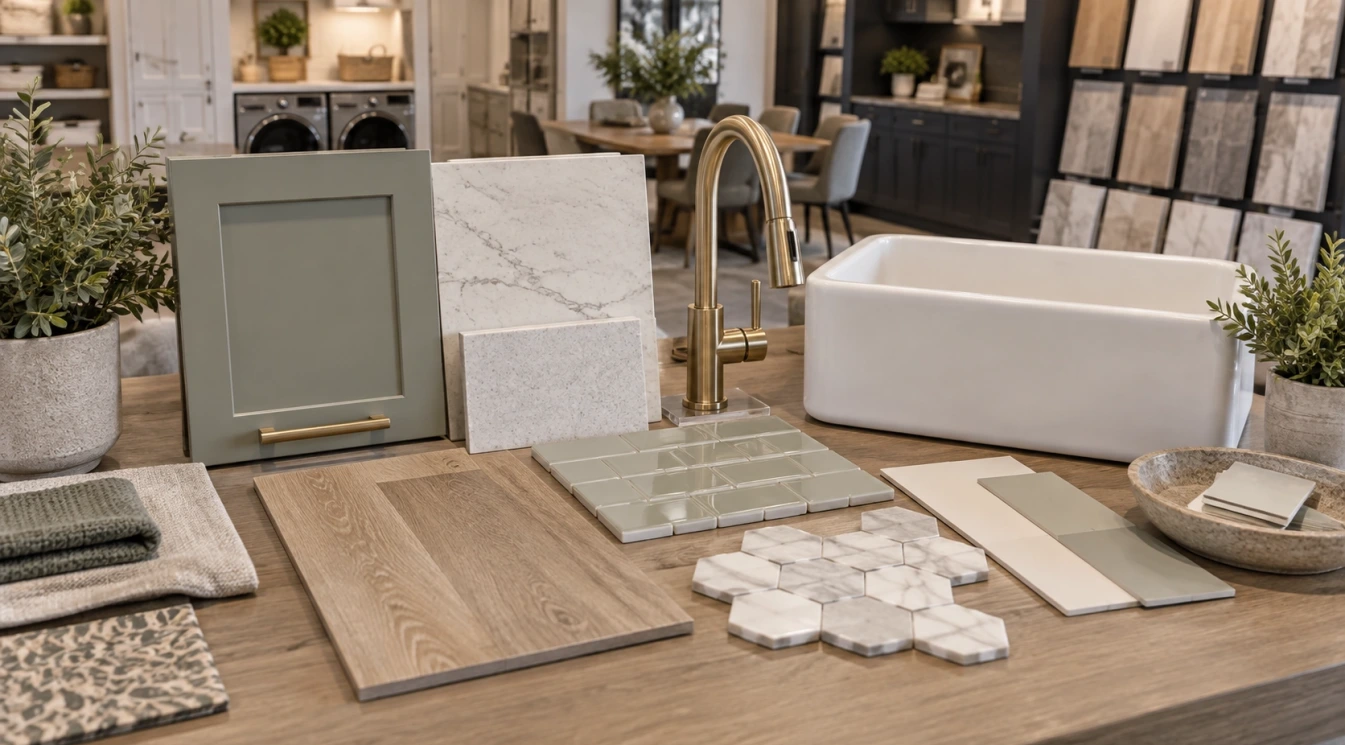
Material Combinations That Usually Work Well
Some combinations are reliable because they solve the room’s main problems. A quartz countertop with a simple tile backsplash and porcelain floor can create a clean, durable laundry room. A wood-look LVP floor with warm white cabinets and a quiet countertop can make the room feel softer. A natural stone counter can work beautifully when paired with simpler tile and flooring so the space does not become too busy.
- Quartz countertop with porcelain tile floor: practical for busy laundry rooms with sinks and folding counters.
- LVP flooring with light cabinets: useful when the homeowner wants warmth and comfort underfoot.
- Simple ceramic backsplash: good for protecting walls without overpowering a small room.
- Natural stone counter with quiet tile: best when the countertop is meant to be the feature.
- Porcelain surfaces with modern cabinets: strong for clean, low-grout, contemporary laundry rooms.
Avoid Materials That Make the Room Harder to Use
Some materials can look attractive but create daily frustration. Very dark floors may show lint, dust, and pet hair. Very glossy surfaces may show water spots and fingerprints. Busy floor patterns can make a small laundry room feel crowded. Highly textured tile can be harder to clean around a utility sink or pet area.
The best laundry room finishes have enough texture and variation to hide ordinary use, but not so much that they become difficult to maintain. Mid-tone flooring, subtle tile, durable countertops, and cleanable surfaces often work better than dramatic finishes in a room built around chores.
Choose Materials as One System
A laundry room may be smaller than a kitchen or primary bathroom, but the same design principle applies: the materials need to work together. A countertop should relate to the cabinet finish. The backsplash should connect to the counter and wall color. The floor should support the palette and handle daily use. Hardware and lighting should make the room feel finished without adding unnecessary clutter.
Domus Surfaces can help Sacramento homeowners compare laundry room countertops, porcelain tile, ceramic tile, LVP, natural stone, cabinets, and backsplash materials in one place. A laundry room does not need to be oversized or overly elaborate to feel well designed. It simply needs surfaces that work as hard as the room does.