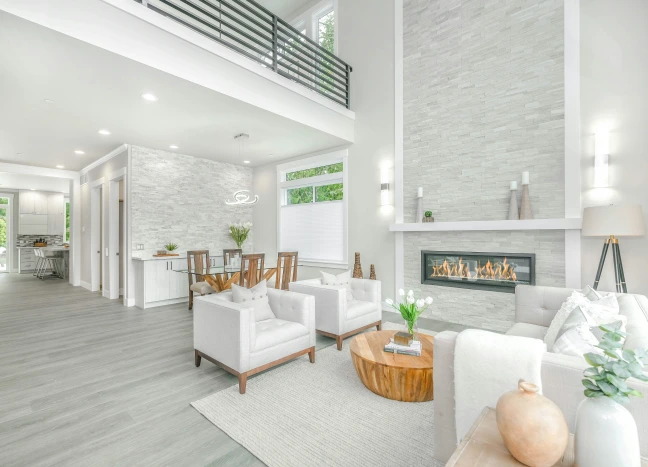
Fireplace Surround Materials: Porcelain Slabs, Natural Stone, and Tile
A fireplace surround is more than the material placed around a firebox. In many homes, it becomes the visual center of the living room, family room, great room, or primary suite. Even when the fireplace is not used every day, the wall around it is always visible. That makes the material choice important: it has to suit the architecture, handle the scale of the wall, coordinate with flooring and furniture, and feel appropriate for the style of the home.
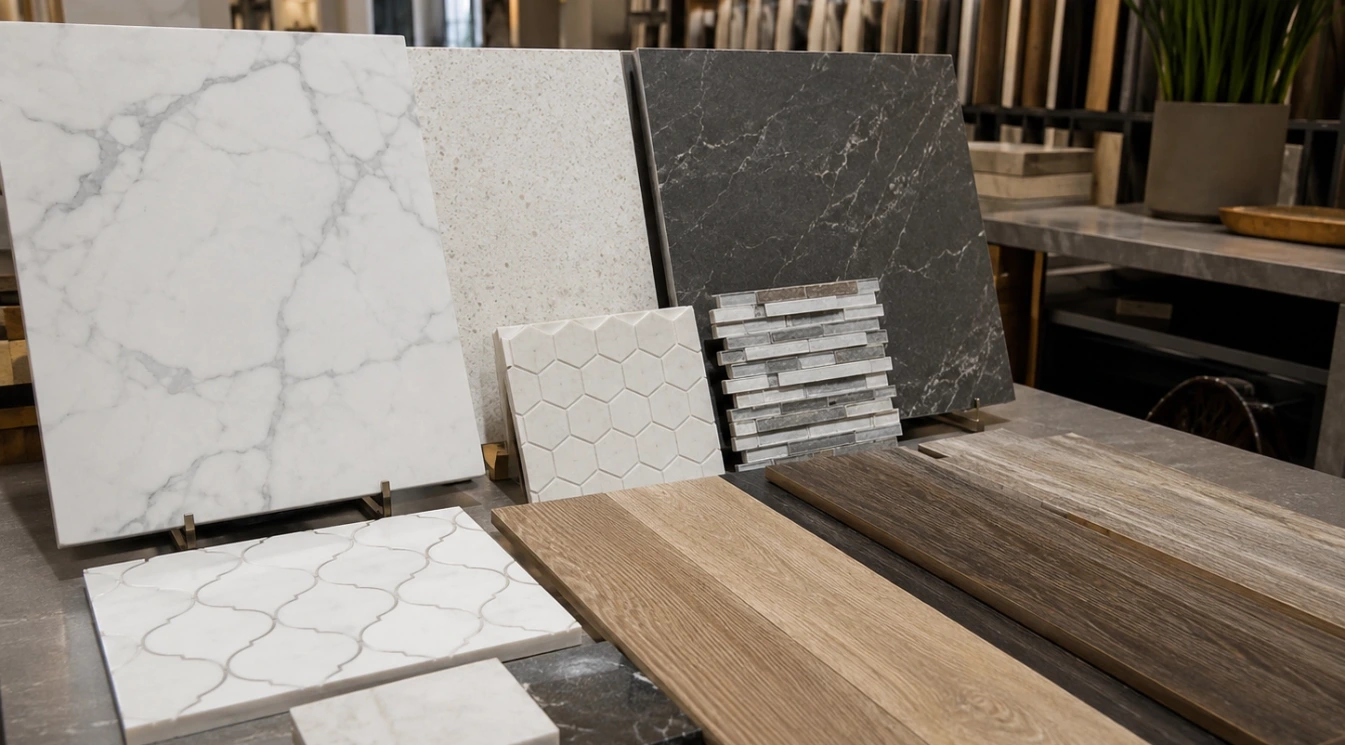
Porcelain slabs, natural stone, ceramic and porcelain tile, marble-look surfaces, limestone-look panels, textured tile, and large-format materials can all work beautifully around a fireplace. The right choice depends on whether the surround should feel quiet, dramatic, rustic, modern, traditional, or fully architectural. A fireplace can be a subtle background element, but it can also become the feature that gives the entire room its character.
Start With the Scale of the Fireplace Wall
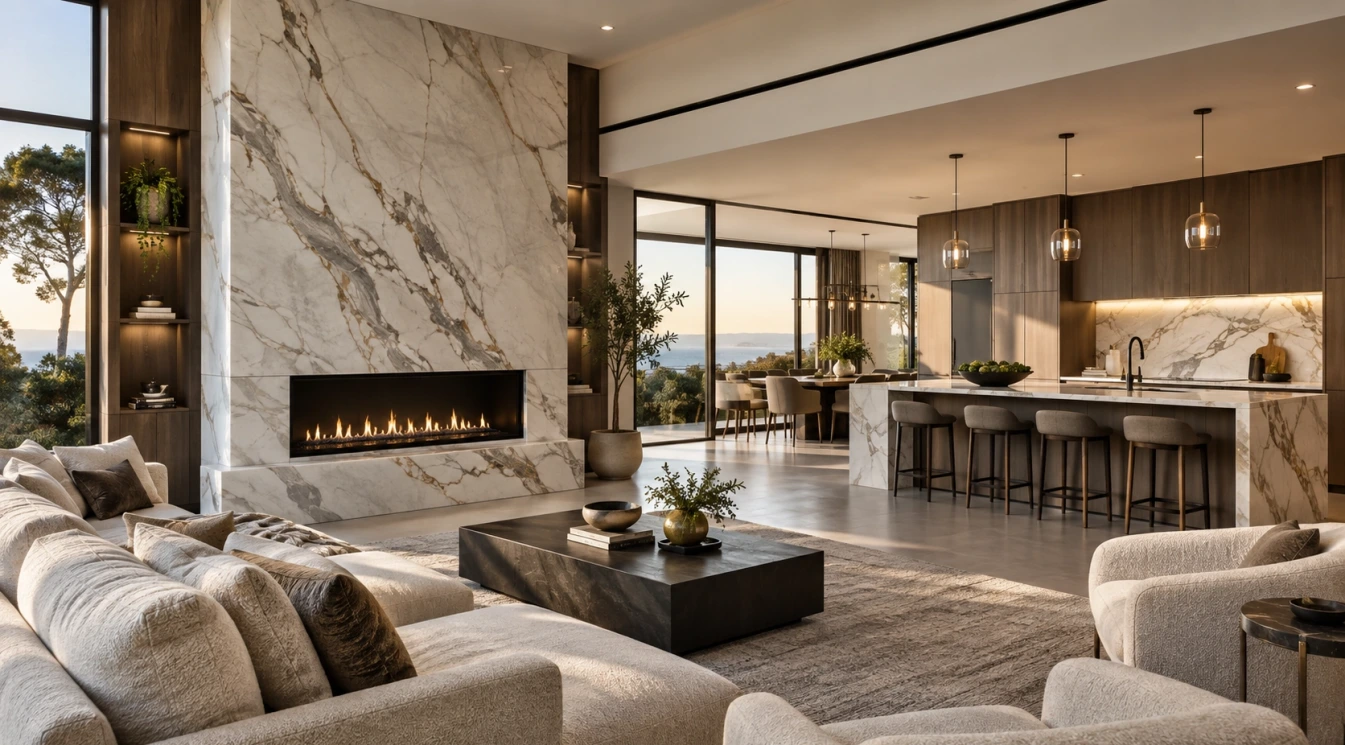
The first question is not only which material looks good on a sample. It is how much wall the material needs to cover. A small fireplace opening with a narrow surround may need a different surface than a tall two-story fireplace wall. A modest surround can carry texture or pattern in a controlled way. A large wall needs material with the right scale, movement, and proportion so it does not look empty or overwhelming.
Large-format surfaces, porcelain slabs, and natural stone slabs are often strongest when the wall itself is a major feature. Smaller tile may work better when the fireplace is part of a built-in cabinet wall, a traditional mantel design, or a room where texture matters more than uninterrupted surface. The best material is the one that fits the wall, not just the sample board.
Porcelain Slabs: Clean, Large, and Architectural
Porcelain slabs are a strong option when the goal is a clean, modern fireplace wall with fewer grout lines. They can create a broad surface that feels more architectural than a traditional tile surround. Many porcelain slabs are designed with marble-look, stone-look, concrete-look, or dramatic veined patterns, which gives homeowners a wide range of styles without relying only on natural stone.
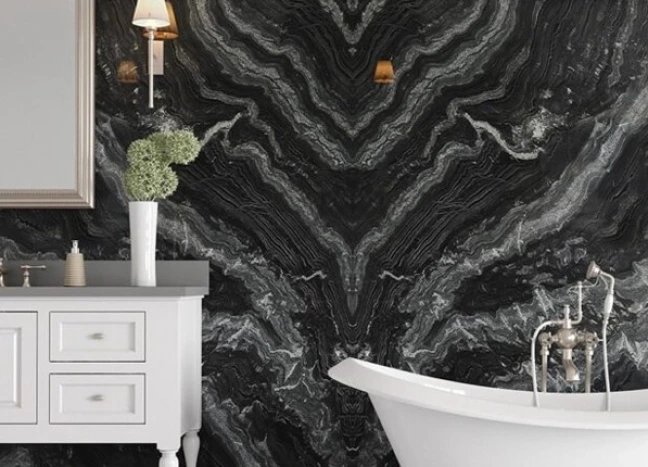
Porcelain can look especially refined around linear fireplaces, modern gas fireplaces, and full-height feature walls. A quiet limestone-look porcelain slab can create a calm backdrop. A dark porcelain slab can make the fireplace feel dramatic and grounded. A marble-look porcelain slab can bring movement and elegance while keeping the wall visually cleaner than small tile.
Porcelain Slab Details Still Need Planning
Porcelain slabs are not just oversized tiles. The finished result depends on cuts, edges, returns, seams, corners, and how the slab meets the fireplace opening. A strong veined pattern may need to be centered, continued, or balanced around the firebox. If the slab is used from floor to ceiling, the layout should be planned before cutting so the wall feels intentional.
Transitions matter too. A fireplace wall may meet drywall, wood flooring, tile flooring, built-in shelving, a hearth, or cabinet panels. Exposed edges and corners should look deliberate. A beautiful porcelain slab can lose its impact if the wall details feel unfinished.
Natural Stone: Depth, Variation, and Presence
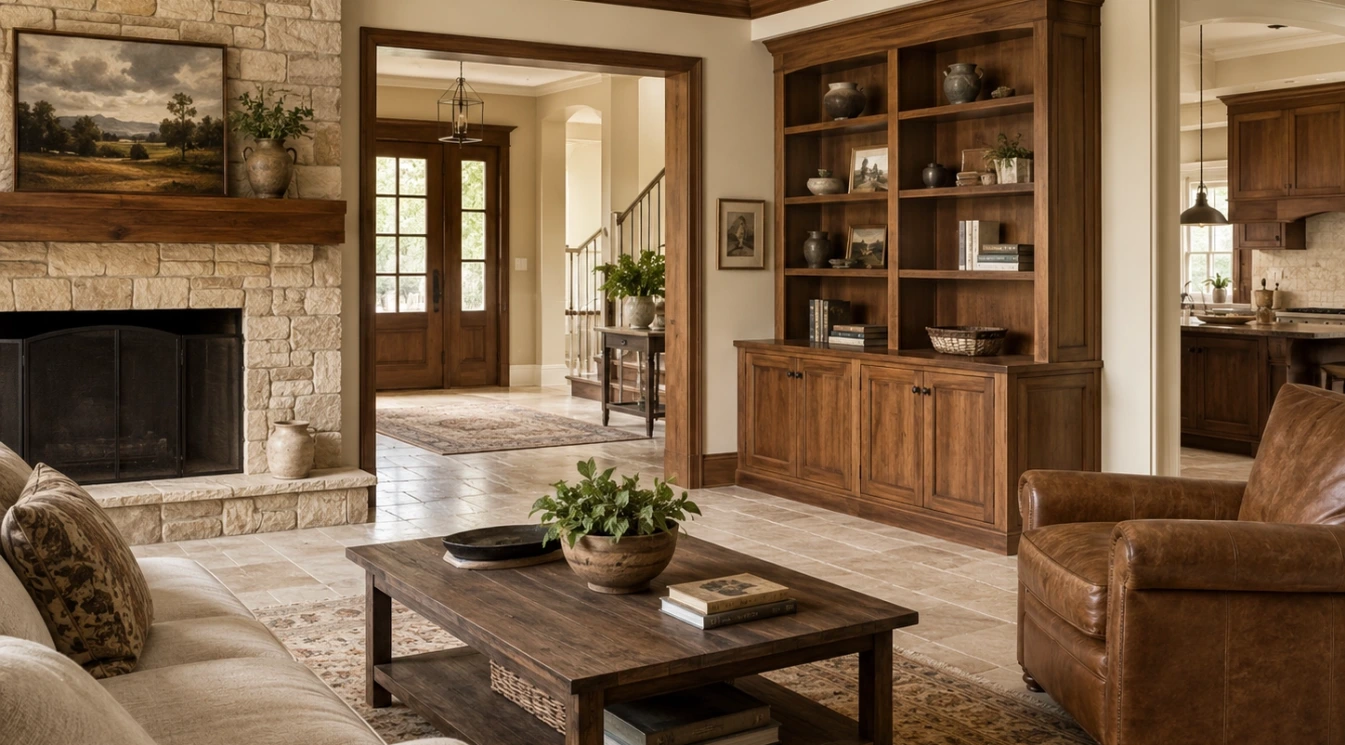
Natural stone has a depth and character that manufactured surfaces can imitate but not fully duplicate. Marble, quartzite, granite, limestone, travertine, slate, and other stones each bring their own movement, texture, and personality. Around a fireplace, natural stone can make the room feel substantial and established.
A refined marble surround can suit a formal living room or elegant primary suite. Quartzite can bring dramatic movement and natural strength. Limestone and travertine can soften the room with warmer texture. Slate and darker stones can give a fireplace wall a grounded, architectural feeling. The right stone depends on the room’s style, lighting, flooring, and how much variation the homeowner wants to see every day.
Tile Surrounds: Flexible, Detailed, and Highly Customizable
Tile remains one of the most flexible fireplace surround choices. It can be quiet or decorative, modern or traditional, handmade or crisp, textured or smooth. Ceramic tile, porcelain tile, stone tile, mosaic tile, and large-format tile each create a different effect around a fireplace.
Tile is especially useful when the design needs rhythm, pattern, or texture. A handmade-look tile can soften a clean room. A vertical tile layout can make a fireplace wall feel taller. A stone mosaic can add detail around a smaller opening. A simple large-format tile can give the wall a calm, modern look without using full slabs.
Think Carefully About Grout
Grout is part of the design, not a detail to ignore. A high-contrast grout can turn the fireplace surround into a grid or pattern. That may be right for a specific tile, but it can also make the wall busier than intended. A grout color closer to the tile creates a calmer effect and allows the tile texture or surface finish to speak more quietly.
On a fireplace wall, grout lines can influence scale. Small tiles with visible grout may make a large wall feel active. Larger tiles with close grout can create a cleaner surface. The decision should be made while looking at the room, not just the tile sample.
A fireplace surround works best when the material does not simply frame the fire, but gives the entire wall a sense of proportion, texture, and purpose.
Marble-Look Surfaces Without Using Marble
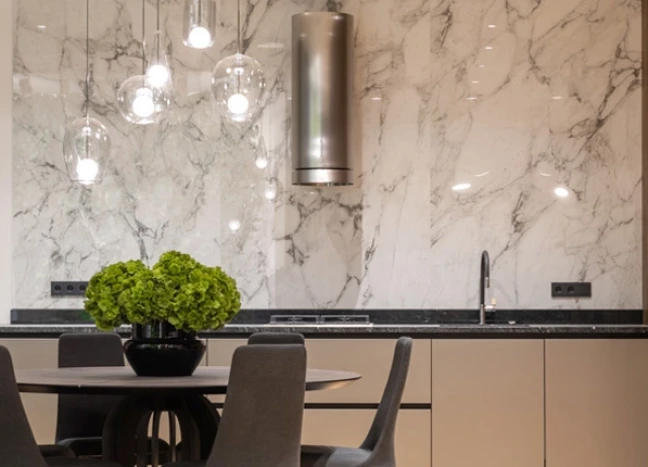
Many homeowners like the look of marble around a fireplace but prefer porcelain, quartz, or other marble-look materials for the project. Marble-look porcelain slabs and large-format porcelain tile can provide soft veining, bright backgrounds, or dramatic contrast while creating a more controlled appearance than natural marble.
This can be useful when the fireplace wall needs elegance without too much unpredictability. A marble-look porcelain slab behind a linear fireplace can feel modern and clean. A quieter marble-look tile can work around a traditional mantel. The important question is whether the pattern scale fits the fireplace wall. A small repeating pattern may look artificial across a large surface, while oversized movement can overwhelm a compact surround.
Rustic, Transitional, and Modern Rooms Need Different Materials
A rustic room may need the warmth of textured stone, travertine, slate, stacked stone, or a surface with more natural variation. A transitional room may work best with soft limestone looks, neutral tile, lightly veined porcelain, or a restrained natural stone. A modern room often benefits from larger panels, cleaner grout lines, and simpler detailing.
The fireplace should also relate to the flooring. Wood floors often pair well with warm stone, limestone-look porcelain, textured tile, or softer marble-look surfaces. Cool gray tile or very sharp white slabs can look striking, but they should be balanced with the room’s furniture, wall color, and lighting.
The Hearth, Mantel, and Built-Ins Change the Decision
A fireplace with a raised hearth needs different planning than a flush wall fireplace. A traditional mantel can soften a stone or tile surround and may reduce how much surface is visible. Built-in shelves or cabinets can make the fireplace part of a larger wall composition, which affects material scale and color.
If the fireplace has a TV above it, the material should not be so visually loud that it fights the screen and furniture arrangement. If the wall has open shelving, the surround may need to be quieter. If the fireplace is the only major feature in the room, a more dramatic slab or stone may make sense.
Safety, Heat, and Product Suitability Matter
Fireplace surrounds are decorative, but they still need appropriate materials and proper installation. The exact requirements depend on the fireplace type, manufacturer clearances, local code, substrate, and how close the material sits to the heat source. Gas fireplaces, electric fireplaces, wood-burning fireplaces, and inserts can all have different requirements.
Homeowners should confirm that the selected surface is suitable for the specific fireplace application. The material, setting products, backing, adhesives, trims, and installation method should all be planned correctly. Good design still has to respect the technical side of the wall.
How to Choose the Right Fireplace Surround Material
Start with the room’s style and the scale of the wall. Decide whether the fireplace should be a quiet background surface or the main feature. Then compare porcelain slabs, natural stone, tile, grout, flooring, cabinet finishes, and wall color together. The surround should not feel like a separate object placed into the room. It should feel like part of the architecture.
If the room already has bold flooring, heavy woodwork, or colorful furniture, a quieter fireplace surface may be stronger. If the room is simple and neutral, the fireplace wall may be the right place for movement, texture, or a dramatic slab. The best choice depends on what the room needs, not only what looks impressive in the showroom.
Plan the Fireplace Wall as a Complete Feature
A fireplace surround can be one of the most rewarding material decisions in a remodel because it changes how the entire room feels. Porcelain slabs can create clean, dramatic, low-grout surfaces. Natural stone can bring depth and permanence. Tile can add texture, pattern, and flexibility. Each option has a place when the scale, style, and technical details are handled thoughtfully.
Domus Surfaces can help Sacramento homeowners compare porcelain slabs, natural stone, tile, flooring, and related surfaces so the fireplace wall works with the rest of the home. A fireplace is often the room’s natural focal point, and the right surround material can make that focal point feel intentional, balanced, and lasting.