Kitchen Backsplash Tile: Which Materials Are Easiest to Clean?
Tomato sauce splashes behind the range. Cooking oil leaves a fine film near the stove. Coffee, steam, and everyday wiping reach the wall beside the sink. A kitchen backsplash is exposed to all of it, so choosing tile is partly a design decision and partly a question about how much cleaning you want to do.
For many households, smooth glazed ceramic and porcelain tile are excellent low-maintenance choices. Glass tile can also be easy to wipe, although its reflective surface may show fingerprints and streaks. Natural stone has its own appeal but often asks for more careful cleaning. The grout, texture, and tile size can change the experience as much as the material itself. Here is how those differences play out in a real kitchen.
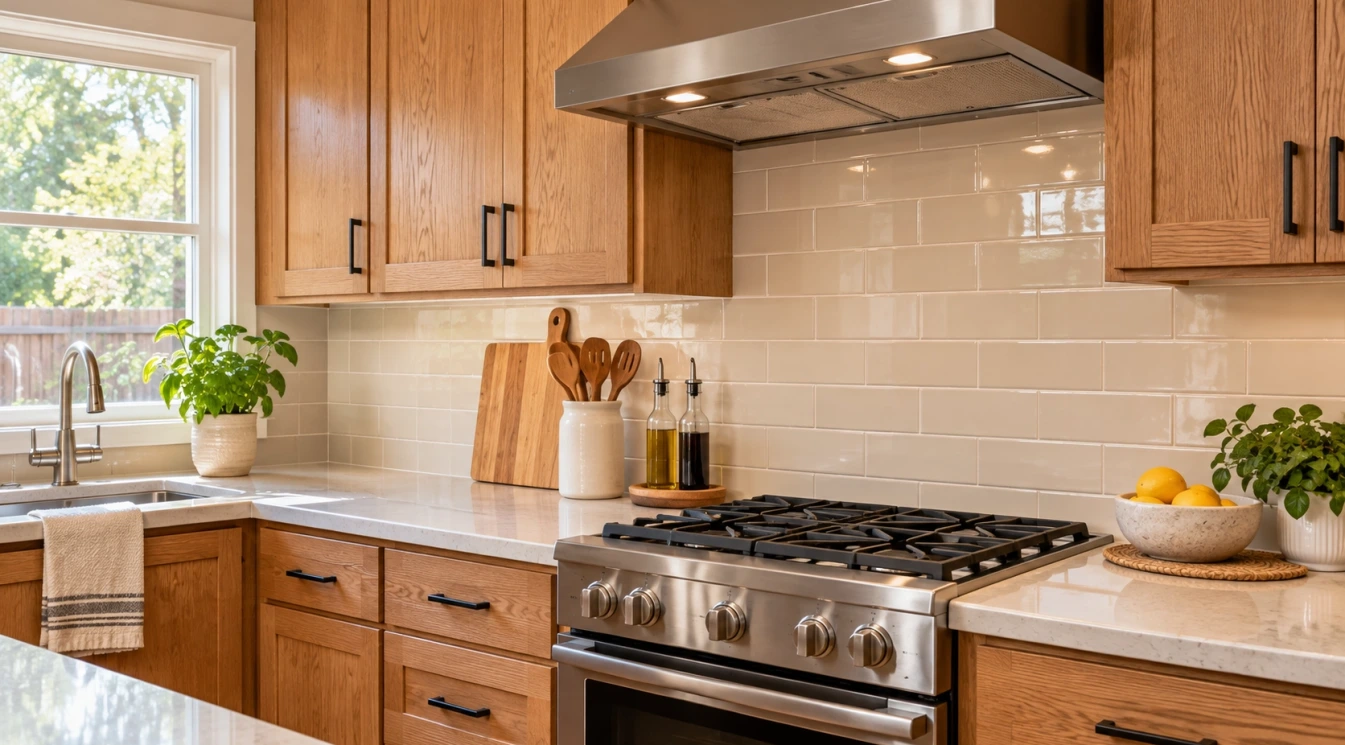
What Makes Kitchen Backsplash Tile Easy to Clean?
The best backsplash for cleaning is rarely determined by color alone. A glossy white tile might wipe down easily, while a heavily textured dark tile can hold cooking residue in tiny grooves. A beautiful mosaic can require more attention because of its many grout joints. A large smooth tile offers fewer joints, but its surface finish still needs to suit everyday cooking.
Before choosing a material, look at four things: the face of the tile, the number and type of grout joints, the area where it will be installed, and the cleaning products allowed by the manufacturer. A backsplash behind an active range experiences more airborne oil and food splashes than one behind an uncluttered coffee station. Planning for the messiest part of the kitchen helps avoid surprises later.
Glazed Ceramic Tile: A Practical Everyday Favorite
Glazed ceramic tile is one of the most approachable choices for a kitchen backsplash. Its fired glaze provides a surface that typically releases everyday splashes with a soft cloth and an appropriate cleaner. It comes in everything from simple rectangular tile to small squares and handmade-look shapes, so choosing something practical does not mean settling for a plain kitchen.
A smooth, even glaze is generally the easiest version to wipe. Deeply rippled ceramic, crackle-glazed products, or tile with prominent edges and recesses can be harder to clean around a stove. Some decorative glazes and crackle finishes have special sealing or cleaning requirements, so check the product instructions rather than assuming every ceramic tile behaves alike.
If you like a classic subway backsplash, consider how the tile is finished before deciding on size. A smooth 3-by-12-inch ceramic tile with carefully chosen grout can be a manageable choice for a busy household. A much smaller arrangement may give the same color and character with more joints to maintain.
Porcelain Tile: Durable, Versatile, and Usually Simple to Maintain
Porcelain is a type of ceramic tile manufactured to meet a very low water-absorption standard. Many porcelain wall tiles provide a hard, easy-care surface and can imitate marble, limestone, concrete, or other finishes. For homeowners who love the appearance of natural stone but prefer a more predictable maintenance routine, a suitable stone-look porcelain tile is worth comparing.
Porcelain is not automatically easier to clean than every glazed ceramic product. A smooth glazed ceramic backsplash may be just as convenient as a smooth glazed porcelain backsplash. Meanwhile, some unglazed, matte, or deeply structured porcelain finishes need a more specific cleaning routine. Compare the actual samples and their care instructions, not just the material name on the label.
Porcelain can also be offered in larger formats. With the right design and installation, a larger surface may reduce the number of grout joints behind the range. That can be useful for cleaning, although layout, outlet cuts, edge details, and wall preparation still matter.
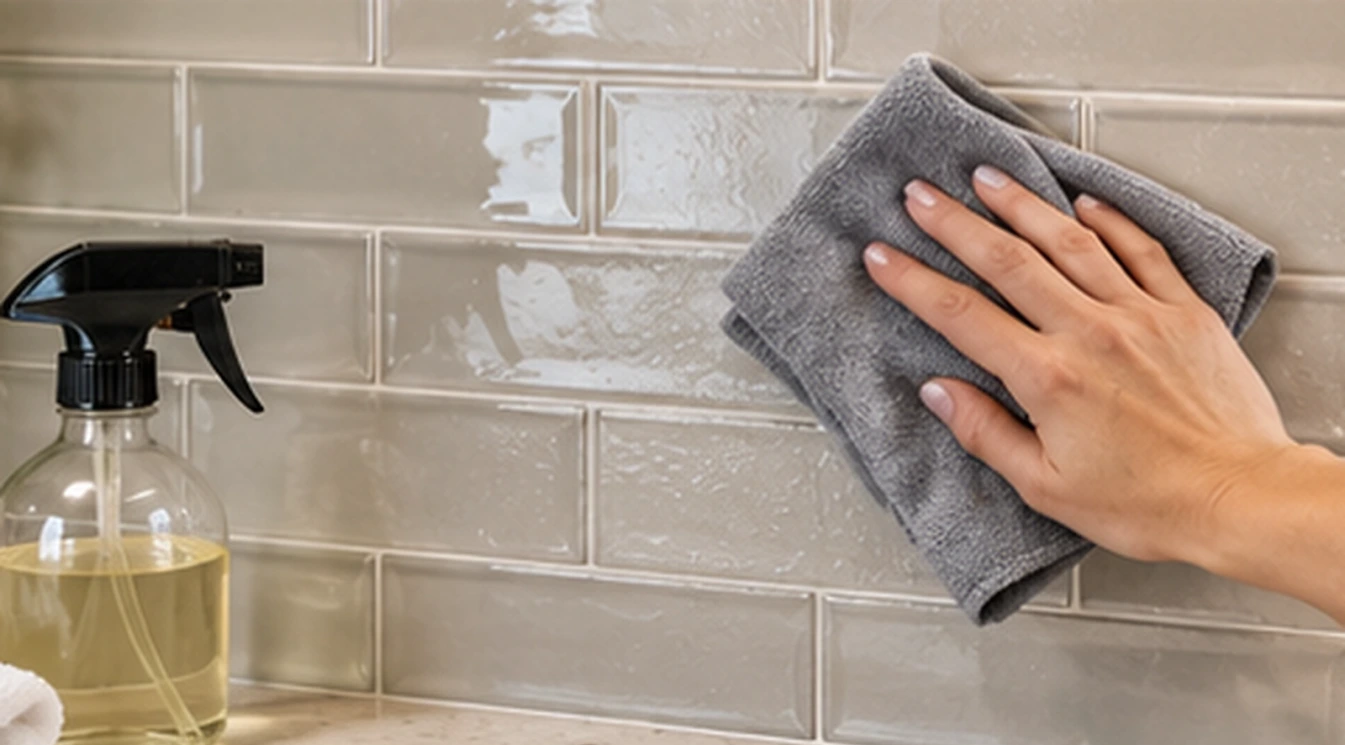
Glass Tile: Easy to Wipe, But More Likely to Show Streaks
Glass tile gives kitchens a crisp, reflective appearance. On a smooth, properly installed glass face, food and grease residue can often be removed with a nonabrasive cleaner compatible with the specific tile and grout. It can be an appealing choice for a bright kitchen, especially when the glass is used as a restrained accent rather than competing with the countertop.
The tradeoff is visibility. Fingerprints, dried droplets, and cloth marks can show more clearly on glossy glass, especially when sunlight or under-cabinet lighting hits the wall at an angle. Textured, frosted, or specialty-backed glass products have their own care and installation requirements. Avoid abrasive pads and check which cleaning products the manufacturer allows.
Glass mosaics also introduce many grout lines. If minimizing maintenance is the priority, compare the appearance and care of a larger glass format with a small mosaic rather than assuming the glass itself makes either installation equally easy to maintain.
Natural Stone: Character Comes With a Different Care Routine
Marble, limestone, travertine, and other natural stones can give a kitchen backsplash softness and depth that manufactured tile may not duplicate exactly. They can be a great fit when natural variation matters more to the homeowner than a completely uniform surface. But the extra character may come with extra care.
Some natural stones are porous and may need a compatible penetrating sealer, depending on the stone and finish. Acid-sensitive stones such as marble and limestone can etch from ingredients like lemon juice or vinegar; sealing may help resist some stains, but it does not prevent acid etching. Grease splashes deserve prompt cleanup, and daily cleaners should be approved for the particular stone.
For a homeowner who cooks often and wants the least complicated routine, stone-look ceramic or porcelain may be a better match than delicate natural stone immediately behind the range. If you do choose real stone, ask about sealing, cleaners, and how the finish will look after years of ordinary use.
Texture and Mosaic Patterns Can Change the Workload
A smooth backsplash with gentle variation can be surprisingly forgiving. By contrast, strongly raised surfaces, deep grooves, and rough split-face details create places where airborne grease can settle. Those finishes can look striking on a feature wall, but the area directly behind a cooktop is a less forgiving location.
Small mosaics are similar: the tiles may be easy to clean individually, but each extra joint adds another line that can collect residue. That does not rule out mosaics. It simply makes grout selection and cleaning expectations more important. If a mosaic is the detail you love, consider using it on a lower-splash wall and choosing a smoother surface behind the stove.
Grout Matters Almost as Much as the Tile
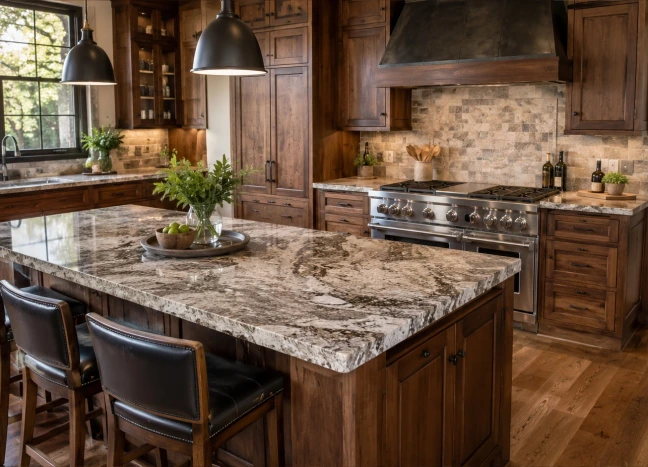
Homeowners sometimes focus on whether porcelain or ceramic is easier to clean while overlooking the grout between the pieces. Conventional cement-based grout is often more absorbent than a glazed tile face and may need sealing or periodic maintenance. Some high-performance and epoxy grout products offer improved stain resistance, but their installation requirements, compatibility, price, and care instructions differ.
Even a stain-resistant grout is not self-cleaning. It can still collect cooking film on the surface. A medium-toned grout may make ordinary use less visible than bright white, but color alone does not replace proper maintenance. Choose grout based on the tile manufacturer's requirements, joint width, the installer’s recommendations, and how the finished wall should look.
The line where the backsplash meets a countertop is another detail worth discussing with the installer. Changes of plane commonly call for an appropriate flexible sealant rather than rigid grout, since the adjoining surfaces can move differently. A well-planned joint is easier to maintain than a cracked one.
An easy-care backsplash is one that still feels right after dinner has been cooked, served, and cleaned up.
Which Tile Makes the Most Sense Behind a Stove?
If you routinely sauté, fry, or cook sauces, a smooth glazed ceramic or porcelain backsplash is a sensible starting point. It offers a practical wipe-clean face without requiring you to give up color, pattern, or a stone-inspired appearance. A smooth glass tile is another option for homeowners who do not mind buffing away occasional streaks.
Before installation, verify that the exact tile, backing materials, adhesives, and surrounding finishes are suitable for the intended wall and the appliance manufacturer's required clearances. A kitchen range can create conditions different from a decorative wall, and not every specialty tile or backing material is approved for every location.
Behind a sink or beverage station, the same practical choices work well, but the emphasis may shift from grease to water spots and fingerprints. In quieter areas of the kitchen, a more textured or decorative backsplash can make sense without becoming a daily cleaning burden.
A Realistic Cleaning Routine for Kitchen Backsplash Tile
Most backsplash cleaning becomes easier when food and oil residue are removed before they build up. Start with a soft microfiber cloth or nonabrasive sponge and a pH-neutral cleaner approved for your tile and grout. Let the product work for the time specified on its label, then wipe and rinse as directed. Drying glossy surfaces afterward can reduce visible streaks.
Avoid treating every kitchen surface with the same strong degreaser. Vinegar and acidic products can damage acid-sensitive stone and some grout or finishes; abrasive pads may scratch glass or decorative surfaces. If the backsplash is natural stone, use a stone-compatible cleaner. If grease has accumulated, consult the manufacturer before trying a stronger specialty cleaner, and test it in an inconspicuous area first.
Grout and flexible joints also deserve an occasional inspection. Check for staining, crumbling, or separation, and follow the manufacturer's maintenance instructions. Prompt attention to a small joint issue is generally easier than waiting until cooking residue becomes embedded.
When a Full-Height Slab Backsplash Is Worth Considering
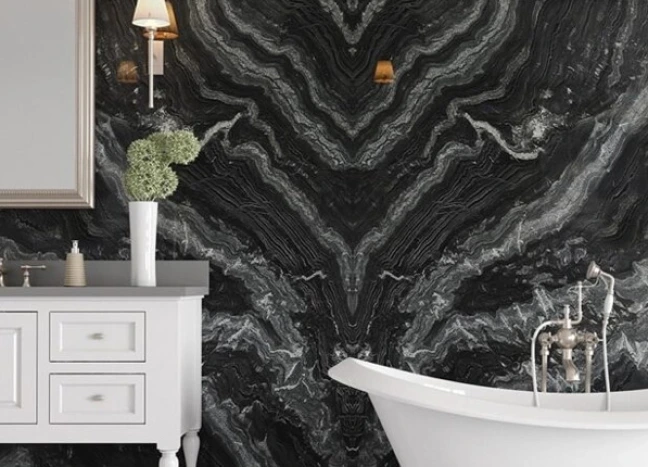
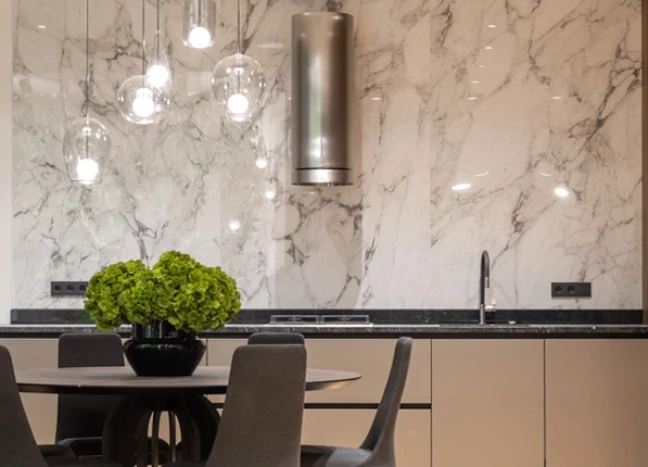
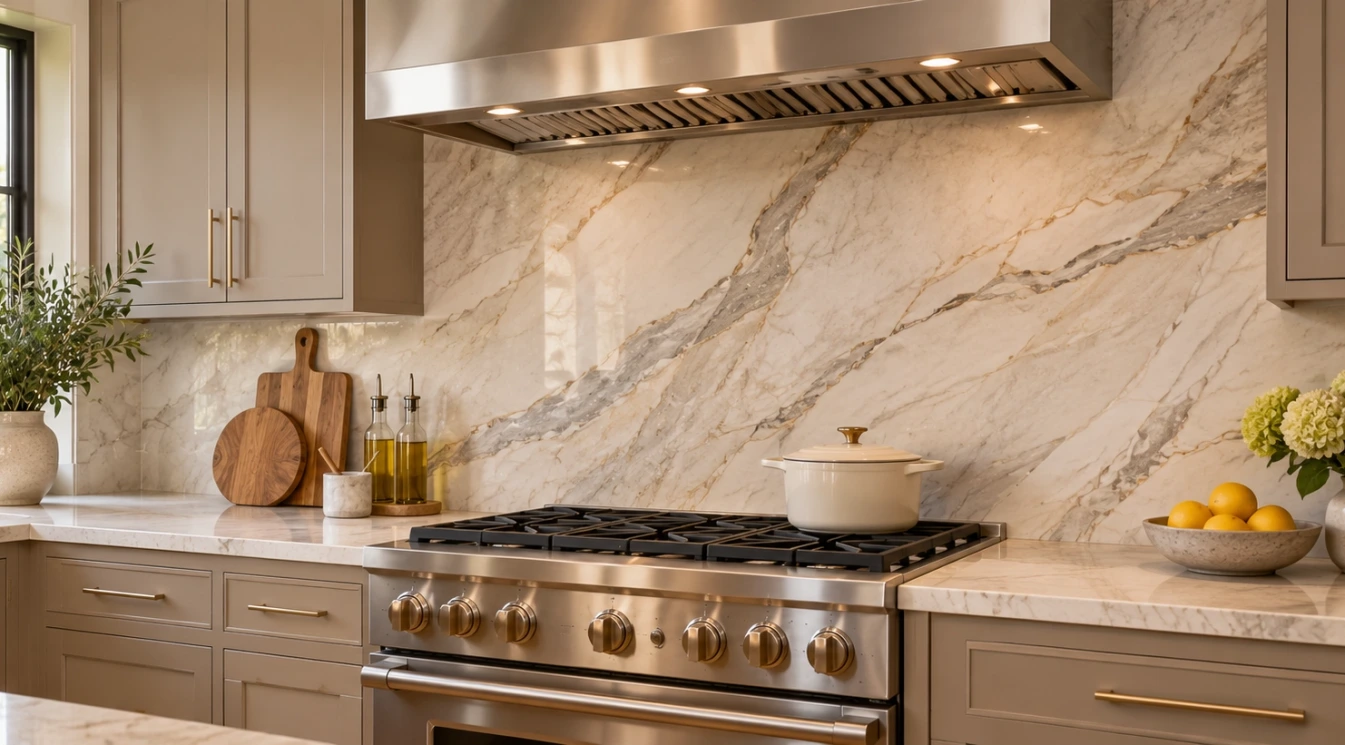
If cleaning grout is the part you dread, tile is not the only choice. A full-height slab backsplash uses one or more large panels, often continuing from the countertop to the upper cabinets or range hood. The result can be beautiful, especially when the veining flows up from the counter. There is also a practical benefit: fewer joints where splattered sauce and cooking oil can linger. On a suitable, smooth surface, wiping down the wall is often straightforward.
Care still depends on the material. Porcelain slabs can be a low-maintenance option when the product is suitable for a kitchen wall. Marble and some other natural stones need more careful cleaning; sealer can help resist stains but does not prevent acid etching. Engineered quartz offers another continuous look, but the surface manufacturer's heat guidance and the appliance manufacturer's clearances must be followed, particularly behind a range. Even a slab backsplash has seams and joints around its edges, so it is not completely maintenance-free.
Slabs also take planning. Outlet openings, wall conditions, edges, transport, and the direction of the pattern can all affect fabrication and installation costs. The choice is not simply expensive slab versus inexpensive tile; detailed tile work can require considerable labor too. For a closer look at design and cost differences, read our slab-versus-tile backsplash comparison.
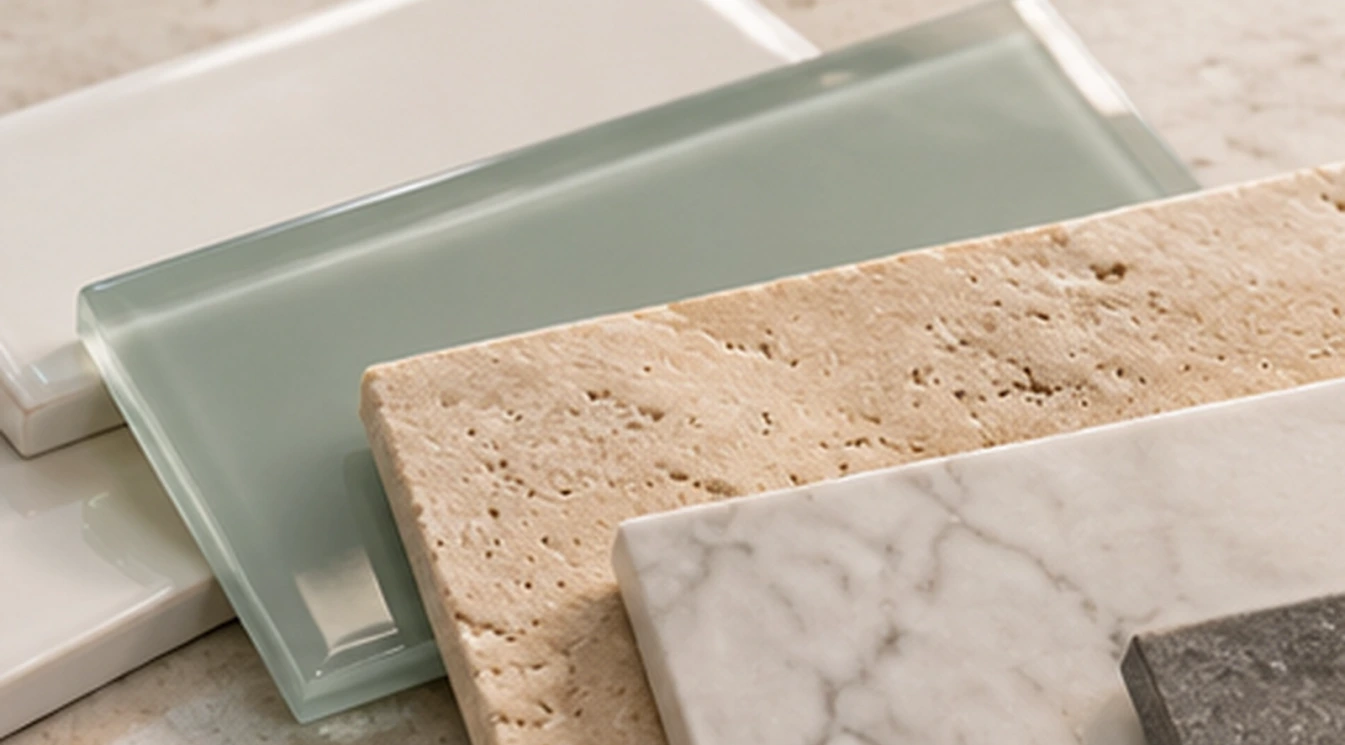
How to Compare Backsplash Tile Before You Buy
Pictures can show color and pattern, but they rarely reveal how a surface feels to clean. When comparing samples, look at them under side lighting to see raised edges, texture, reflections, and grout spacing. Ask for the written care instructions. If a spare sample is available, try wiping it with a manufacturer-approved cleaner before making your decision.
Bring your countertop and cabinet finishes into the decision as well. A backsplash can be easy to clean and still feel out of place in the kitchen. Compare the samples together in natural and under-cabinet light, and explore the Domus Surfaces tile collection to narrow down the finishes you like.
Common Questions About Easy-to-Clean Backsplashes
Is white backsplash tile harder to keep clean?
Not necessarily. A smooth white glaze can be simple to wipe, although a high-contrast splash may show until it is cleaned. Grout color and texture often have more influence on how much maintenance a white backsplash seems to need.
Do ceramic and porcelain backsplashes need sealing?
Many glazed ceramic and porcelain tile faces do not require sealing, but unglazed or specialty finishes can have different instructions. Cement-based grout and certain decorative surfaces may need a suitable sealer. Always check the specific product.
Is a glossy backsplash always easier to clean than a matte one?
No. A smooth glossy surface can release grease easily but reveal streaks. A smooth matte finish may hide fingerprints better. Surface texture and the manufacturer's cleaning guidance matter more than the single word glossy or matte.
Find a Kitchen Backsplash That Suits the Way You Cook
There is no need to choose between a backsplash that looks good and one that is practical. The most satisfying choice usually comes from deciding how much texture and maintenance you want, then comparing actual ceramic, porcelain, glass, and stone samples with your countertops and cabinets.
At Domus Surfaces, homeowners planning Sacramento-area kitchens can explore backsplash tile and coordinating materials and discuss which finishes fit their routine. Bring a cabinet photo, a countertop sample if you have one, and a sense of where the wall gets the most splashes. You can also contact the showroom before visiting.