The best Taj Mahal quartzite projects start with the slab itself: the color temperature, vein direction, finish, and layout should all be chosen before the rest of the room is finalized.
Taj Mahal Quartzite: Warm Natural Stone for Kitchens, Islands, and Bathrooms
Taj Mahal quartzite has become one of the most requested natural stone looks for homeowners who want a bright kitchen without the cold feeling that sometimes comes with stark white surfaces. The appeal is easy to understand: soft ivory and cream tones, gentle beige movement, and warm gold veining that can make a kitchen feel elegant, calm, and expensive without looking too busy. For Sacramento kitchen remodeling projects, Taj Mahal quartzite is especially useful because it works with both modern and traditional homes, and it pairs naturally with white cabinets, light oak, walnut, brass, black fixtures, and warm neutral flooring.
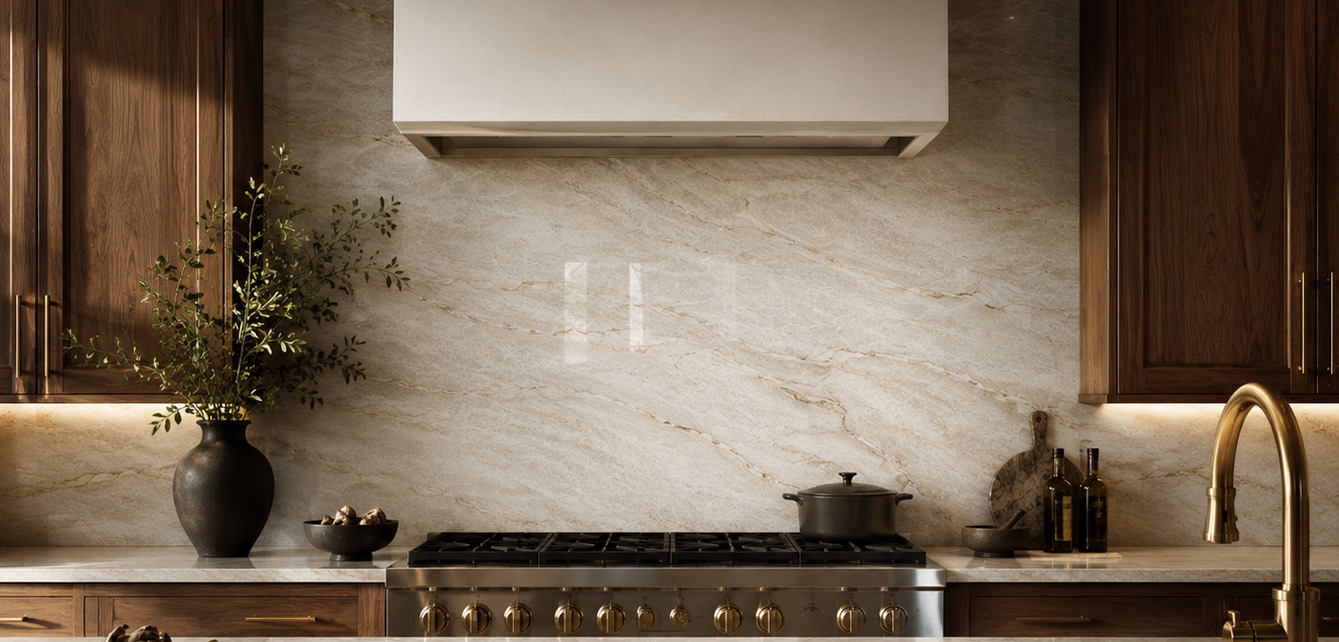
Online photos can give you the general idea, but Taj Mahal quartzite is a natural stone, so every slab can look different. Some slabs lean warmer and creamier. Some have stronger gold movement. Others look lighter, quieter, and more subtle. That natural variation is part of the reason people search for Taj Mahal quartzite countertops in the first place. It gives a kitchen or bathroom the softness of a marble-inspired design, but with a different natural stone character and a more grounded, warm look.
If you are comparing Taj Mahal quartzite with quartz, granite, marble, or porcelain slabs, the right choice depends on how you want the room to look, how you use the surface, and how much natural variation you want. Taj Mahal quartzite is not the same as engineered quartz. It is a natural stone slab, which means the pattern is not printed or repeated. That makes slab viewing, layout planning, and fabrication details very important.
Why people choose Taj Mahal quartzite
- Warm ivory, cream, beige, and soft gold tones that feel elegant without being harsh
- Natural stone movement that can make an island, full-height backsplash, or vanity feel custom
- A lighter countertop look that pairs well with white, oak, walnut, taupe, and darker cabinets
- A premium slab choice for kitchens, bathrooms, waterfall islands, fireplaces, and feature walls
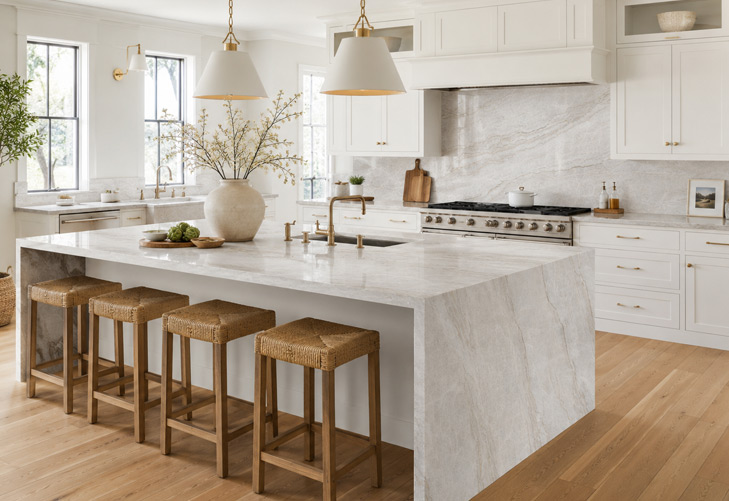
What Taj Mahal quartzite looks like in a real room
Taj Mahal quartzite usually sits in the warm neutral family. Instead of a high-contrast black-and-white pattern, the movement tends to feel softer and more layered. That makes it a strong choice when you want the countertop to be beautiful but not visually loud. In a kitchen with white shaker cabinets, it can add warmth. In a modern kitchen with flat-panel wood cabinets, it can soften the room. With darker cabinets, it can create contrast without the sharpness of a bright white slab.
The final result depends heavily on the slab. A quieter Taj Mahal quartzite slab may work well for perimeter countertops and a full-height backsplash because it keeps the design calm. A slab with stronger movement may be better used on a kitchen island, waterfall side, fireplace surround, or feature wall where the stone is meant to be noticed.
Taj Mahal quartzite countertops vs quartz, granite, and marble
One reason Taj Mahal quartzite gets compared so often is that it sits between several popular design directions. It can feel softer and more luxurious than many granite countertops. It can look more natural and less repeated than engineered quartz. It can give some of the elegance people associate with marble-inspired kitchens, while still offering a different natural stone profile. That does not mean it is the right surface for every person, but it is one of the best options to consider when you want a warm, upscale, natural slab look.
Quartz is usually the easiest option for homeowners who want very low maintenance and predictable color. Granite is a strong choice for people who like natural stone character and a wider range of colors. Marble is beautiful, but many homeowners hesitate to use it in busy kitchens because it can require more careful living. Taj Mahal quartzite is often considered when the goal is a natural, lighter stone with warm movement and a refined look that can carry the design of the entire room.
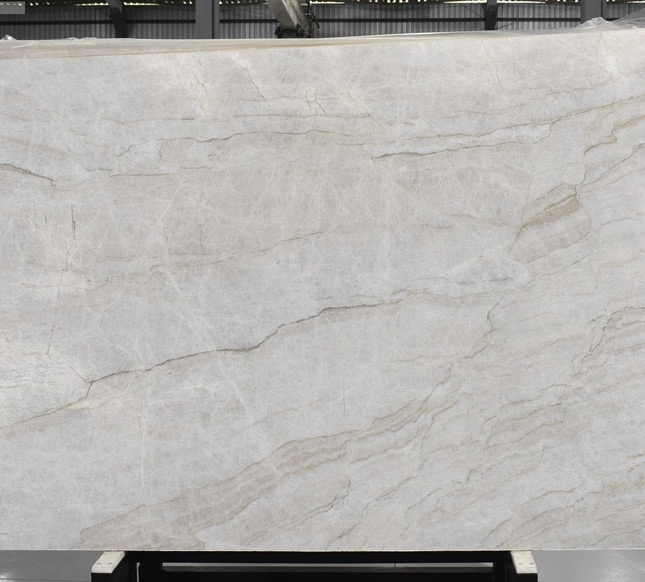
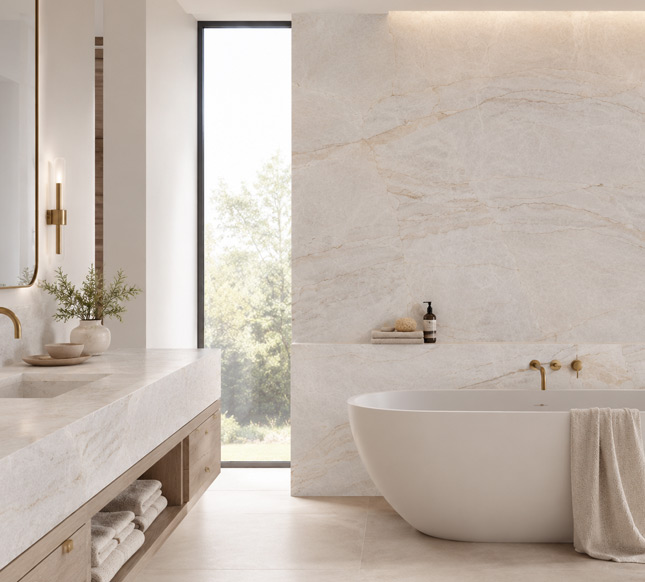
The most common mistake is choosing a material name before looking at the actual slabs. Two Taj Mahal quartzite slabs can both be beautiful while feeling very different in the same kitchen. Cabinet color, flooring, wall color, natural light, and lighting temperature can all change how the slab reads. A slab that looks beige in one room may look creamier or more golden in another. That is why it helps to compare the stone with cabinet samples, backsplash tile, flooring, and hardware before final decisions are made.
Where Taj Mahal quartzite works best
In kitchens, Taj Mahal quartzite is often used for island countertops, perimeter countertops, waterfall islands, full-height backsplashes, and coordinated stone shelves. If the island is the main feature, a slab with graceful movement can make the entire kitchen feel more custom. If the room already has strong cabinets, detailed tile, or dramatic lighting, a quieter slab may be the better choice because it keeps the design from feeling crowded.
In bathrooms, Taj Mahal quartzite can work beautifully on vanity tops, tub decks, wall features, and selected shower applications when the design calls for a warm spa-like feeling. It also pairs well with porcelain tile, creamy shower tile, brushed brass fixtures, champagne bronze finishes, matte black accents, and natural wood vanities. The key is to keep the surrounding materials coordinated instead of forcing too many statement surfaces into one room.
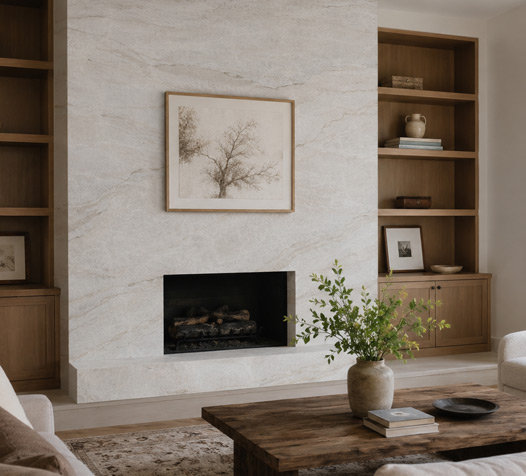
For feature areas, Taj Mahal quartzite can be used on fireplaces, bar tops, built-in niches, and accent walls. When the veining is planned carefully, the stone can become the main design detail without needing extra decoration. On larger pieces, ask about slab layout, seam placement, edge profile, and whether the movement should run horizontally, vertically, or mirror across a focal wall.
Finish, edge, and backsplash choices
Taj Mahal quartzite can feel different depending on finish. A polished finish usually gives the stone more reflection and depth, which can make the cream and gold movement feel more pronounced. A honed, brushed, or leathered finish can feel softer and more organic, but finish availability depends on the actual slab and supplier. In a busy kitchen, finish choice should be discussed with the fabricator because texture, cleaning, reflection, and long-term maintenance all matter.
Edge profile should support the style of the room. A simple eased edge or small bevel often works well in modern and transitional kitchens. A more decorative edge can fit a traditional room, but it should not fight the quiet elegance of the stone. For backsplash, many homeowners choose either a simple tile that lets the stone stay in control or a full-height Taj Mahal quartzite splash that turns the slab into a feature.
Care and maintenance: what to know before choosing quartzite
Taj Mahal quartzite is a natural stone, so it should be treated differently from engineered quartz. Day to day, the best habits are simple: wipe spills promptly, clean with a soft cloth and a stone-safe cleaner, avoid harsh acidic cleaners, and use cutting boards and trivets. Sealing may be recommended depending on the slab, finish, and use. A good sealer helps improve stain resistance, but it does not make natural stone careless or indestructible.
Before installation, ask how the slab should be sealed, how often resealing may be needed, and what cleaners are safe for the surface. Also ask whether a sample can be tested for absorption or staining if you are concerned about real-life use. These practical questions matter because a countertop should not only look beautiful on install day. It should also fit the way you cook, clean, entertain, and live in the room.
How to select the right Taj Mahal quartzite slab
Start by deciding whether you want a quiet countertop or a feature stone. Then look at full slabs, not just small samples. Small samples are useful for checking color direction, but they cannot show the full pattern, veining, or movement. If your kitchen has a large island, bring measurements or cabinet plans so the slab can be evaluated for yield, seam location, and layout. For a waterfall island or full-height backsplash, vein direction becomes even more important.
It is also smart to compare the slab against the other materials in the room. Bring cabinet doors, tile samples, flooring samples, paint colors, and hardware finishes if you have them. Taj Mahal quartzite often looks best when the room stays warm and balanced: not too yellow, not too gray, and not overly busy. When all of the materials are reviewed together, the final design usually feels more intentional and more expensive.
Frequently asked questions about Taj Mahal quartzite
Is Taj Mahal quartzite good for kitchen countertops?
Yes, Taj Mahal quartzite is commonly selected for kitchen countertops, islands, backsplashes, and other premium surfaces. Like any natural stone, it should be selected, fabricated, sealed, and maintained properly. The most important step is seeing the actual slab and confirming that the color, finish, and care requirements match the way you plan to use the kitchen.
Is Taj Mahal quartzite the same as quartz?
No. Quartzite is natural stone cut from slabs, while quartz countertops are engineered surfaces made with mineral content, resins, and pigments. Quartz is usually more consistent and lower maintenance. Quartzite is chosen when the goal is natural stone movement, unique slab character, and a more organic look.
What cabinet colors work with Taj Mahal quartzite?
Taj Mahal quartzite often works well with white, cream, taupe, light oak, walnut, and darker cabinet finishes. Because it has warm undertones, it is usually best to compare it with real cabinet and flooring samples before finalizing the palette.
Should I use Taj Mahal quartzite on the backsplash too?
A full-height Taj Mahal quartzite backsplash can look very high-end when the slab movement is planned correctly. If you want a quieter room, a simple porcelain or ceramic tile backsplash may be better. The right answer depends on the slab, cabinet style, budget, and how much visual movement you want in the kitchen.
Ready to Compare Taj Mahal Quartzite in Person?
The best way to choose Taj Mahal quartzite is to see the material in person and compare it with the rest of your design. Photos help, but they cannot fully show the scale of the pattern, the undertone of the slab, or how the movement will look across an island, backsplash, vanity, or feature wall.
Domus Surfaces can help you compare quartzite countertops, quartz countertops, granite, marble, porcelain tile, flooring, and cabinetry in one place. Bring your ideas, measurements, samples, or inspiration photos, and we can help you narrow the options into a surface plan that makes sense for your kitchen or bathroom.
Availability is subject to current stock. Natural stone colors, veining, movement, and slab appearance may vary.