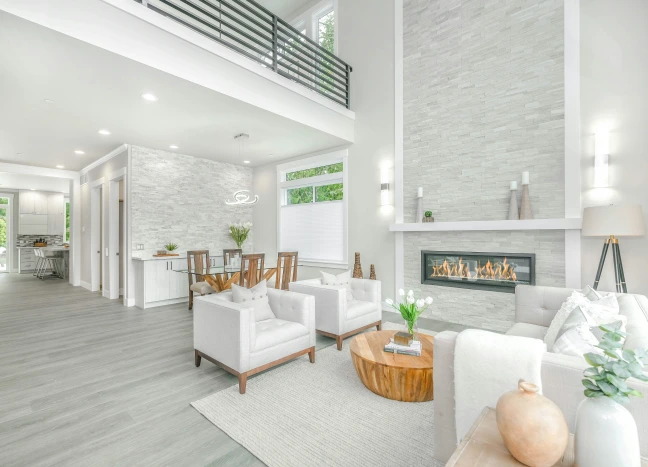
Granite Countertops Are Still Relevant: Why Natural Stone Remains a Strong Choice
Granite has been used in kitchens for decades, and that long history sometimes leads people to assume it has been replaced by newer materials. In reality, granite remains one of the strongest choices for homeowners who want a genuine natural stone surface with durability, depth, and one-of-a-kind variation.
What has changed is not granite itself, but the way it is selected and designed. Current kitchens often favor cleaner patterns, lighter colors, dramatic full-slab movement, honed or leathered finishes, and simpler edge profiles. The right granite can feel timeless, contemporary, rustic, or luxurious depending on the slab and the surrounding materials.
Granite remains relevant because genuine natural character never goes out of style
Granite Is a Natural Material, Not a Printed Pattern
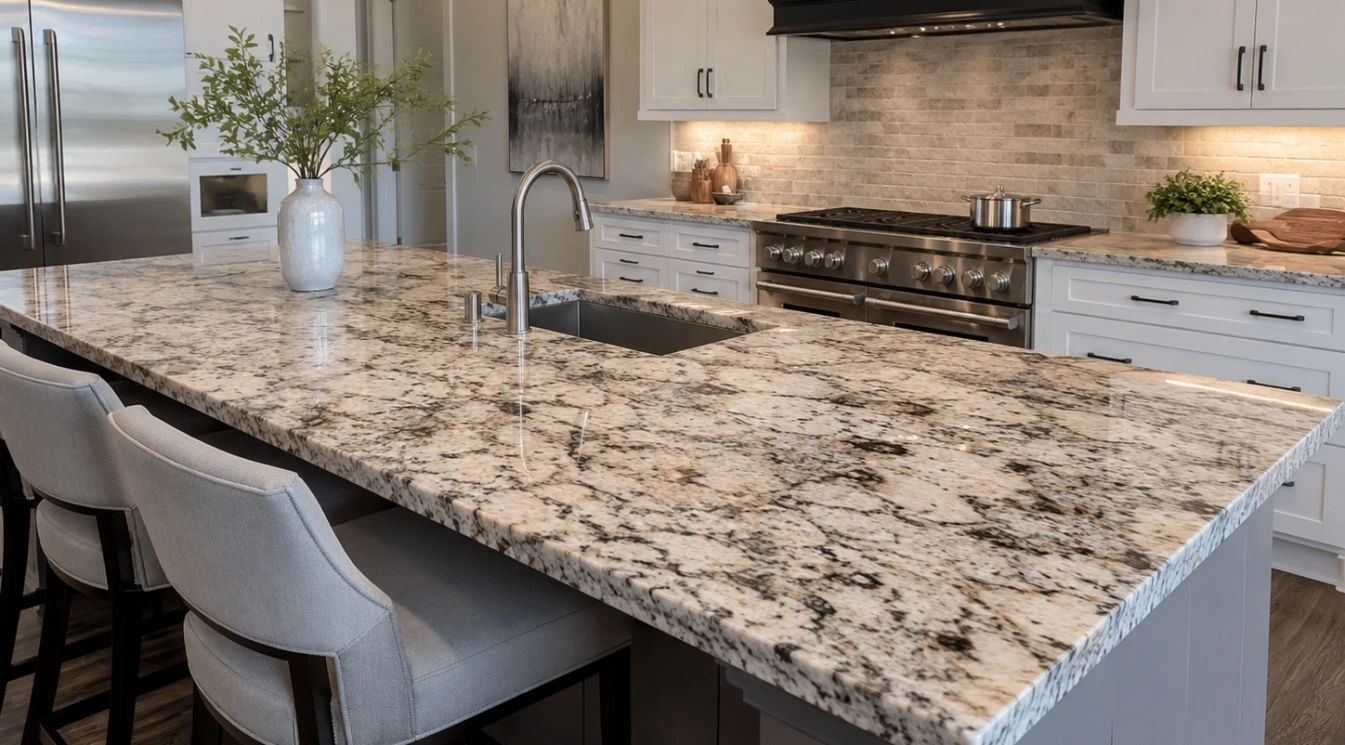
Every granite slab is formed by natural geological processes, which means its minerals, colors, crystals, and movement cannot be reproduced exactly. Even slabs from the same named selection may vary in tone and pattern.
That variation is one of granite''s greatest strengths. The surface has real depth because the visual character exists within the stone rather than being printed only on top. Crystals may reflect light differently throughout the day, and veins or mineral clusters can create focal points across an island.
For homeowners who want the countertop to feel specific to their home, choosing a natural slab in person can be more meaningful than selecting a highly uniform surface from a small sample.
Durability Is Still a Major Advantage
Granite is valued for its strength and ability to handle everyday kitchen use when it is properly fabricated, installed, sealed when needed, and maintained. It is generally resistant to scratches and heat compared with many household surfaces, but no countertop should be treated as indestructible.
Using cutting boards protects both the stone and kitchen knives. Trivets are still a sensible habit because cookware can transfer extreme heat and may contain residue that marks a surface. Heavy impacts near sink cutouts, corners, and unsupported overhangs should be avoided.
The practical lesson is simple: granite is durable enough for an active kitchen, but good care and proper support still matter.
Granite Offers More Variety Than Many Homeowners Expect
Granite is sometimes associated only with heavily speckled brown or gold patterns. Those materials represent only part of the available range. Granite can include white, black, gray, green, blue, cream, burgundy, silver, and mixed mineral tones.
Some slabs are quiet and consistent. Others include sweeping movement, large crystals, contrasting veins, or dramatic color transitions. This variety allows granite to work with many cabinet styles and design directions.
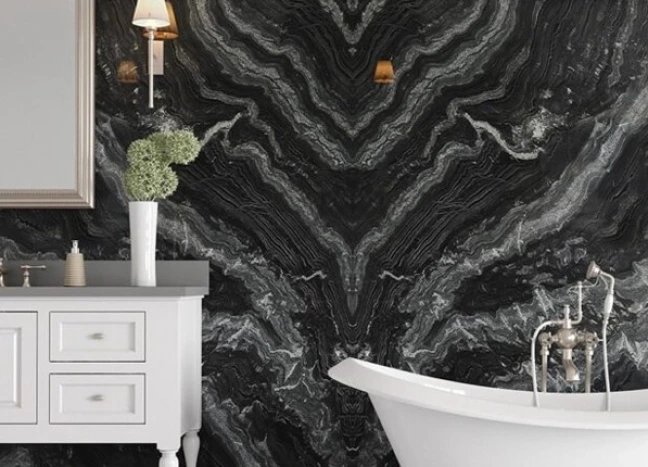
A pale granite with soft movement may suit a bright transitional kitchen. Deep black granite can create a clean contemporary surface, particularly in a honed or leathered finish. A highly expressive slab can become the main feature of an island or bar.
Finishes Can Completely Change the Look
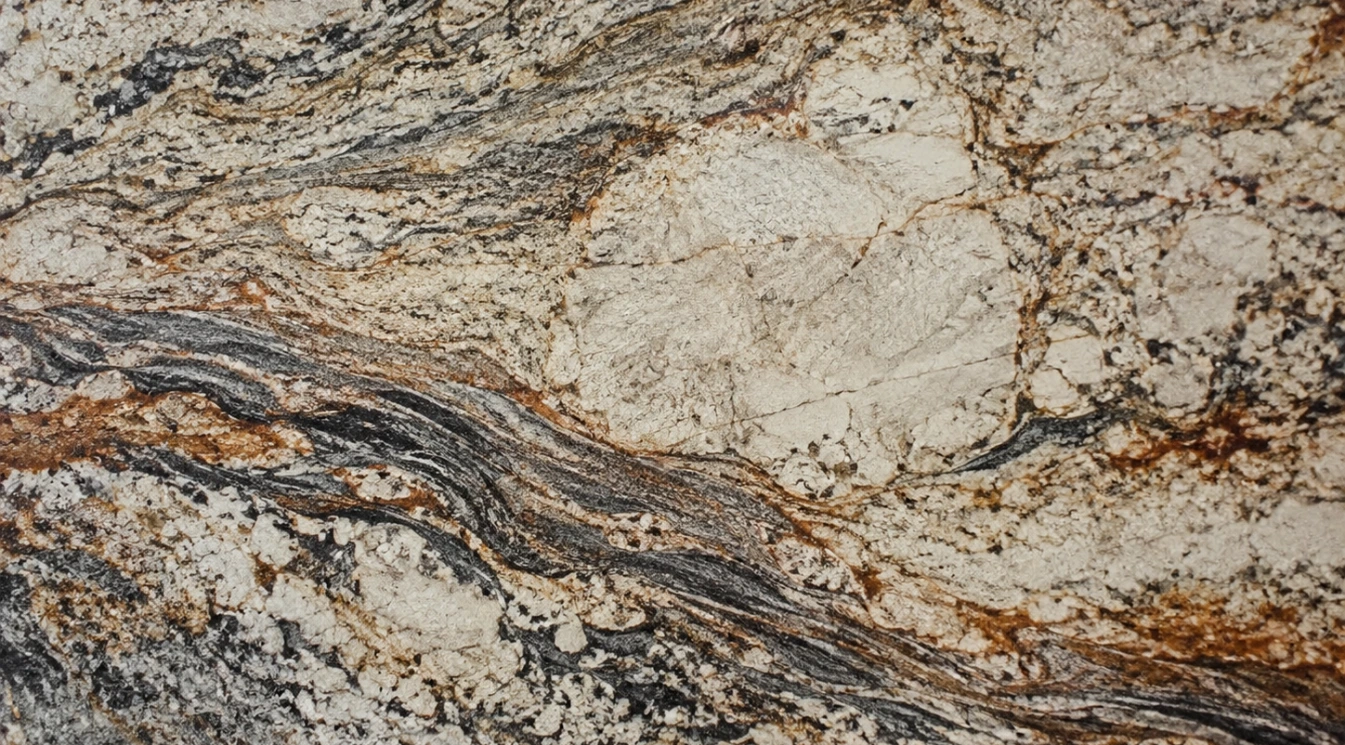
Polished granite has a reflective surface that deepens color and highlights crystals. It is the most familiar finish and can make the stone look rich and dimensional.
Honed granite has a smooth matte appearance with reduced reflection. It can make certain colors feel softer and more understated. Leathered granite introduces texture and often creates a tactile, organic surface that works well with wood, metal, and natural materials.
The same stone may look significantly different across these finishes. Color saturation, maintenance, fingerprint visibility, and texture should be reviewed before making a final decision. Not every slab is available or appropriate in every finish, so product-specific guidance matters.
Granite stays relevant because natural character does not depend on a temporary trend.
Does Granite Require Too Much Maintenance?
Granite maintenance is often exaggerated. Many granite countertops need only mild soap, warm water, a soft cloth, and sensible spill care for routine cleaning. Abrasive pads and harsh cleaners should be avoided unless specifically approved for natural stone.
Some granite benefits from periodic sealing, while other varieties absorb very little and may require less frequent attention. The need depends on the specific stone, finish, sealer, installation, and amount of use. Rather than following a universal schedule, homeowners should rely on guidance for the selected slab.
Sealing does not make granite stain-proof, and it does not replace prompt cleaning. It gives the stone additional resistance so spills are easier to manage before they penetrate.
Granite Can Work in Modern Kitchens
A material does not become outdated simply because it has been popular for a long time. The surrounding design determines how it is perceived. Granite can feel current when it is paired with simple cabinetry, restrained hardware, balanced lighting, and an edge profile that suits the room.
For a modern result, consider granite with broad movement, a limited color palette, or a dark monochromatic appearance. A honed or leathered finish may reduce shine and create a more architectural feel. An eased edge or clean mitered build-up can further simplify the presentation.
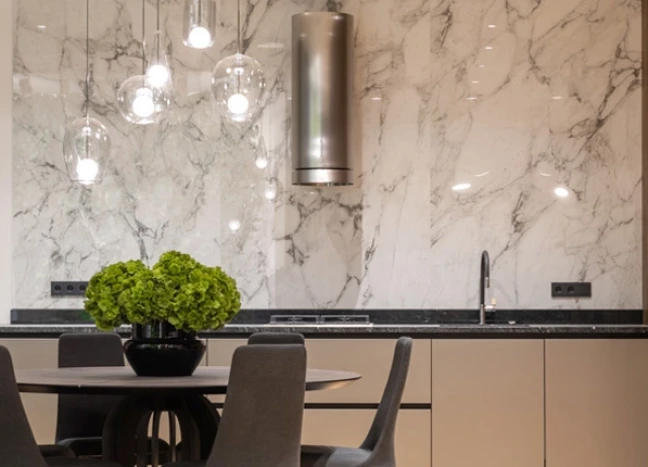
When the stone is highly expressive, keep nearby materials quieter. A simple backsplash and calm cabinet color allow the granite to become the focal point without overwhelming the kitchen.
Granite and Natural Wood Are Natural Partners
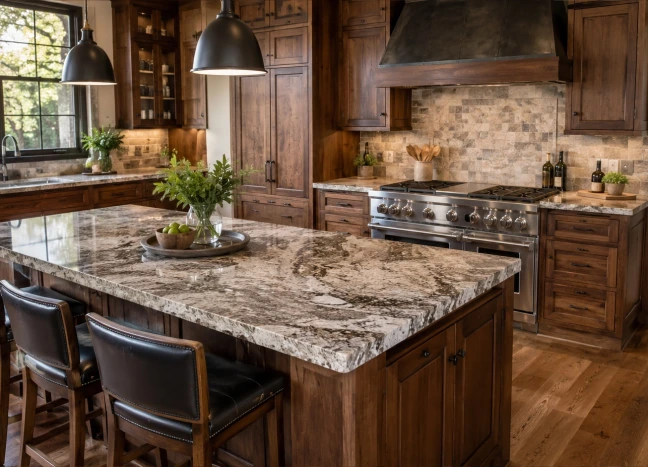
Granite often pairs beautifully with wood because both materials contain natural variation. Cream, gray, black, green, and mixed-tone slabs can connect with oak, walnut, maple, alder, and painted wood cabinetry in different ways.
The undertones should still be compared carefully. A warm granite may reinforce golden wood tones, while a cooler white or gray granite can create contrast. Dark granite can ground light wood cabinets and make the grain appear richer.
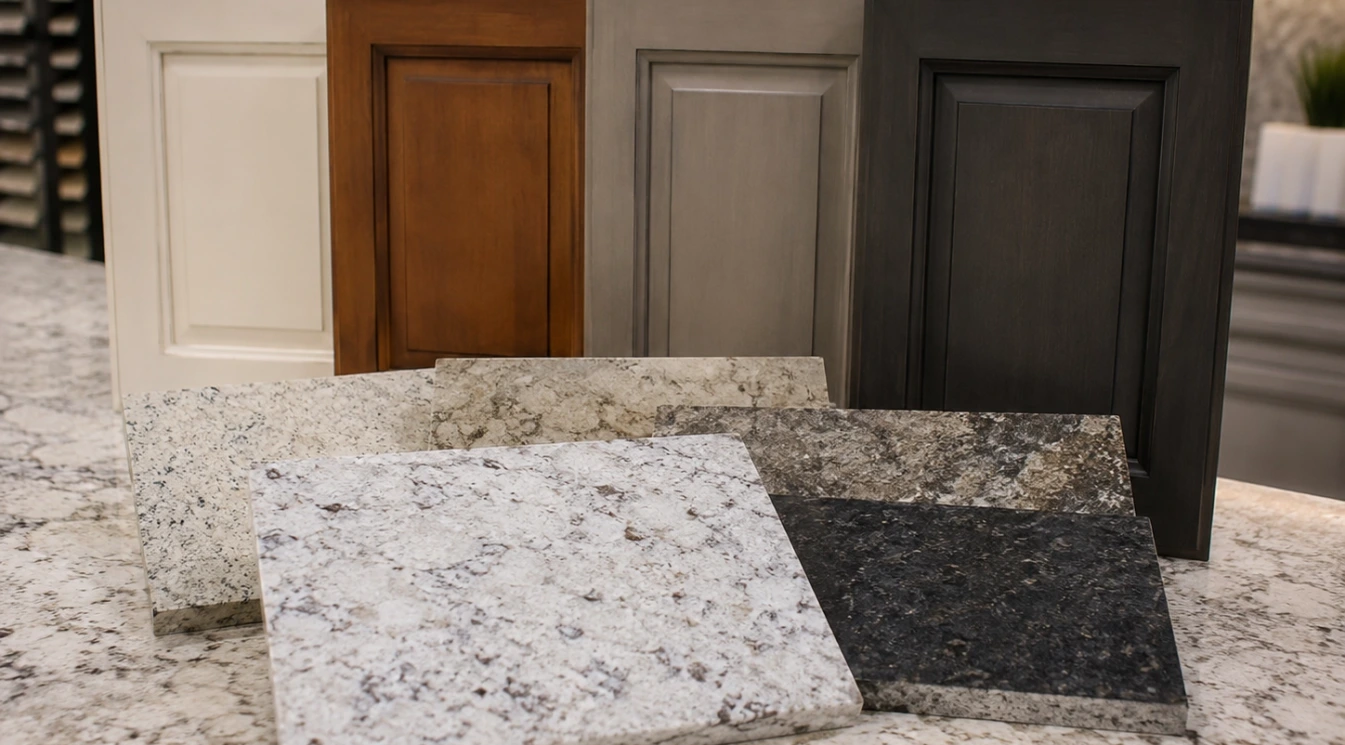
Bring the actual cabinet door, flooring sample, and backsplash option to the slab whenever possible. Natural stone contains more color than a small photograph can show.
Slab Selection and Layout Make a Major Difference
Because granite is natural, the exact slab matters. A sample shows the general material, but it cannot reveal the complete movement, mineral clusters, fissures, or color transitions.
Before fabrication, homeowners should understand which slab or slabs will be used and how the main pieces may be positioned. Important areas include the island, long perimeter runs, sink section, cooktop, seams, and any full-height backsplash or waterfall feature.
Thoughtful layout can place the most attractive movement where it is visible and reduce awkward pattern changes. For multi-slab projects, reviewing how the slabs relate to one another is especially important.
Granite Versus Engineered Quartz
Granite and quartz serve different priorities. Granite offers natural variation, heat resistance associated with stone, and a unique slab. Engineered quartz offers greater pattern consistency and generally does not require sealing.
Quartz may be preferable for someone who wants predictable color across the entire project. Granite may be the stronger choice for someone who values natural depth and accepts variation as part of the design.
Neither material is automatically superior for every household. Appearance, maintenance expectations, fabrication, manufacturer guidance, heat exposure, edge design, and budget all need to be considered.
Where Granite Works Beyond the Main Kitchen
Granite can also be used for bathroom vanities, laundry counters, bars, fireplace surrounds, outdoor applications when the specific stone and installation are suitable, and other architectural surfaces.
Using the same granite in several areas can create continuity, while selecting a distinctive remnant for a smaller vanity or bar can introduce natural stone without requiring a full kitchen project.
Why Granite Continues to Earn Its Place
Granite remains relevant because it combines practical performance with something manufactured surfaces cannot fully duplicate: authentic natural variation. It can be subtle or dramatic, polished or textured, traditional or modern.
For Sacramento homeowners comparing countertop materials, the best decision comes from seeing full slabs and evaluating them alongside cabinets, flooring, tile, and lighting. Domus Surfaces can help bring those materials together so the selected granite feels intentional within the complete remodel.