The strongest material selections are the ones that balance appearance, durability, maintenance, and how the room actually functions.
Choose Materials That Fit the Room, Not Just the Trend
The right materials can make a renovation feel more custom, more durable, and easier to live with every day. Whether you are comparing quartz countertops, granite countertops, quartzite countertops, marble, tile, flooring, or cabinetry, the best choice usually comes down to how the room is used, how much maintenance you want, and what kind of visual tone fits the home. A kitchen countertop takes a different kind of abuse than a bathroom vanity top. A shower wall needs different performance than a feature backsplash. Flooring has to connect rooms visually while still handling wear, moisture, and cleaning.
This is why broad material categories are only the beginning. Quartz is not the same as quartzite. Marble is beautiful, but it does not behave the same way as quartz in a busy family kitchen. Porcelain tile opens up different possibilities than mosaic tile. Vinyl plank flooring solves different problems than natural stone or engineered wood. Even within one category, color, finish, pattern movement, slab size, and edge detail can change the final result dramatically. A warm creamy slab like Taj Mahal quartzite can create a softer, upscale kitchen or bath, while a brighter Calacatta-inspired surface can make the room feel lighter and more architectural.
If you are planning a Sacramento kitchen remodel, bathroom remodel, or a broader renovation, material selection is where function and style start to come together. The goal is not to chase every popular look. It is to understand which surfaces make sense for countertops, backsplashes, shower walls, floors, feature walls, and cabinetry so the finished room looks intentional and performs well over time.
What to compare first
- Where the material will be used: kitchen countertops, bathroom vanity tops, shower walls, backsplash, flooring, or feature areas
- How much daily wear, moisture, heat, staining, and cleaning the surface will need to handle
- Whether you want a low-maintenance finish, a natural one-of-a-kind look, or a stronger statement piece
- How the slab, tile, or flooring color works with cabinets, lighting, wall color, and the rest of the home
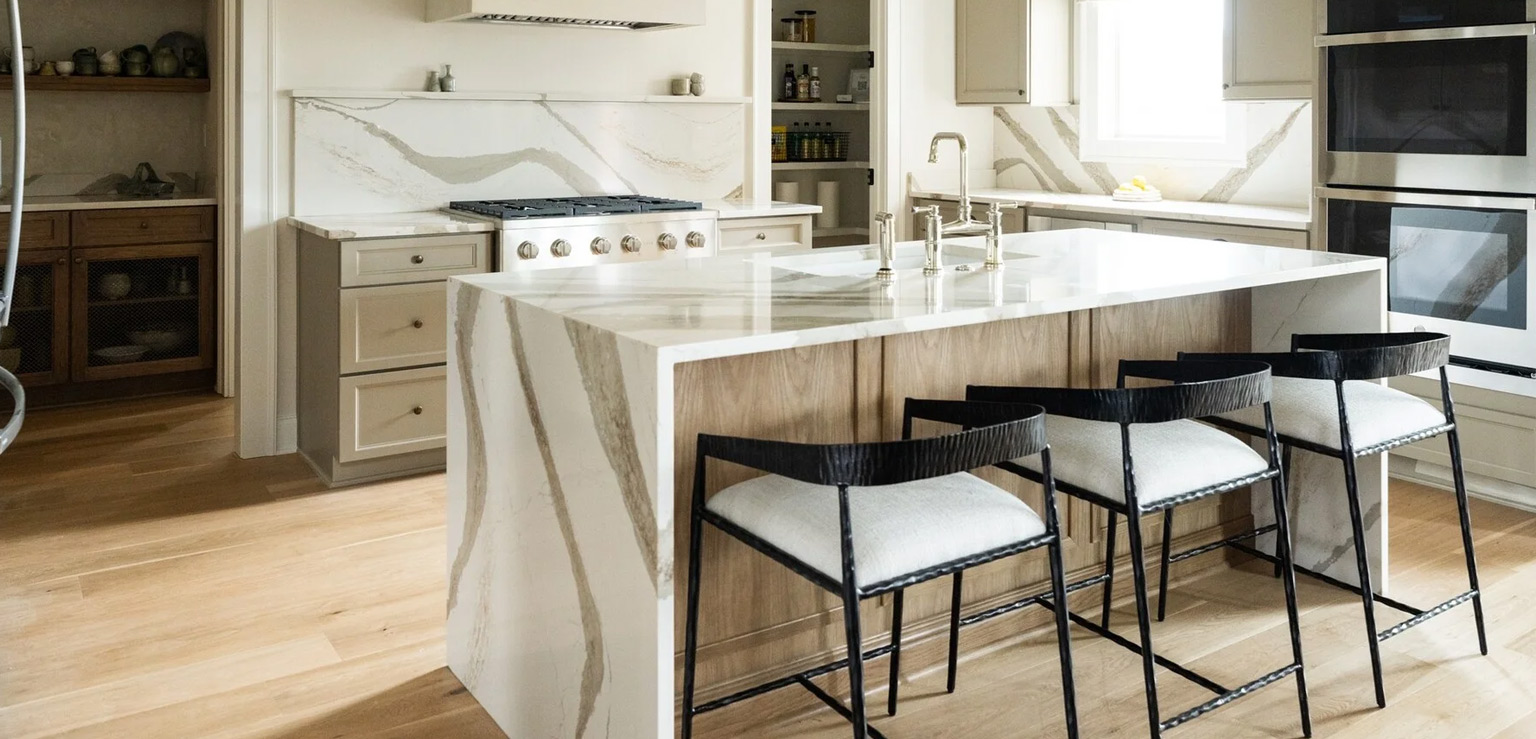
Quartz, granite, quartzite, and marble all play different roles
Quartz countertops remain one of the most practical choices for kitchen countertops and bathroom vanity tops because they are consistent, non-porous, and easy to maintain. For many homeowners, quartz offers the simplest combination of durability and design flexibility. It works especially well in busy kitchens, family homes, and bathrooms where easy cleaning matters. It is also available in a wide range of colors, from quiet soft whites to stronger veining patterns inspired by marble.
Granite countertops are still a strong option when you want natural stone character and a surface that feels unique from slab to slab. Some kitchens look best with that natural variation because it brings warmth, depth, and a less uniform appearance. Quartzite countertops have become one of the most requested premium natural stone options because they can bring the softness of marble-like movement while still offering a more durable natural stone profile. Taj Mahal quartzite is one of the most searched and requested looks for good reason: it adds warmth, creamy movement, and a refined natural pattern that works beautifully in both kitchens and bathrooms.
Marble still deserves a place in the conversation, especially for vanity tops, feature walls, fireplace surrounds, and selected kitchen applications where beauty is the main priority. Calacatta marble remains one of the most recognized names because of its bright background and dramatic veining. Carrara marble tends to feel softer and more understated. For homeowners who love that look but want lower maintenance, Calacatta quartz and other Calacatta-inspired quartz surfaces can offer a similar visual direction with easier day-to-day care.
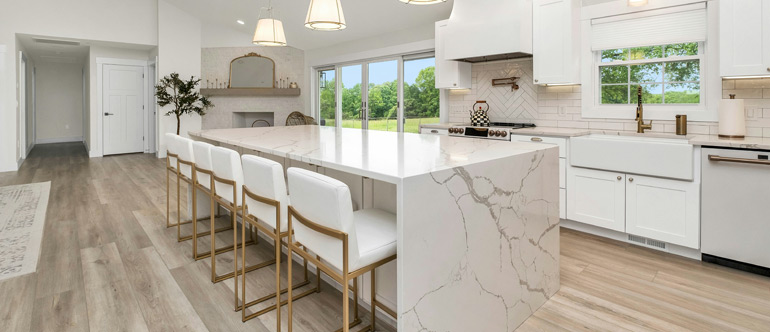
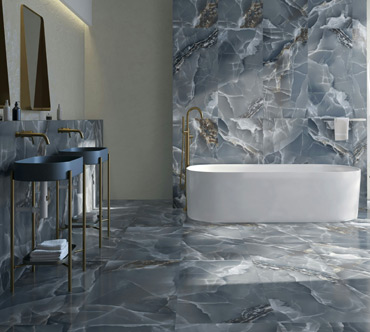
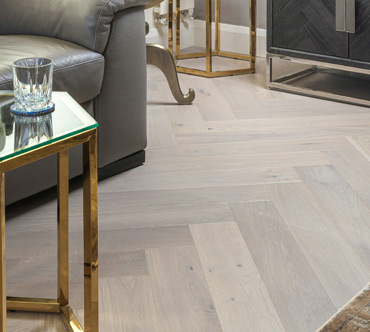
Tile and flooring deserve just as much attention as the countertops because they shape the mood of the entire room. Porcelain tile is often one of the most versatile choices for floors, shower walls, bathroom walls, and even feature surfaces because it is durable, easy to clean, and available in a huge range of looks. Ceramic tile can also work very well, especially on walls and backsplashes. Mosaic tile is often used more selectively, such as shower floors, niches, accent strips, and feature backsplashes where added detail makes sense. For flooring outside the shower area, many homeowners also compare tile to vinyl plank flooring because luxury vinyl plank can offer warmth underfoot, easier installation, and a softer wood-look appearance.

Popular looks people ask for most
Some material names get searched more often because they describe a look people already have in mind. Taj Mahal quartzite continues to stand out because it fits so many renovation styles. It can work with white cabinets, light oak, warm walnut, black fixtures, brass hardware, and both modern and more traditional interiors. It often works beautifully on a kitchen island, perimeter kitchen countertops, a bathroom vanity top, or even a full-height stone splash where a more luxurious statement is the goal.
Calacatta marble remains the classic name for a brighter white stone with stronger veining, but it has also influenced an entire category of quartz and porcelain looks. Calacatta quartz is popular for kitchen countertops and vanity tops because it brings that upscale contrast without the same level of maintenance many homeowners associate with marble. Softer Carrara-inspired looks remain appealing too when you want movement without making the room feel too busy. Other materials people frequently compare include black granite, warm beige quartz, marble-look porcelain tile, wood-look tile, and creamy quartzite styles that bridge traditional and contemporary design.
Where each material tends to work best
In kitchens, quartz countertops are often the easiest recommendation when easy maintenance is a priority. Granite countertops make sense when natural stone character matters more. Quartzite countertops can be excellent for premium kitchen countertops, statement islands, and upscale natural stone kitchens. For backsplashes, porcelain, ceramic, and mosaic tile can all work depending on whether you want something simple, textured, or more decorative. For kitchen flooring, porcelain tile and luxury vinyl plank are often strong practical choices because they hold up well and visually connect to surrounding spaces.
In bathrooms, vanity tops often lean toward quartz, quartzite, or marble-look quartz because they offer a refined finish in a smaller focal area. Shower walls and wet areas usually benefit from porcelain or ceramic tile because those materials handle moisture and cleaning well. Larger-format tile can make a bathroom feel calmer and more open, while mosaics still work well on shower floors, niches, and decorative accents. If the bathroom is already carrying a lot of texture, the vanity top may work best in a quieter finish. If the room is visually simple, the vanity surface or a full slab wall can become more of the feature.
Cabinets and wood tones are part of the material conversation too. Light oak, painted white, creamy taupe, walnut, and charcoal finishes all change the way countertops and tile read. The same slab can feel crisp and modern next to a flat-panel cabinet, or warmer and more traditional next to a shaker door with softer metal finishes. That is why side-by-side comparison matters so much. Materials should not be selected in isolation. They should be judged together.
How to make mixed materials feel intentional
One of the biggest mistakes in a renovation is choosing each surface separately and hoping they come together at the end. The strongest rooms usually have one clear lead material, one supporting material, and one quieter background finish. For example, if the kitchen countertops carry strong veining, the backsplash may need to stay simpler. If the floor has a strong wood-look pattern, the slab or tile may need to be calmer. If the vanity top is a major feature, the shower wall might work better in a quieter format and color.
This is also where finish matters. Polished surfaces reflect more light and often feel dressier. Honed or matte finishes can feel softer and more contemporary. Glossy wall tile can brighten a darker room. Textured tile can add depth, but it should be used thoughtfully in areas that are easy to clean. Even grout color changes the final impression. Matching grout can make a surface feel larger and calmer, while contrasting grout can highlight pattern and layout.
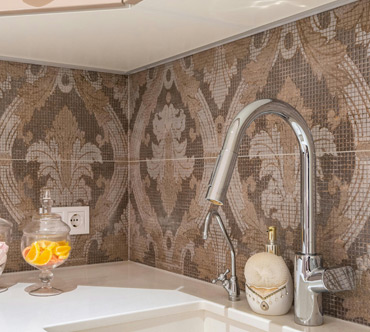
The best material plan usually feels simple in the end, even if a lot of comparison went into it. That is a good sign. It means the countertops, tile, flooring, cabinetry, and accent materials are doing their jobs together instead of competing for attention. When slabs and tiles are seen in person and compared under realistic lighting, it becomes much easier to decide whether a Taj Mahal quartzite slab, a Calacatta quartz surface, a porcelain backsplash tile, or a warmer vinyl plank flooring direction is actually right for the room.
If you are trying to narrow down kitchen countertops, bathroom vanity tops, shower tile, backsplash tile, flooring, or coordinated cabinet tones, focus first on where performance matters most, then refine the design direction from there. That approach tends to create rooms that not only photograph well but also live well for years.
Ready to Narrow Down Your Materials?
Once you know whether you are leaning toward quartz countertops, granite countertops, quartzite countertops, marble, porcelain tile, mosaic tile, vinyl plank flooring, or coordinated cabinetry, the next step is seeing larger samples and full slabs side by side. This is where color temperature, pattern movement, finish, and scale become much easier to judge than they are online.
Domus Surfaces can help you compare countertops, slabs, tile, flooring, and cabinetry in one place, then connect those selections back to the room you are planning. If you want to keep going, the kitchen remodeling guide and bathroom remodeling guide break down how these materials perform in each space more specifically.