Luxury Home Design: Materials and Details That Create a High-End Look
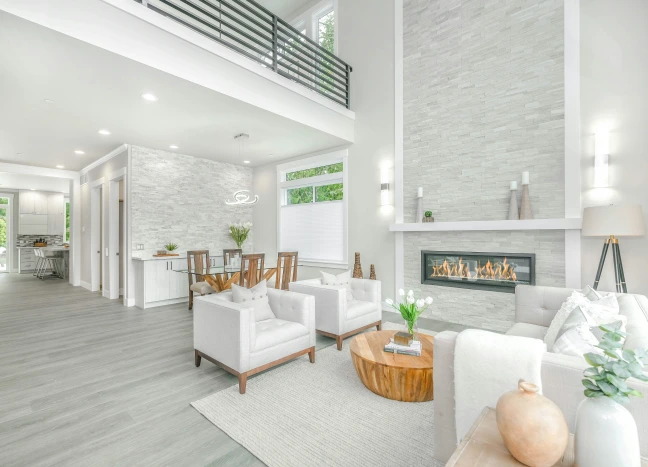
A luxury home is rarely defined by one expensive surface or a room filled with decorative features. The strongest designs feel calm, proportioned and carefully resolved. Materials repeat with purpose, rooms connect naturally, storage is built into the architecture, and everyday functions are handled without visual clutter.
That is why two homes with similar budgets can feel very different. One may contain costly products that compete for attention, while the other uses a smaller, more disciplined palette with better scale, craftsmanship and lighting. The second home often feels more luxurious because every choice appears intentional.
A luxurious interior is not about using more—it is about choosing better and bringing every element into balance.
Luxury Starts with the Way the Home Is Planned
High-end homes are usually organized around how people actually live. The main kitchen may open to a comfortable family room, but support spaces keep the working side of the house under control. A walk-in pantry, beverage center, scullery or secondary prep area can hold small appliances, bulk storage and cleanup functions that would otherwise crowd the primary kitchen.
Private areas are often arranged with the same care. A primary suite may include a quiet transition from bedroom to bathroom, generous wardrobe storage and direct access to an outdoor area. Guest rooms are placed where visitors have privacy without feeling separated from the household. Even hallways, landings and door locations are considered as part of the experience rather than leftover circulation.
Luxury does not require an enormous footprint. A well-planned house can feel more generous than a larger home with awkward circulation, undersized openings or rooms that have no clear purpose.
Proportion Matters More Than Ornament
Ceiling height, window scale, cabinet height, doorway width and the relationship between furniture and architecture all affect how refined a home feels. Tall ceilings can add presence, but they need appropriately scaled windows, lighting and millwork. A large kitchen island should have enough surrounding space to remain comfortable rather than becoming an obstacle.
Luxury interiors often use strong visual lines. Cabinet tops align with architectural elements. Countertop edges remain consistent. Tile layouts are centered where the eye naturally lands. Door and window trim follows a deliberate hierarchy. These decisions may not be obvious individually, but together they create order.
Natural Stone Brings Depth That Cannot Be Repeated Exactly
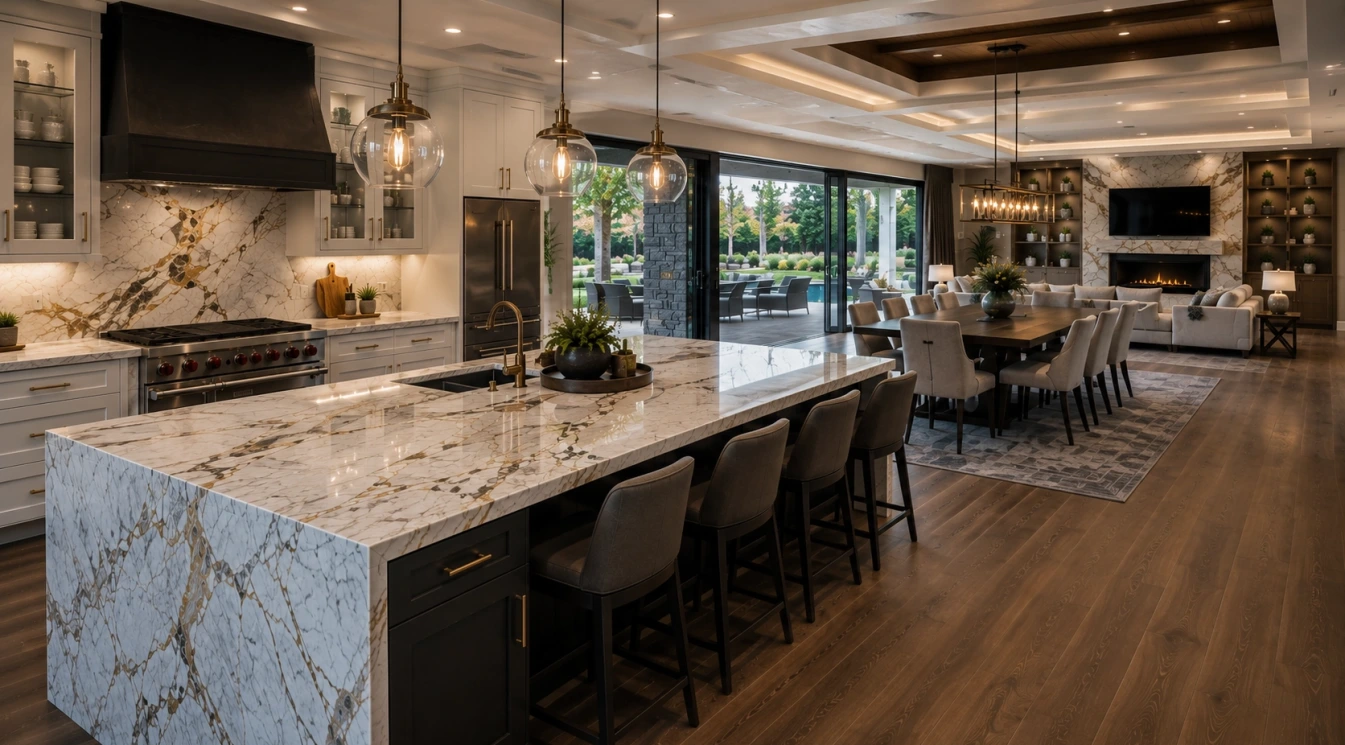
Marble, quartzite, granite, limestone and other natural stones are common in luxury homes because each slab has its own movement, mineral structure and color variation. They may be used for kitchen islands, fireplace surrounds, bathroom walls, vanities, floors or architectural accents.
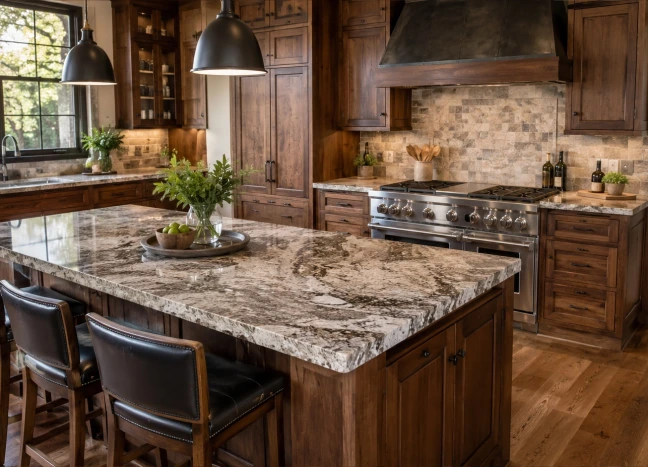
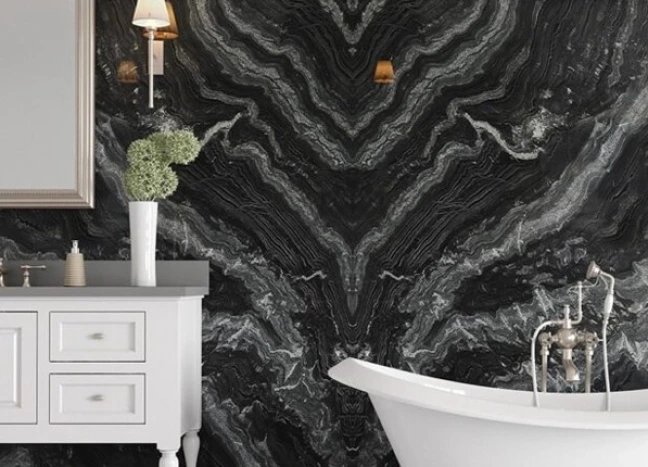
The material alone does not create the result. Slab selection and layout matter just as much. A dramatic vein can be centered on an island, continued across a mitered edge or mirrored through bookmatching. Quieter stone may be selected when cabinetry, lighting or artwork is intended to lead the room.
Natural stone also requires an honest discussion about care. Some varieties are more absorbent or sensitive to acids than others. A luxury installation should match the household’s habits rather than selecting a surface only because it looks impressive in a photograph.
Engineered Surfaces Can Be Equally Appropriate
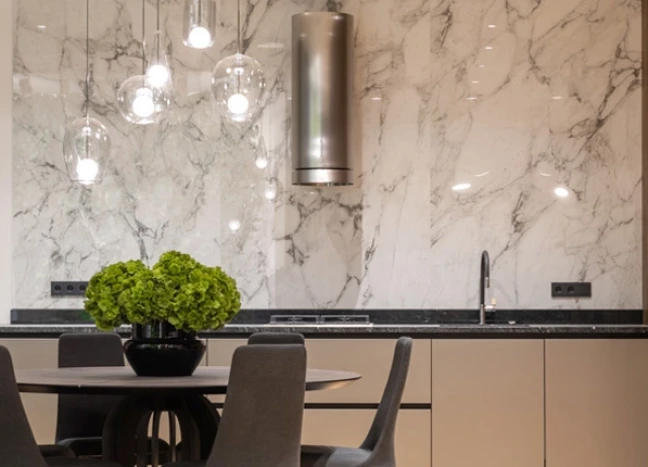
Luxury design is not limited to natural materials. High-quality quartz and porcelain surfaces can provide controlled patterning, consistent color and useful performance characteristics. They are often selected where homeowners want a particular look across several areas or prefer a more predictable maintenance routine.
Porcelain slabs can create thin, clean planes on walls, shower surrounds and selected countertop applications. Quartz can offer soft veining or a restrained solid color that allows custom cabinetry to stand out. The best choice depends on the application, fabrication requirements, exposure conditions and desired level of variation.
Custom Cabinetry Makes the Architecture Work Harder
Cabinetry is one of the clearest differences between an ordinary room and a fully considered one. Custom or carefully configured semi-custom cabinets can fit the walls precisely, conceal practical storage and maintain consistent spacing around appliances, windows and architectural features.
In kitchens, luxury cabinetry may include integrated appliance panels, deep drawers, tray dividers, concealed charging areas and specialized pantry storage. In living spaces, built-ins can frame a fireplace or create a balanced media wall. Bathrooms may use furniture-like vanities with internal organizers rather than a basic row of doors.
Wood species and finish also matter. Walnut, white oak and other character-rich woods can add warmth, while painted cabinetry creates a quieter background. The most convincing rooms often combine them selectively instead of using one finish everywhere.
A home feels luxurious when its materials, proportions and everyday functions have been resolved as one complete idea.
Floors Establish the Character of the Entire Home
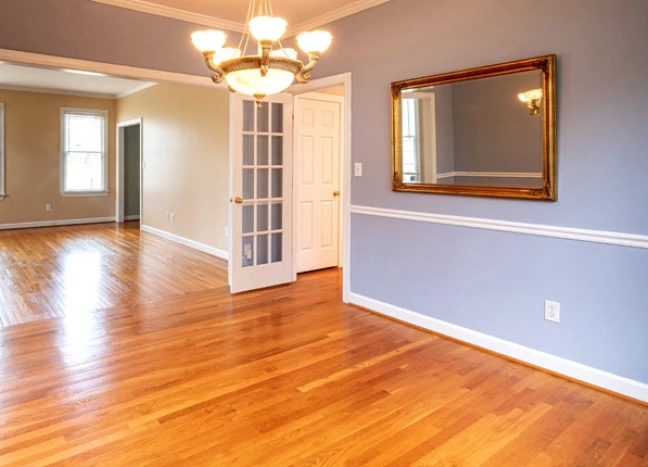
Flooring covers more visible area than almost any other interior finish, so it has a major influence on continuity. Wide-plank hardwood, natural stone and high-quality porcelain are common choices because they can carry through large spaces without looking visually busy.
Wood brings warmth and softens rooms with stone counters, metal fixtures and large windows. Stone can create permanence in entries, bathrooms and indoor-outdoor areas. Porcelain may provide a more controlled appearance and can be useful where moisture, traffic or maintenance are important considerations.
Transitions deserve careful planning. Abrupt changes in color, thickness or pattern can make an expensive project feel pieced together. Luxury homes often limit the number of floor materials and use deliberate thresholds when a change is necessary.
Lighting Should Reveal Materials, Not Fight Them
A single decorative fixture cannot carry an entire lighting plan. Refined homes combine ambient, task and accent lighting. Recessed lighting provides general illumination, pendants or sconces add character, and concealed lighting can brighten shelves, cabinets, toe kicks or architectural recesses.
Color temperature and placement affect how stone, wood and paint appear. Warm light may enrich walnut and beige stone, while poor placement can flatten texture or create distracting reflections on polished surfaces. Fixtures should be scaled to the room and coordinated without making every piece match exactly.
Bathrooms Feel Luxurious When Comfort Is Built In
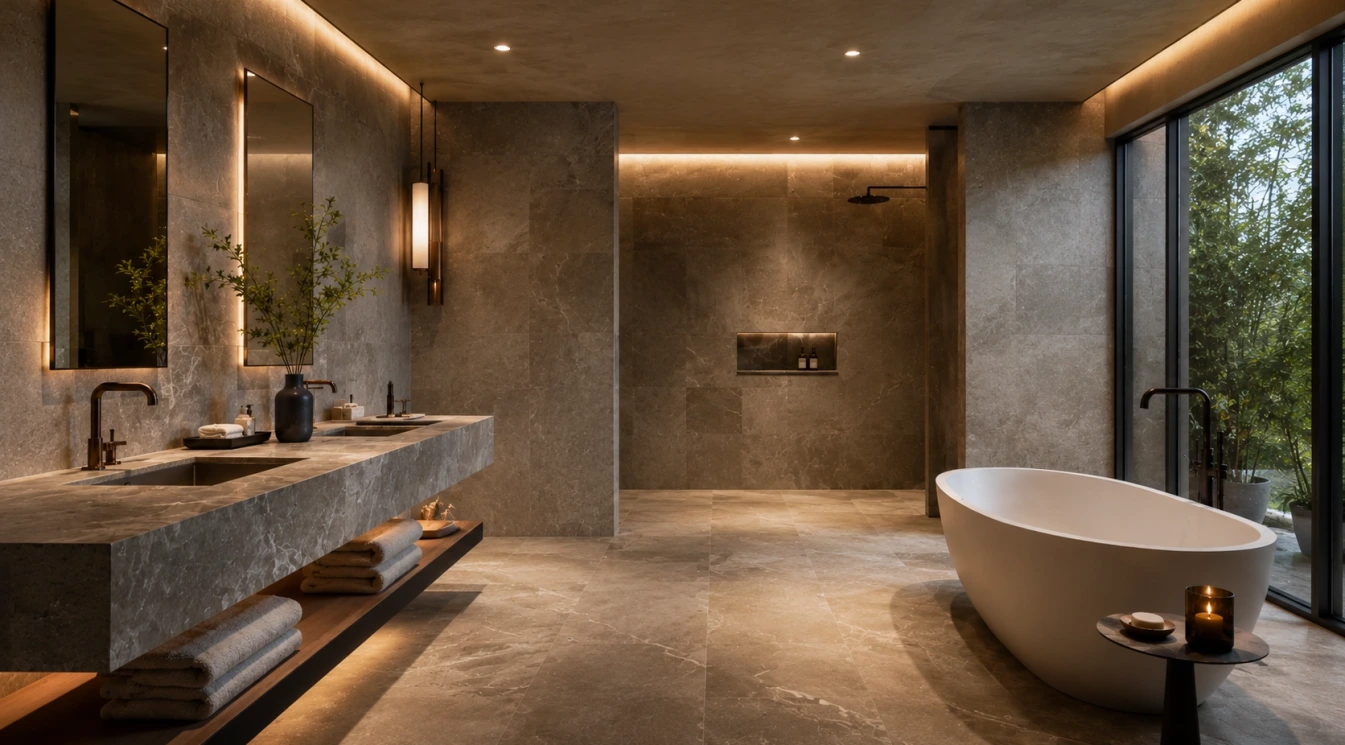
Spa-like bathrooms often use large-format tile or slab surfaces, curbless showers, freestanding tubs, heated floors, integrated niches and well-planned lighting. The visual calm comes from limiting unnecessary transitions and allowing a few materials to continue across larger areas.
Comfort is equally important. Shower controls should be reachable without standing under cold water. Vanities need useful storage and flattering light. Towel locations, bench placement and floor temperature affect the daily experience more than decorative accessories.
Architectural Details Create a Finished Look
Solid interior doors, substantial hardware, well-proportioned baseboards, consistent reveals and carefully detailed stair components give a home a sense of permanence. Fireplace surrounds, ceiling treatments and wall paneling can add character when they belong to the architecture rather than appearing as isolated decoration.
The key is restraint. Coffered ceilings, arches, fluted panels, decorative stone and metal accents can all be effective, but using every feature in one home weakens the hierarchy. A few well-executed details are more convincing than many competing ones.
A Limited Material Palette Usually Looks More Expensive
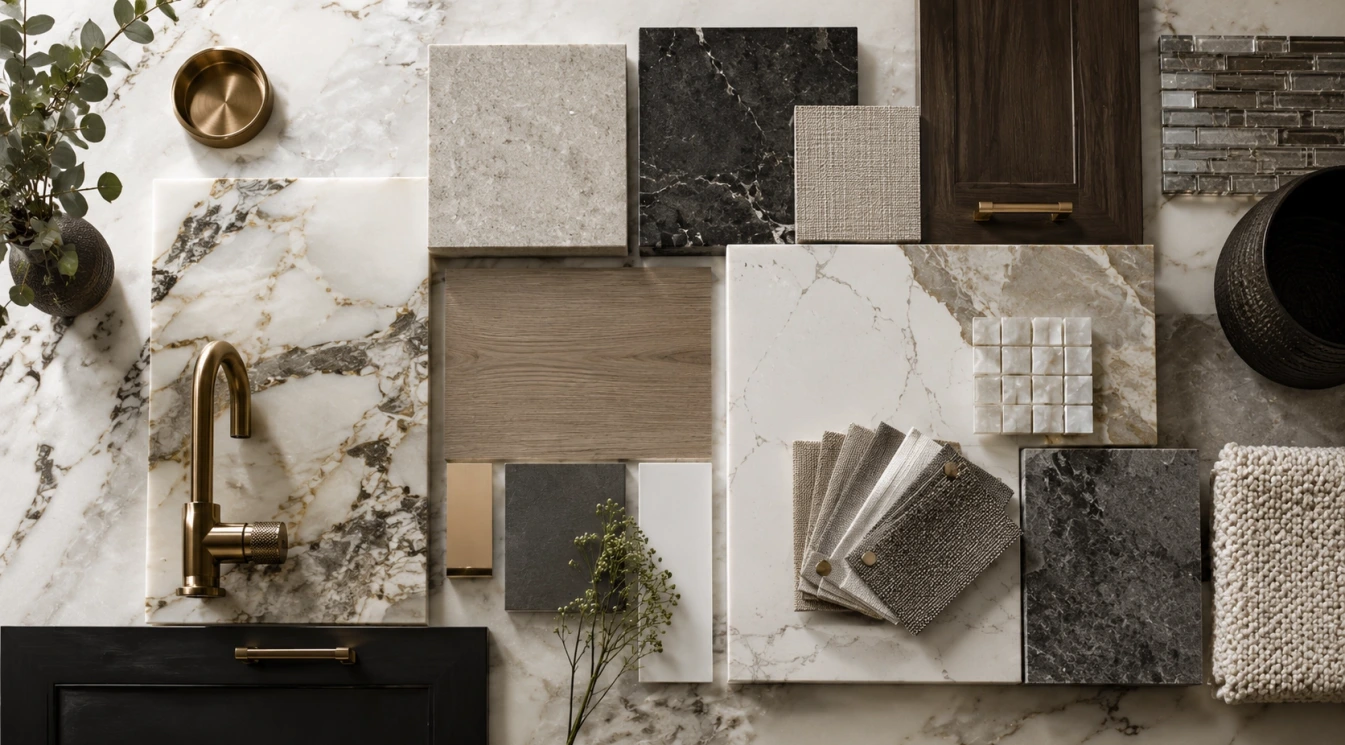
Luxury rooms often rely on a disciplined family of colors and textures. Warm white plaster, natural oak, softly veined stone and aged metal may repeat in different forms throughout the home. Repetition creates continuity, while controlled variation prevents the result from feeling flat.
Before purchasing materials, place cabinet samples, countertops, flooring, tile, paint and hardware together under the actual lighting. This reveals undertone conflicts early. It also helps determine which material should be the focal point and which ones should remain quiet.
How to Create the Look Without Adding Unnecessary Cost
- Invest in layout, proportion and installation before decorative accessories.
- Use one memorable material in a focal area instead of expensive finishes everywhere.
- Continue cabinetry to appropriate architectural stopping points rather than leaving awkward gaps.
- Reduce the number of unrelated colors, metals and flooring changes.
- Choose durable materials that will still suit the home after short-term trends pass.
- Plan lighting and electrical locations before walls and finishes are completed.
A luxury appearance is often achieved by removing visual problems rather than adding more features. Better alignment, fewer transitions, concealed storage and accurate fabrication can make familiar materials look substantially more refined.
Build the Design as One Coordinated Composition
The most successful luxury homes do not treat countertops, tile, flooring and cabinets as separate shopping decisions. Each material affects the next. A bold quartzite island may call for quieter flooring. Rich wood cabinets may look best beside a restrained warm surface. A detailed bathroom slab may need simple hardware and minimal grout lines.
Domus Surfaces can help Sacramento homeowners compare these materials together so the final selections support the architecture, daily use and desired level of formality. The goal is not simply to fill a home with premium products, but to create rooms that feel considered, comfortable and complete.