Some slabs look beautiful on their own. Bookmatched slabs look like a deliberate statement—like the stone was designed, not just selected.
If you’ve ever seen a dramatic marble wall or a waterfall island where the veining looks perfectly mirrored down the center, that’s bookmatching. It’s one of the most striking ways to use natural stone (and certain engineered looks) because it turns a surface into a centerpiece, almost like a large-format art installation made of geology.
What “bookmatch” means in plain English
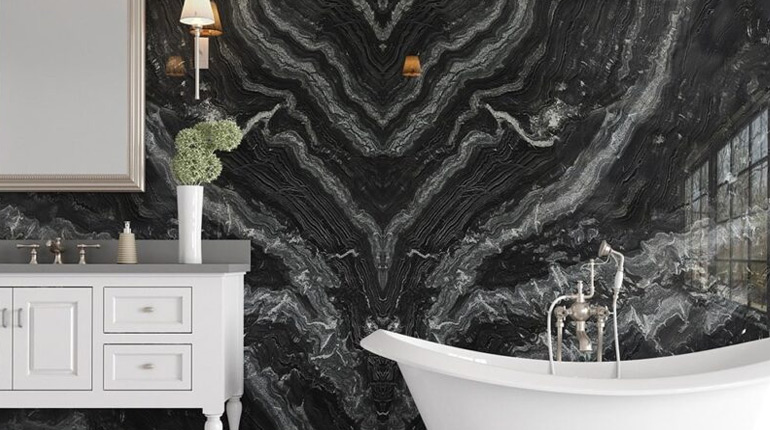
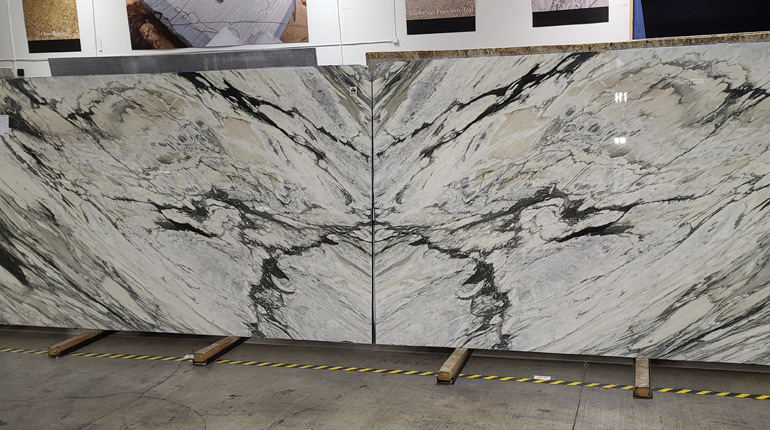
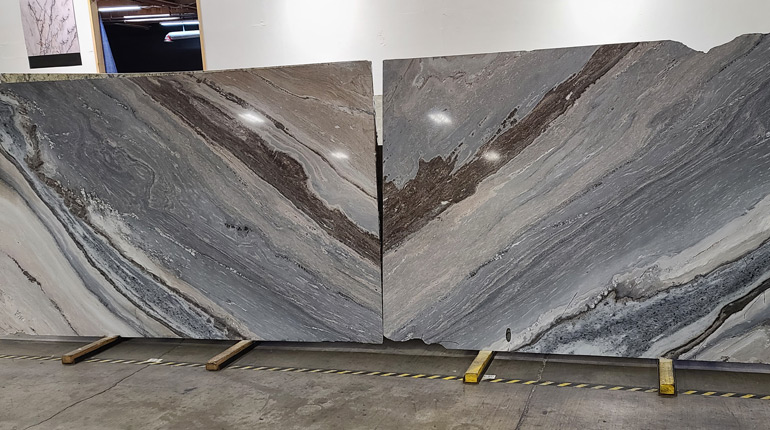
Bookmatching is when two slabs are placed side-by-side so the pattern mirrors across a seam, like opening a book. The veins flow toward each other (or away from each other) in a symmetrical way, creating a “butterfly” effect.
It sounds simple, but the magic comes from selection and planning. Not every slab can be bookmatched, and not every stone will look good bookmatched. The best results happen when the material has movement—veining, dramatic pattern shifts, or bold mineral character—so the mirror effect feels intentional and clean.
Bookmatch slabs: one stone, two halves, one masterpiece.
Ceramic tile: classic style, friendly budget, great for walls
Ceramic tile is a longtime favorite for backsplashes and bathroom walls because it offers lots of color and style options at approachable price points. If you love the look of bright white subway tile, handmade-style glazed finishes, or softer traditional patterns, ceramic is often where those looks shine.
For floors, ceramic can work in the right situations, but most homeowners prefer porcelain when the goal is maximum durability—especially in high-traffic zones. Think of ceramic as a beautiful “wall-first” tile that can still be used in other places when the project and tile specs make sense.
Why bookmatch looks so expensive (because it kind of is)
Bookmatching reads as luxury for a few reasons. First, it’s visually rare: symmetry in nature is uncommon, so when you see it in stone, your brain flags it as special. Second, it usually requires multiple slabs from the same “bundle” so the pattern can mirror correctly. Third, it demands careful layout, fabrication, and installation so the seam lands exactly where it should.
In other words: the look isn’t just the stone. It’s the craftsmanship.
Where bookmatched slabs look best
Bookmatching is most famous on big, uninterrupted surfaces where you can appreciate the mirror effect from a distance.
A waterfall island is the classic example. When the veining rolls over the edge and the bookmatch continues, the island stops being “just a countertop” and becomes the focal point of the room. Full-height slab backsplashes are another perfect candidate, especially behind a range where you want a clean, dramatic centerpiece without the visual breaks of tile.
Fireplace surrounds are an underrated place for bookmatch. A bookmatched stone fireplace can make a living room feel instantly architectural and custom, even if the rest of the finishes are simple. And in bathrooms, bookmatched slabs can create a stunning shower wall feature—particularly on the back wall of a large shower where the symmetry can be seen clearly.
If you’re designing in the Sacramento area and trying to create a high-end look without adding a dozen decorative elements, bookmatching is one of the cleanest ways to do it. It delivers drama without clutter.
What to know before you commit
Bookmatching is not a last-minute add-on—it’s a decision you make early, because it affects slab selection, how many slabs you’ll need, and how the pieces are cut.
The first step is choosing the right slabs. Bookmatching usually works best when you can select consecutive slabs that were cut in sequence from the same block. That’s how you get that mirrored “sibling” pattern. If slabs aren’t sequential, the symmetry can look forced or slightly off, and the illusion breaks.
The next step is layout. A good shop will plan the digital layout so you can see where the mirror line will land, how the seams will align, and how the pattern will behave across corners—especially on a waterfall island or large slab backsplash. This planning is where great bookmatch projects are won or lost.
It’s also worth knowing that bookmatching can affect cost. Sometimes it requires additional material to preserve the pattern, avoid awkward cuts, and ensure the seam hits the right centerline. The payoff is the look—but it’s better to go in expecting a “premium detail” rather than hoping it’s the same price as a standard layout.
Bookmatch vs “vein matching” (the common confusion)
People often use these interchangeably, but they’re not the same vibe.
Bookmatching is mirror symmetry: left reflects right. Vein matching is continuity: the pattern flows naturally from one piece into the next without necessarily mirroring. Both can look amazing. If you want that bold, intentional “wow,” bookmatch is the move. If you want seamless elegance that doesn’t call attention to itself, vein matching can be the better fit.
A simple way to decide if bookmatching is right for your space
If your room is already visually busy—strong cabinet grain, bold flooring, loud backsplash—bookmatching can feel like “one statement too many.” But if your finishes are calm, modern, or minimal, bookmatching becomes the hero and everything else supports it. That’s usually the sweet spot.
And if you’re not sure, your best tool is real slab viewing. Photos rarely capture depth, sparkle, and vein contrast accurately. Seeing slabs in person makes the decision obvious fast.
If you’re considering bookmatched slabs for a waterfall island, slab backsplash, shower feature wall, or fireplace surround, the key is choosing the right slab pair and planning the layout before fabrication begins. If you’re shopping countertop slabs in Sacramento, bookmatching is one of the cleanest ways to create a luxury, custom look that feels architectural—not trendy. Contact us today for a free consultation and the perfect start of your project!