Quartz has quietly become the “default smart choice” for modern kitchens. It looks clean and elevated, it holds up well to everyday life, and it doesn’t demand a complicated maintenance routine. If you’re shopping for quartz countertops in Sacramento, the hardest part usually isn’t finding options — it’s narrowing them down without second-guessing everything the moment you get home.
The easiest way to choose confidently is to decide what matters most to you before you fall for a particular slab. Some homeowners want a bright, airy kitchen that feels timeless. Others want bold veining and a big statement island. Some want the “I cook constantly and I’m not babying my counters” kind of durability. Quartz can do all of those, but you’ll choose differently depending on which one is the real priority.
Quartz: the beauty of natural stone—engineered to outlast everyday life.
Start with the room, not the slab
A countertop doesn’t live alone. It touches cabinets, backsplash, flooring, paint, lighting, and hardware. If you choose a slab in isolation, it can look perfect in the showroom and “off” in your kitchen once everything is together.
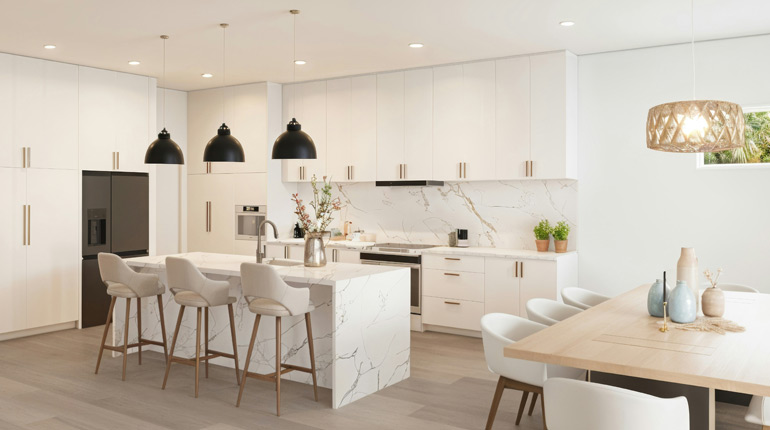
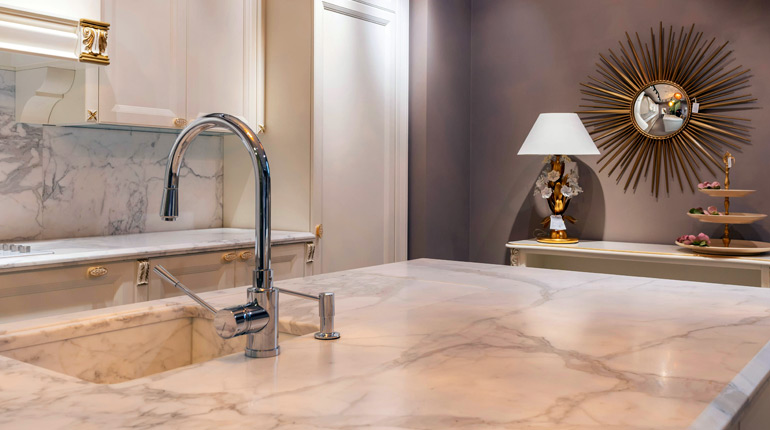
A simple rule keeps you out of trouble: the more visual movement you already have in the room, the calmer your countertop should be. If your floor has strong grain or pattern, or your backsplash is a feature, you’ll often be happiest with softer quartz movement. On the other hand, if your cabinets and finishes are clean and simple, quartz is the perfect place to add character — especially with marble-inspired veining.
Lighting matters more than most people expect. Quartz can shift from warm to cool depending on natural light, LED temperature, and even the color of surrounding cabinets. When you visit the showroom, take a quick photo of your cabinets and flooring in daylight, then compare slabs against those photos. It’s a small thing that prevents expensive “why does this look different at home?” regret.
Finish changes everything: polished versus honed
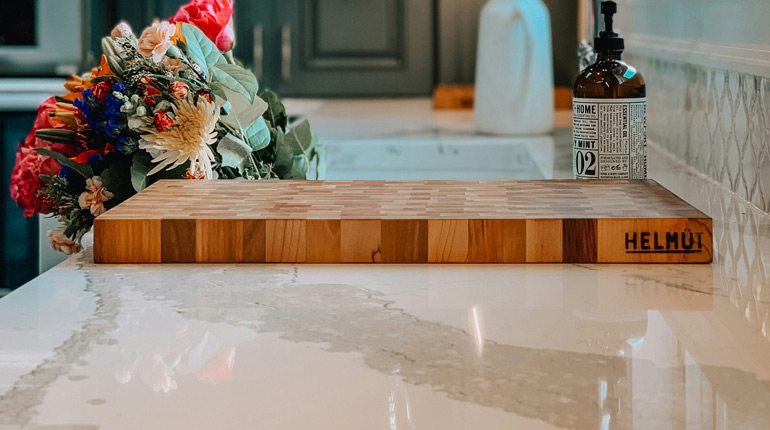
Quartz finish is one of those details that sounds minor until you see it installed. Polished quartz reflects light and gives that crisp, bright, clean-kitchen feel. Honed or matte quartz reads softer and more modern, and it can make a space feel calmer and more architectural.
If you’re sensitive to smudges or fingerprints, don’t rely on guesswork. Touch a sample. Put it under light. Wipe it. Look again. Some colors hide everyday marks beautifully; others show them more — not because the countertop is “bad,” but because the color/finish combo is honest about living.
Edges are style, but they’re also practicality
Edge profiles tend to be underestimated, yet they influence the whole vibe. A simple eased edge leans modern and clean and usually keeps fabrication costs reasonable. Decorative edges can add traditional character, but they’re not always the best “return” if your goal is a high-end look. Many of the most expensive-looking kitchens use a simple edge and let the slab itself do the talking.
Thickness decisions fit the same logic. Standard thickness works for most kitchens and looks right in most homes. Thicker looks can feel more premium or more modern — especially on a waterfall island — but there are design strategies that give a thicker look without wasting material. This is where an experienced team pays off, because you can get the visual result you want without accidentally turning a detail into a budget problem.
Seams aren’t the enemy — surprise seams are
Most kitchens will have seams somewhere, especially on larger runs or oversized islands. The goal is not “zero seams at any cost,” but smart seam placement and clean pattern flow. Ask where seams will land early in the process and why. If your slab has movement or veining, ask how the pattern will be matched across the seam. This is one of the biggest differences between a countertop that looks “fine” and one that looks intentional.
What affects quartz countertop pricing in Sacramento
People love a single “price per square foot” number, but real countertop pricing depends on the layout and the details. Slab selection and availability matter, but so does how much material the design uses, how many cutouts are needed, what edge profile you choose, and how the seams are planned. The fastest way to get clarity is a quote based on your actual measurements, even if they’re rough at first. Bring photos and basic dimensions, and you’ll get a much more realistic number than any generic estimate.
What the process looks like from showroom to install
Once you select a slab, the project usually moves into templating (precise measurement), then fabrication (cutting, polishing, cutouts, edge work), then installation. This is also where your backsplash and sink decisions can tighten up the timeline, so it helps to choose those with the slab rather than “later when we get around to it.”