With Calacatta-style stone, the smartest question is not only whether the slab is beautiful. It is whether the material type, finish, and care expectations are right for the room.
Calacatta Quartzite for Bright Stone Countertops and Feature Surfaces
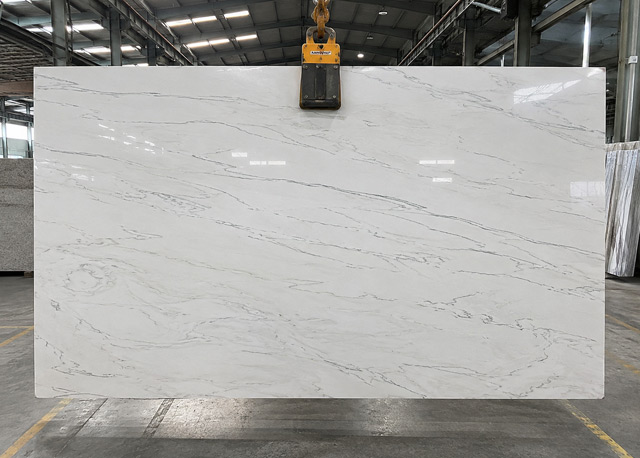
Calacatta quartzite appeals to people who want a light, elegant stone with stronger movement than a plain white surface. The look can fit kitchens, bathroom vanities, full-height backsplashes, islands, fireplaces, and feature walls where the goal is a clean room with enough veining to feel custom.
Calacatta is used as a style name across several surface categories, so it is worth confirming what the material actually is before choosing by name. One Calacatta-style surface may be marble, another may be engineered quartz, another may be porcelain, and another may be natural quartzite or a quartzite-like stone. For a Sacramento countertop or slab project, the name is only the starting point. The actual material type, slab appearance, finish, and maintenance expectations matter more than the name alone.
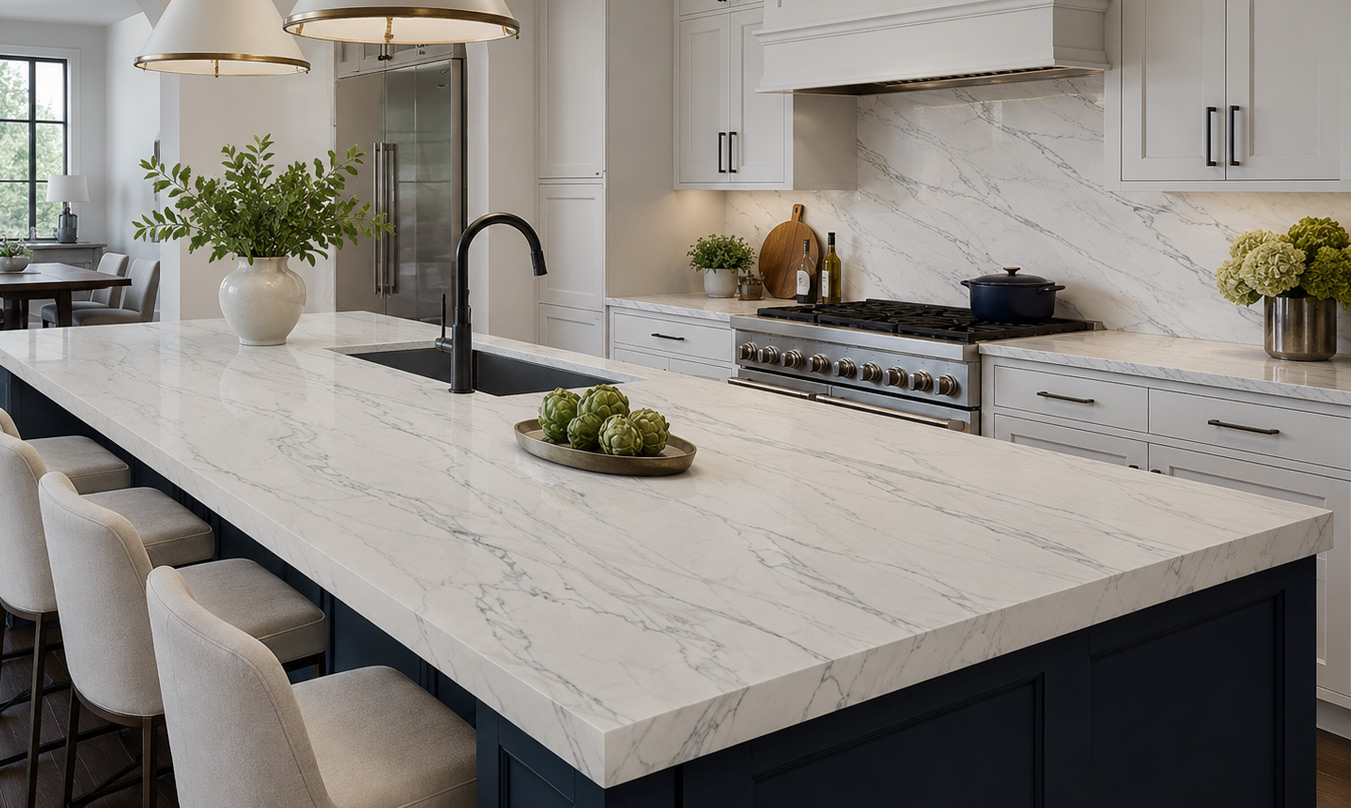
Why Calacatta-style stone is so popular
Light surfaces continue to be popular because they make kitchens and bathrooms feel larger, cleaner, and easier to coordinate. A Calacatta-style slab adds movement to that light foundation. Instead of a flat white countertop, the room gets veining, depth, and a stone pattern that can work with white cabinets, natural oak, walnut, black accents, brass fixtures, polished nickel, warm flooring, or simple tile.
The challenge is balance. A slab with bold veining can make a kitchen island stunning, but it can also compete with busy flooring, heavy cabinet grain, patterned tile, or strong wall color. The best Calacatta quartzite projects usually let the slab lead and keep the surrounding materials clean enough to support it.
Where it works well
- Kitchen islands and perimeter countertops
- Full-height backsplashes with planned vein direction
- Bathroom vanities and tub decks
- Fireplaces and vertical stone features
- Projects that need a bright surface with real movement
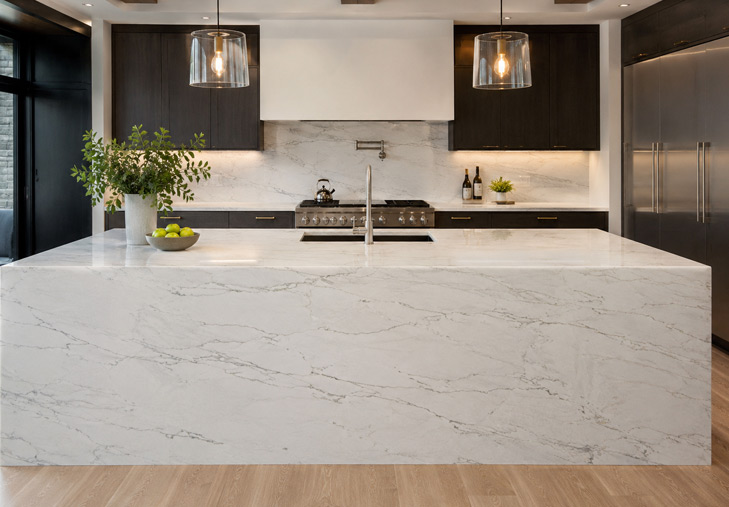
Calacatta quartzite vs Calacatta quartz
This is one of the most important comparisons for homeowners. Calacatta quartz is engineered and usually offers a more predictable pattern, easier care, and repeatable colors. Calacatta quartzite is natural stone, so the pattern is created by the earth, not printed in a factory. That means the slab may feel more unique, but it also requires natural stone expectations.
If low maintenance and predictability matter most, engineered quartz may be the better fit. If the goal is natural movement, a one-of-a-kind slab, and a surface that feels more organic, quartzite may be worth comparing. The right answer depends on the room, budget, use, and the exact slabs available.
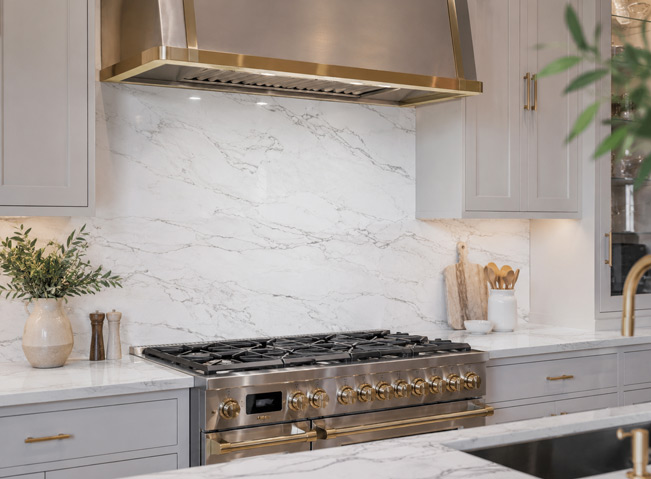
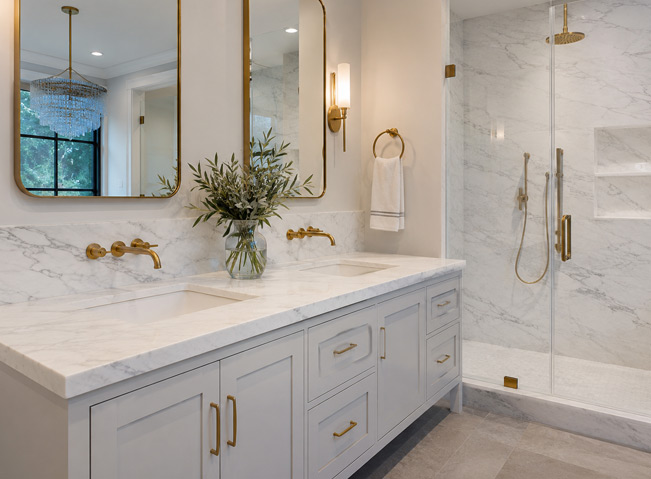
Choosing the right slab
Look at the full slab and pay attention to the undertone. Some Calacatta-style slabs are cool white and gray. Others have cream, taupe, warm gray, gold, or charcoal movement. A slab that looks crisp in one room may feel cold in another. A warmer slab may be perfect with oak cabinets but too creamy with certain whites.
Bring samples whenever possible. Cabinet doors, flooring, backsplash tile, paint chips, and hardware finishes help reveal whether the stone belongs in the same palette. For large islands and backsplashes, ask how the slab will be cut and how the veining will move through the visible areas. The layout should be decided before fabrication, not guessed later.
Care and maintenance
If the selected material is true quartzite or another natural stone, it should be cleaned with stone-safe products and protected from harsh acidic cleaners. Sealing may be recommended depending on the slab and finish. A sealer can improve stain resistance, but it does not turn natural stone into engineered quartz. Ask about care instructions for the exact material you choose.
For clients who cook heavily, entertain often, or want the least amount of maintenance, it is worth comparing the Calacatta quartzite look against quartz and porcelain slabs. Sometimes natural stone is the right emotional choice. Sometimes an engineered surface is the better fit for how the room will be used.
Frequently asked questions about Calacatta quartzite
Is Calacatta quartzite the same as Calacatta marble?
No. Calacatta is a design name used across materials. Confirm whether the actual material is quartzite, marble, quartz, porcelain, or another surface before making a decision.
Is Calacatta quartzite good for kitchens?
It can be a strong kitchen choice when the slab is suitable, fabricated correctly, sealed as needed, and maintained as natural stone.
Does Calacatta quartzite need sealing?
Many natural stone slabs should be sealed, but the specific recommendation depends on the slab, finish, and use.
What colors pair well with Calacatta quartzite?
White, cream, oak, walnut, black, taupe, warm gray, brass, and polished nickel can all work, depending on the slab undertone and veining.
Compare Calacatta-Style Slabs Before You Decide
The best choice may be quartzite, quartz, porcelain, or another natural stone depending on the project. Seeing the surfaces next to your real design materials is the safest way to avoid choosing the wrong undertone or maintenance level.